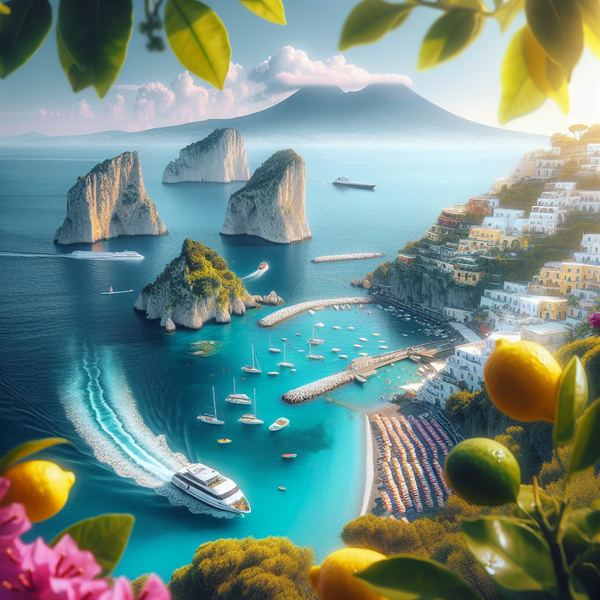
Few Mediterranean experiences are as effortlessly glamorous and yet deeply local as island hopping across the Bay of Naples. From the pale limestone cliffs of Capri to the volcanic springs of Ischia and the pastel waterfronts of Procida, these three islands offer distinct flavors of southern Italian life — all within an hour’s sail of Naples. Knowing how to navigate them efficiently, and what each does best, transforms a simple trip into a layered coastal adventure.
Go to the section
ToggleHow to Get Around the Bay of Naples by Ferry
The main ferry ports serving the Bay of Naples islands are Molo Beverello and Porta di Massa in Naples. Hydrofoils (aliscafi) depart roughly every hour in high season to Capri and Ischia, with Procida served on the same routes or via Pozzuoli port to the north. Companies such as Caremar, SNAV, and Alilauro publish schedules online, but on busy weekends you’ll want to book at least a day in advance. The fastest crossing to Capri takes around 45 minutes from Naples, while Procida is the nearest at 35 minutes.
During summer, ferries between the islands themselves (Capri–Ischia–Procida) run several times a day, making triangular itineraries feasible without returning to Naples. Day trippers often underestimate the ferries’ punctuality: hydrofoils usually leave right on time, so arriving 20–30 minutes early is prudent. Consider the sea conditions as well — in choppy weather the smaller hydrofoils cancel first, while larger ferries remain reliable for those prone to seasickness.
Capri Beyond the Crowds: Where to Find Quiet Corners
Capri’s reputation for celebrity glamour overshadows its gentler faces. The majority of tourists mass around the Piazzetta and Via Camerelle between 10 a.m. and 4 p.m., when day-trip boats from Naples and Sorrento arrive. To experience Capri in relative calm, stay overnight in Anacapri, the higher, quieter town reached by bus or taxi (€2.40 per public bus). Here you can take the chairlift to Monte Solaro, whose viewpoint reaches 589 meters for the best panorama of the bay — especially clear on crisp spring mornings.
For swimming, slip down the stone trail to Gradola near the Blue Grotto for an uncrowded rocky lido, or walk 25 minutes from Marina Piccola to find local families sunbathing at Torre Saracena. Evenings are Capri’s secret reward: restaurants like Da Gemma or Panorama reopen to mostly overnight guests once the last ferries leave, and you can sip a limoncello under jasmine-scented arches while watching the lights of Naples flicker across the sea.
Relaxing in Ischia’s Thermal Parks and Volcanic Landscapes
Ischia, nearly five times the size of Capri, has more variety than most visitors expect. Its volcanic soil feeds lush gardens, and its mineral springs — dating back to Roman times — bubble up throughout the island. The Poseidon Gardens in Forio offer over twenty pools of varying temperatures overlooking Citara Bay, while Negombo in Lacco Ameno pairs spa waters with an art-filled botanical park designed by landscape architect Luigi Silvestri. Entry prices range from €40 to €50 per day, with half-day passes available.
For independent soaking, the Sorgeto bay near Panza remains open 24 hours and free: natural springs mix with seawater directly off the rocks. Arrive early morning when the tide is low, and bring swim shoes for the stony steps. Afterward, explore Ischia Ponte, the island’s oldest village, where the 15th-century Aragonese Castle juts into the sea on a causeway. The short climb rewards you with views of fishing boats unloading swordfish and octopus, evidence that Ischia’s cuisine remains intimately tied to the sea and volcanic soil.
Discovering Procida: Italy’s Smallest and Most Colorful Island
At just four square kilometers, Procida is the most compact and authentically local of the three islands. Many Neapolitans visit for Sunday lunch rather than a full holiday, and that relaxed rhythm still defines the place. Ferries arrive in Marina Grande, whose pastel houses look hand-tinted; from there it’s a 15-minute uphill walk to Terra Murata, the historic citadel. The Belvedere dei Cannoni viewpoint at the top gives a cinematic panorama of Marina Corricella’s fishing harbor, recognizable from films like *Il Postino*.
Procida’s beaches reflect its volcanic origins: the long black-sand strip at Pozzo Vecchio warms quickly in the sun, while tiny Chiaiolella on the southwest coast stays shallow and perfect for evening swims. Scooters are available near the port for €35–40 per day, but Procida rewards slow wandering more than speed. Wander down Via Vittorio Emanuele until you find bakery Pasticceria Bar Roma; their lemon cream pastries, called lingue, are famous among ferry crews for good reason.
Nightlife here remains low-key — just a few wine bars near Corricella where fishermen tell stories until midnight — but sunrise over the pastel harbor is one of the Bay’s quietest spectacles.
Crafting the Perfect Island-Hopping Itinerary
Because ferry schedules favor Naples as a hub, base your itinerary there if you plan to move between all three islands in under a week. One practical sequence is:
- Take an early hydrofoil from Naples to Ischia, overnight in Forio or Sant’Angelo.
- Spend the next day exploring Procida before continuing to Capri the following morning.
- Return from Capri to Naples at sunset, when the view of Vesuvius turns rose-gold.
This order minimizes rough crossings, since Ischia–Procida–Capri routes typically run with morning calm seas. If you prefer fewer transfers, pick just two islands: Ischia for relaxation and Procida for local life, or Capri and Procida for a contrast of luxe and simplicity. Pack light — ferry decks have steep gangways, and even small wheelies can be unwieldy.
Dining logistics also matter: most restaurants open only for dinner from 7:30 p.m., so reserve earlier if catching an evening ferry. Carry a contactless card but keep small cash for beach buses, which often don’t make change.
When to Go and Local Tips for Smooth Sailing
The Bay of Naples islands each reveal their best sides in shoulder season. Late April to mid-June offers warm seas and blooming caper bushes across the cliffs, yet far fewer crowds than July. September’s light turns honey-colored, and sea temperatures hover around 25°C. High summer can still be enjoyable if you time ferry departures early — the first hydrofoils leave around 7 a.m., letting you reach quieter coves before group tours arrive.
Accommodation rates vary sharply by month: Capri’s hotels can drop by 30% after mid-September, while Procida’s remain stable year-round. Booking directly with family-run pensions often yields free breakfast or a transfer from the port, something many visitors miss when relying only on international sites.
For navigation, Google Maps may falter on narrow island paths. Offline apps like Maps.me or locally printed maps from kiosks (often €1) are more accurate, especially around Anacapri trails and Forio’s garden routes. Traffic restrictions on Capri mean you’ll often walk or use public minibuses — budget around €2 per ride, or purchase a daily pass at Tabacchi shops.
Insider Cultural Experiences on Each Island
Capri’s artisan side hides in quiet corners: seek out handmade sandals at Canfora, where Jackie Kennedy famously ordered pairs, or visit the Carthusia perfume workshop near the Charterhouse to see small-batch distillation using island botanicals. Both shops are open mornings and early evenings, perfect for avoiding day-trip crowds.
In Ischia, arrange a local cooking class in Barano village where nonnas teach how to prepare coniglio all’ischitana — rabbit stewed in white wine with wild herbs from Mount Epomeo’s slopes. Pre-booking through local agriturismi ensures your guide speaks English and includes transport. Meanwhile, Procida’s cultural heartbeat revolves around simple pleasures: the annual Madonna della Pietà procession in spring, when fishermen decorate their boats with flowers, remains one of southern Italy’s most photogenic events.
Each island celebrates its individuality yet shares a Neapolitan warmth visible in small gestures — a ferry captain pausing for late passengers, or a shopkeeper offering a taste of lemon jam before you buy. Island hopping in the Bay of Naples isn’t just about moving between shores; it’s about tuning into a rhythm of hospitality that has pulsed here since Greeks sailed these waters millennia ago.
Essential Takeaways for Planning Your Trip
- Travel light and early: ferries board swiftly, and luggage limitations are rarely enforced but lighter bags make boarding smoother.
- Book return ferries: last boats to Naples depart around 7 p.m.; missing one means an unplanned overnight stay.
- Respect local pace: Italians lunch long and late; most shops close from 1 to 4 p.m., even in high season.
Combining Capri, Ischia, and Procida within a few days isn’t a race but a sensory progression: limestone cliffs to volcanic valleys, pastel alleys to luxurious terraces. With well-planned ferry timings, a pair of good walking shoes, and curiosity for the small rituals of island life, the Bay of Naples becomes — quite literally — your open-air living room over the sea.