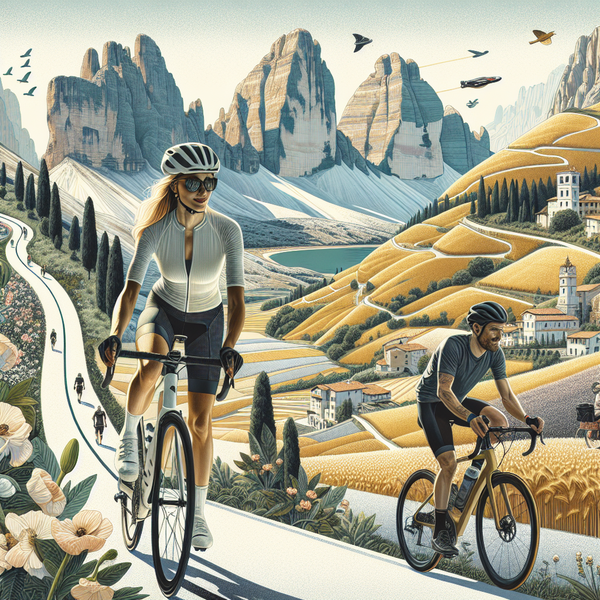
Cycling in Italy is not just about endurance or scenery — it’s a way to feel the country’s rhythm. Every region offers a distinct flavor, from the Dolomites’ crisp alpine climbs to Sicily’s coastal ribbon rides. Whether you’re pedaling past vineyards, tracing rivers, or scaling historical passes, cycling in Italy reveals a landscape that feels personal and alive.
Go to the section
ToggleCycling in Northern Italy: Alpine Peaks and Lakeside Roads
Northern Italy sets the gold standard for cycling routes. The Dolomites in Trentino-Alto Adige challenge even seasoned cyclists with legendary climbs like the Passo Pordoi and Passo Giau, both known from the Giro d’Italia. Start from Canazei to loop through Val di Fassa: a 60 km circuit combining pine forest descents and clear mountain air. In summer, road conditions are immaculate and traffic light before 10 a.m.
Further west, Lombardy’s Lake Como offers a more leisurely but no less scenic experience. The classic ride from Menaggio to Bellagio hugs the lake for 35 km with gentle inclines, village trattorie, and frequent ferry crossings to shorten the loop. Early morning is best to avoid the midday parade of scooters. Between Como and Varenna, stop at Mandello del Lario — home to the Moto Guzzi Museum, an interesting stop even for die-hard cyclists.
In Piedmont, vineyards replace mountains. The Barolo Wine Route from Alba to La Morra combines steady gradients with panoramic rows of Nebbiolo vines. Cyclists often plan it around local wine festivals in autumn, when farm roads are closed to cars and locals offer refreshment stations with fresh focaccia.
Central Italy: Tuscany, Umbria, and the Heart of Slow Cycling
Tuscany is to cycling what Bordeaux is to wine — iconic. The Strade Bianche routes, made famous by the white gravel roads winding through Siena and Crete Senesi, remain open year-round. The 120 km loop from Siena passing through Pienza and Montepulciano rewards riders with quiet farm tracks and sunburnt fields. Places like Gaiole in Chianti rent gravel bikes fitted for the historic Eroica ride, complete with toe clips and vintage styling.
In Umbria, cycling feels intimate. The 75 km trail from Assisi to Spoleto follows the old railway corridor, the Ex Ferrovia Spoleto–Norcia. Tunnels drilled through Apennine ridges and arched viaducts make this route a visual feast. Electric bikes are available in Spoleto near Piazza Garibaldi, useful for first-time climbers tackling the steady 4% grade.
Further east, Marche offers rural solitude and Adriatic views. The ride from Urbino to Pesaro follows quiet provincial roads dissecting rolling hills. Late spring is ideal before the coastal humidity sets in; cyclists often stop at olive farms near Cartoceto for tastings and shaded breaks.
Cycling in Southern Italy: Coastlines and Cultural Contrasts
Southern Italy rewards riders who like their scenery rugged and their hospitality spontaneous. In Campania, the Amalfi Coast’s Strada Statale 163 may look daunting, but riding early from Positano to Ravello (25 km) before tourist traffic appears is a dream — hairpin turns, lemon terraces, and coastal wind in your face. Carry a compact bell or whistle for blind turns; local drivers are courteous but fast.
In Puglia, the Valle d’Itria trail connecting Alberobello, Locorotondo, and Cisternino runs almost entirely on paved bike lanes converted from old roads. Expect a 45 km stretch through trulli-dotted countryside and easy gradients. Cyclists often base in Martina Franca for central access to all routes and bike shops.
Calabria’s Riviera dei Cedri offers cliffside paths from Scalea to Maratea. Fewer cyclists reach here, but those who do find roads with ocean views uninterrupted for hours. Stop at San Nicola Arcella to descend to the Arco Magno, a natural stone arch accessible only by a short footpath — an unforgettable mid-ride detour.
Find all the best hotel deals — Book your stay across Italy
Cycling in Sicily and Sardinia: Island Adventures for Every Rider
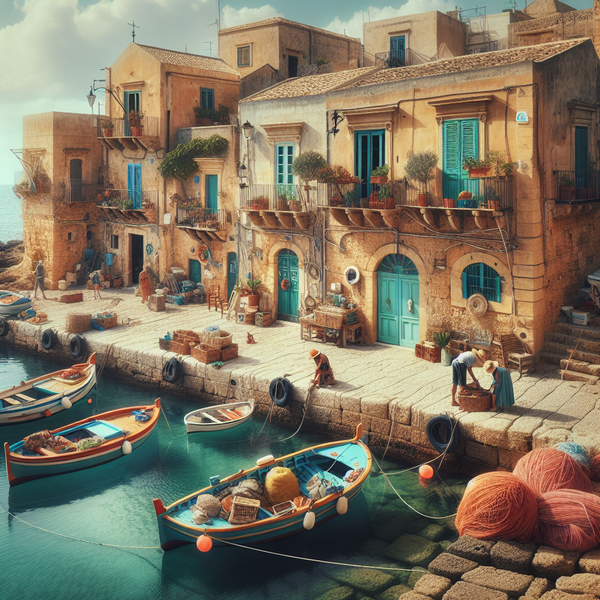
Sicily’s cycling scene has blossomed thanks to widened rural roads and cycling-friendly agriturismi. The ride around Mount Etna from Linguaglossa to Nicolosi (85 km) includes alternating black lava roads and views of the Ionian Sea. Mid-April is prime time to avoid heat and traffic. Rental shops in Catania usually equip bikes with 32 mm tires for the ash-textured pavement.
For coastal exploration, the route from Marsala to Sciacca offers 120 km of undulating seafront terrain and constant sea breeze. Don’t miss the salt pans of Trapani — their cycling path skirts pink-hued flats used since Phoenician times.
In Sardinia, few roads are truly flat, but that’s part of the reward. The Carbonia–Teulada–Chia loop traces turquoise coves and cork forests, covering 100 km of secondary roads with near-zero traffic. Cafés along the route often offer local sebadas (fried honey pastry) — the perfect sugar hit mid-ride. Take extra water in July: fountains are less frequent in the south.
Cycling Along Italian Rivers and Lakes: Relaxed Routes for All Levels
Italy’s river valleys and lake districts provide gentle gradients without sacrificing beauty. The Adige Cycle Path, stretching 300 km from the Resia Pass to Verona, is among Europe’s best-maintained bike routes. Signs are bilingual (Italian and German), surfaces smooth asphalt, and rental stations are positioned roughly every 20 km. Verona’s Porta Nuova station even has a dedicated bike garage with overnight storage.
Along Lake Garda, a suspended cycle path now allows cyclists to ride over the water between Limone sul Garda and Riva del Garda. It’s only 2 km but spectacular at sunset, when the limestone cliffs reflect in the lake. Nearby, the path continues into the Sarca Valley, linking directly to Trento — a seamless way to blend leisure and exploration.
Further south, the Parco del Po bike network offers endless variations beside Italy’s longest river. In Emilia-Romagna, the Ferrara–Comacchio stretch passes historic drainage canals and 16th-century watchtowers once used to monitor floods.
Discover the best local experiences — Book guided cycling tours and tastings across Italy
Essential Tips for Cycling Logistics in Italy
Planning logistics transforms a good ride into a seamless one. Trenitalia regional trains allow standard bicycles during off-peak hours, usually for a modest ticket supplement purchased at vending machines labelled “Servizio Bici.” Folding bikes travel free. In small towns, most bike repair shops close for lunch between 12:30 and 15:30 — plan accordingly if you require mechanical help.
Cycling maps in Italy use the Ciclovia numbering system. Popular routes like Ciclovia del Sole (connecting Verona to Bologna) are clearly marked by blue signs with a yellow sun symbol. Download the Komoot map of your region before arrival — cell coverage in rural Tuscany or Basilicata can drop abruptly.
As for safety, Italian drivers are more accustomed to cyclists than visitors expect. Wearing high-visibility gear is still encouraged, especially through tunnels lacking shoulder lanes, such as those near Lake Iseo. Helmets are mandatory only for children, yet virtually all locals wear them — particularly on mountain descents.
Post-Ride Culture: From Espresso Stops to Evening Aperitivi
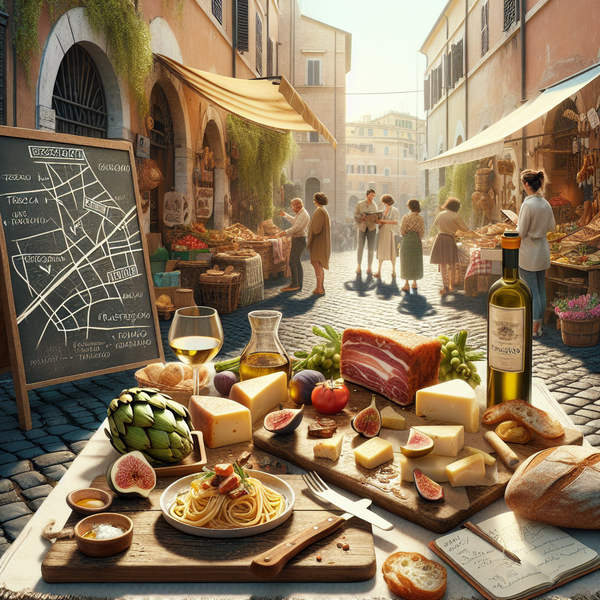
The best part of cycling in Italy often starts when you dismount. Every region has its own rituals: in Friuli, riders sip spritz al Select at the bar near the finish; in Tuscany, locals stop at enotecas for a glass of Vernaccia. Many cycling cafés, such as Milan’s UpCycle Café near Piazzale Loreto, combine a repair shop, brunch bar, and travel hub where route tips are exchanged in half a dozen languages.
For recovery, Italy’s cuisine naturally supports cyclists. Salted almonds in Puglia, parmesan shards in Emilia, or a double espresso in Liguria each serve as local energy boosters. Hydration-wise, most small fountains labeled “Acqua Potabile” are safe to refill from; using a lightweight filter bottle is still a good practice.
When and Where to Go: Seasonal Cycling Planning
Spring (March–May) is ideal for central and southern Italy when temperatures average between 18°C and 24°C. June to September suits alpine cyclists heading to the Dolomites — major passes usually open once winter snow clears. Autumn (October–November) is perfect for food-and-wine rides in Piedmont and Emilia, with mild air and truffle festivals aligning with low tourist numbers.
Avoid midsummer in Sicily unless you start before 7 a.m.; heat and traffic build swiftly after sunrise. Winter cycling remains possible in coastal Liguria, thanks to its mild climate averaging 12°C, and its Genoa–Levanto path runs almost entirely flat through converted railway tunnels.
Cycling in Italy is the ultimate slow-travel approach. Whether you chase elevation or espresso, every region delivers a ride that feels thoughtfully designed by humans who love both terrain and tradition. True Italian cycling is not a race — it’s a moving feast of geography, culture, and quiet accomplishment.