The southern corner of Sicily feels like a living museum of the late Baroque. After the devastating earthquake that reshaped much of the island’s southeast, towns like Noto, Modica, and Ragusa Ibla rose again in ornate splendor—each a master lesson in stonework and artistic ambition. What makes these baroque towns in Sicily special isn’t only their architecture, but also how daily life still hums along their dramatic staircases, limestone facades, and sun-warmed piazzas.
Go to the section
ToggleNoto: The Heart of Sicilian Baroque Architecture
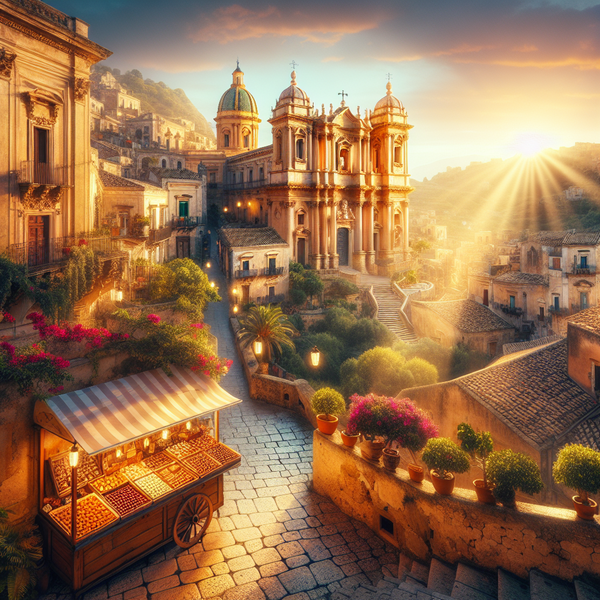
Strolling down Corso Vittorio Emanuele in Noto just after sunrise, you’ll see a honeyed glow wash over the town’s limestone buildings. The material, quarried locally, gives Noto its characteristic light—pale gold in the morning, almost pink by late afternoon. The city’s coherent baroque design was a deliberate urban plan by Rosario Gagliardi and other architects after the 17th-century earthquake. Landmarks such as the Cattedrale di San Nicolò, with its serene dome and elegant staircase, epitomize Noto’s theatrical grandeur.
A good way to absorb the city’s beauty is to stop for an espresso on Via Corrado Nicolaci, facing the gracefully curving balconies of Palazzo Nicolaci di Villadorata. Here, winged cherubs and fanciful horses seem ready to leap from the balconies themselves—a hallmark of Sicilian exuberance. In May, the Infiorata flower festival transforms this same street with intricate floral carpets that reinterpret art and mythology using petals and herbs.
Ragusa Ibla: Stone Terraces and Baroque Labyrinths
Ragusa is really two towns: the modern upper portion, and the exquisite Ragusa Ibla below—a baroque gem stacked on terraces below the high plateau. The best approach is from the panoramic Belvedere di Ragusa, where Ibla unfurls like a stone amphitheater. From there, a slow walk down the winding steps reveals a network of alleys that all seem to lead toward the Duomo di San Giorgio, crowned by its impressive dome and graceful twin staircases.
Unlike Noto’s carefully planned grid, Ragusa Ibla’s layout feels organic, shaped by centuries of rebuilds. Street life here thrives in miniature: locals chat outside tiny alimentari shops, and artisan bakeries serve mpanatigghi—delicate pastries filled with chocolate and minced meat, an unexpected legacy of Spanish rule. Staying overnight gives you the chance to see Ibla in silence, when the domes glow amber against a deep indigo sky.
Modica: Chocolate, Churches, and Layers of Baroque Drama
Modica, carved into a steep canyon, may be the most atmospheric of Sicily’s baroque towns. It’s divided into Modica Alta and Modica Bassa, with twin hearts of stone dramatically connected by stairways. The Church of San Giorgio, rising in luminous tiers, is perhaps Gagliardi’s finest work—its staircase framed by iron lamp posts and flowering terraces.
What sets Modica apart is how the baroque here coexists with the sensory pleasures of everyday Sicilian life. The town is famous for its ancient-style chocolate, still cold-ground from cocoa using Aztec-inspired methods introduced by the Spanish. Visit Antica Dolceria Bonajuto on Corso Umberto, where the scent of roasted cocoa hangs in the air. Pair a bar of grainy chocolate with a caffè ghiacciato and watch as locals drift past in evening passeggiata style.
Scicli: Intimate Charm off the Usual Baroque Route
Just a short drive south from Modica, Scicli feels like a perfectly kept secret. Built along intersecting valleys, its baroque splendor blends into the surrounding landscape. The Via Mormina Penna, a pedestrian street lined with palaces and churches, is the town’s beating heart. Here you’ll find the Palazzo Beneventano, its balconies supported by grotesque masks—both comical and haunting—as if frozen mid-laughter. The elegant façade of San Bartolomeo Church sits framed by cliffs, giving the impression that nature and architecture conspired together.
Despite its scale, Scicli thrives with authentic local rhythm. The small osterie near Piazza Italia serve excellent ricotta ravioli with sage butter, and during evening hours, the whole town seems to participate in spontaneous conversation. If Scicli looks familiar, that’s because many scenes of the “Inspector Montalbano” TV series were filmed here, adding gentle fame to its serene profile.
Caltagirone: Ceramic Capitals and Ornate Churches
Further inland, Caltagirone sits on a hilltop known for both baroque art and ceramics traditions stretching back centuries. The monumental Scala di Santa Maria del Monte, a stairway of 142 steps, is decorated with hand-painted majolica tiles—no two alike. Each tile depicts motifs reflecting Sicily’s layered past: Arab patterns, Renaissance flourishes, and baroque scrollwork. Climbing it at sunset rewards visitors with superb views of rooftops and bell towers glowing in amber light.
Caltagirone’s baroque presence extends to the Church of San Giacomo and the Cathedral of San Giuliano, their interiors rich with gilt wood and colorful stucco. The town’s ceramic workshops, often run by multigenerational families, invite visitors to try glazing techniques themselves. Buying one of the local testine di moro—ornamental heads based on an old Arabic legend—makes a meaningful souvenir that ties the region’s artistic heritage to living craft.
Palazzolo Acreide: A Baroque Gem in the Iblean Hills
Nestled in the Hyblaean hills, Palazzolo Acreide is often overlooked—but that’s exactly why it’s worth the detour. Its narrow streets lead to some of Sicily’s most harmonious baroque architecture. The twin churches of San Sebastiano and San Paolo define the town’s skyline, both enveloped by broad staircases that seem to lift them skyward. Inside San Sebastiano, intricate stucco angels and gilded balustrades form a visual counterpart to the clear light outside.
Palazzolo Acreide also preserves Greek roots: the ancient theater of Akrai lies just beyond the town center, allowing visitors to move from the 3rd-century BC stone seats to the elaborate 18th-century façades within minutes. Dining here feels intimate and slow-paced; trattorie like U Locale serve homemade pasta with herbs gathered from surrounding fields.
Practical Travel Routes for Baroque Sicily
Southeastern Sicily’s baroque circuit can be comfortably explored over five or six days by car. The Val di Noto, designated as a UNESCO World Heritage area, conveniently groups many of these towns within easy driving distance. From Catania’s airport, it’s roughly an hour to Noto or Ragusa via well-maintained state roads. Base yourself in two locations—perhaps Noto for the coastal towns and Ragusa for the inland ones—to minimize daily driving.
Public transport is improving but remains patchy, especially on weekends. If you prefer not to drive, using shared transfers between Noto, Modica, and Scicli can be a cost-effective option. Most towns are best explored on foot; wear rubber-soled shoes for the polished limestone steps that can get slippery after rain.
Local Life and Seasonal Highlights in Baroque Sicily
Timing your visit adds depth to the experience. In spring, the Infiorata di Noto and Scicli’s Festa delle Milizie fill the baroque streets with flowers, parades, and re-enactments. Come summer, Ragusa Ibla hosts open-air classical concerts in small squares, while Modica’s chocolate shops introduce special citrus-infused varieties. Autumn remains ideal for mild weather and truffle-based dishes around Palazzolo Acreide.
Evenings across these baroque towns follow a similar rhythm: families stroll the main streets, children play near fountains, and café terraces transform into stages for conversation. Sitting with a glass of locally produced Nero d’Avola, you realize that Sicily’s baroque towns are not mere architectural relics—they’re living, breathing stages of Sicilian humanity.
Where Baroque and Everyday Sicily Converge
What unites all these towns—from Noto’s grand avenues to Scicli’s humble lanes—is how the baroque aesthetic still guides daily life. The sense of theatricality that defines Sicilian baroque architecture also appears in the island’s gestures, cuisine, and social rituals. You see it in the polished marble counters of a Modica patisserie or in the careful fold of a linen napkin at a Caltagirone trattoria.
Traveling through these baroque towns in Sicily presents more than a study in architectural history—it offers a rare alignment of beauty and routine, of grandeur and simplicity. That paradox, held in every curled cornice and laughing balcony, is what keeps visitors returning long after the first visit fades from memory.