The artistry of Italy’s traditional folk costumes reveals more than local fashion—it tells stories of ancient craftsmanship, village pride, and regional identity. From the embroidered bodices of Sardinia to the colorful skirts of Puglia, each garment still appears in festivals, museums, and small-town processions where centuries-old rituals live on. Visiting these places isn’t about nostalgia alone; it’s a chance to witness how Italy keeps its cultural threads unbroken through dance, textile work, and living heritage.
Go to the section
ToggleExperiencing Traditional Costumes in Sardinia’s Village Festivals
Sardinia offers perhaps the richest concentration of regional costumes still worn for actual community events. The Sant’Efisio Procession in Cagliari—held every spring—draws hundreds of participants from towns across the island, each wearing their local dress. You’ll see women from Desulo in layered velvet bodices adorned with coral jewelry, and men from Oristano in black wool breeches and embroidered linen shirts. For photographers and costume enthusiasts, positioning near Piazza Yenne before the parade begins offers close-up views without heavy crowds.
Smaller mountain villages such as Mamoiada and Orgosolo maintain their traditional wardrobes year-round. Local artisans here still hand-stitch copricapi (headdresses) and heavy wool shawls using patterns passed through families. Visiting during winter festivals like Carnevale Barbaricino adds another sensory layer—goat bells, masks, and bright ribbons marking one of Italy’s most authentic public displays of folk attire.
Alpine Traditions: Trentino-Alto Adige’s Living Heritage
In the alpine valleys of Trentino-Alto Adige, different valleys produce distinct folk costumes recognizable by their color combinations and headgear. In Val Gardena, for instance, women still wear blue pleated skirts with intricate lace aprons during village festivals like Festa di Santa Cristina. Several museums, including Museo degli Usi e Costumi della Gente Trentina in San Michele all’Adige, provide detailed exhibits with original 19th-century garments displayed alongside farming tools and musical instruments.
For a hands-on experience, some cultural centers—such as the Tiroler Weltmuseum in Innsbruck just beyond the Italian border—offer workshops on traditional hat-making and embroidery. This cross-border cultural exchange helps explain why Tyrolean costume patterns, including silver filigree buttons and corset-like vests, appear in northern Italy’s Ladin communities. If timing allows, plan your visit around the late-summer Sagra del Törggelen events, where locals don their heritage clothes while serving roasted chestnuts and new wine.
Campania’s Costumed Traditions Beyond Naples
Though Naples is more famous for its music than its attire, rural Campania still presents some of Italy’s most expressive folk costumes. In Cilento—south of Salerno—villages like San Mauro Cilento and Pisciotta introduce costume displays during summer ethnographic festivals. Women wear starched linen dresses with carefully pinned shawls and gold spille (brooches), recalling attire shown in the Museo Etnografico di Teggiano, one of southern Italy’s most overlooked collections.
Every August, the village of Agropoli hosts a Palio Storico where participants ride through town in costumes inspired by medieval pageants. While these dresses are partly reconstructed for performance, they reflect accurate textile choices: raw silk, velvet, and lace imported through nearby Amalfi ports. Observing seamstresses preparing costumes in local workshops offers a glimpse of skills that underpin the choreography seen on festival day.
Find all the best hotel deals Book your stay here
Veneto’s Palio and Carnival Costumes with Centuries of Legacy
Veneto provides two contrasting yet related stages for folk and historical dress: the refined Venetian Carnival and the village pali that re-enact medieval competitions. In small towns such as Marostica—known for its “human chess game” staged in even years—the participants wear brocade costumes inspired by 15th-century attire preserved in the civic museum. You can purchase entry tickets ahead through the Pro Loco office for a guaranteed seat in the castle square.
Meanwhile, in the mountain community of Feltre, the Palio di Feltre combines costume parades with archery contests among four historic districts. Tailors prepare ornate garments months in advance, often following patterns archived in local parishes since the Renaissance. The Museo Etnografico Dolomiti Bellunesi in nearby Serravella di Cesiomaggiore documents how these local designs evolved from practical wool clothing into ceremonial pieces decorated with beads and braiding.
Discover the best local experiences Join guided tours and workshops
Puglia’s Handwoven Skirts and Tarantella Festivals
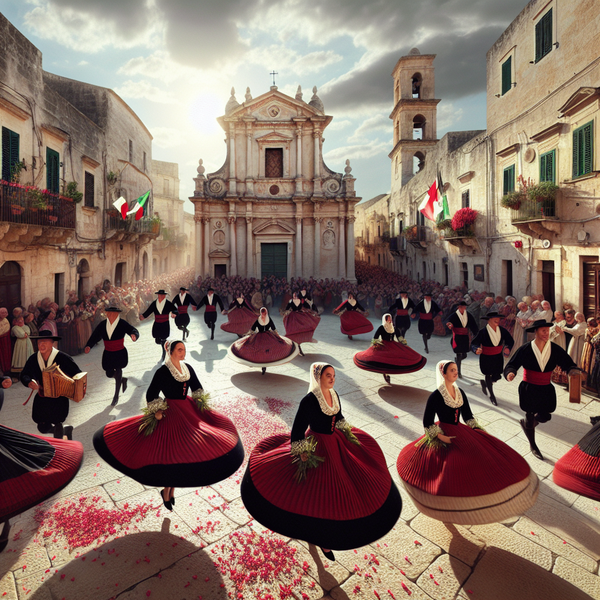
In southern Puglia, costumes accompany the famous pizzica dance, a folk tradition rooted in Salento’s countryside. The Museo del Costume di Ruffano displays everyday and festive versions of the region’s attire, including men’s white trousers cinched with red sashes and women’s flared cotton skirts with lace trims. During summer, the touring event La Notte della Taranta takes this imagery to open-air stages across the region, where dancers swirl in reconstructed historic clothing inspired by early-20th-century photographs.
For travelers seeking authenticity beyond the concert crowds, towns like Nardò and Galatina host smaller reenactments where seamstresses explain fabric symbolism. These events often end with communal dinners featuring local bread baked in ancient stone ovens—a reminder that costume, music, and food were all part of the same rural rhythm.
Sicily’s Costumes Between Noble and Peasant Traditions
Sicilian folk costumes show extraordinary variation between coastal and inland communities. In Catania’s hinterland, women’s attire features black wool skirts, white blouses, and red sashes—similar to the garments worn by performers of the opera dei pupi (traditional puppet theatre). In contrast, Palermo’s historic quarters showcase noble-style gowns during the Festa di Santa Rosalia, when even children parade in brocaded outfits echoing 17th-century Spanish influence.
The Museo Internazionale delle Marionette Antonio Pasqualino holds a permanent section on costume history, pairing puppet clothing details with their human counterparts. Many of the museum’s tailors also design for community troupes that perform folk dances in Monreale and Cefalù during regional festivals, so visitors can easily combine cultural sightseeing with costume appreciation. If you want to bring a piece home, look for hand-embroidered scarves or copied patterns sold in artisan cooperatives around Caltagirone.
Piedmont and Lombardy: Folk Attire in Rural Museums
Northern Italy’s industrial heartland hides collections that explore everyday clothing before mass production changed rural life. In Piedmont’s Piverone, the Museo del Costume Alpino Femminile presents women’s mountain outfits—heavy felt skirts and colorful aprons—once worn along transhumance routes. Navigating these small museums usually requires a quick phone reservation; many are community-run and open on weekends only.
In Lombardy, the Ethnographic Museum of Valtellina (in Tirano) has preserved the dark wool cloaks that protected shepherds against alpine weather, alongside velvet bodices used for church processions. Near Lake Como, the Museo Della Seta (Silk Museum) in Como shows how the region’s silk production influenced the fine embroidery used in wedding costumes throughout the 19th century, linking industrial history with personal adornment.
Where to Combine Costume Appreciation with Learning
Several Italian regions now integrate folk costume studies into workshops and cultural stays. The School of Traditional Arts in Lecce occasionally hosts short textile courses, guiding students through hand-loom weaving similar to what was once done in Salento homes. In Abruzzo’s town of Scanno, local ricamatrici (embroiderers) offer half-day sessions in lace-making, culminating in a visit to the regional costume museum where silver crowns and intricate skirts tell stories of courtship and social rank.
Seasoned travelers may prefer timing trips to coincide with regional competitions recognizing the best traditional costumes. The Premio Internazionale del Folklore in Castrovillari (Calabria) invites folk groups from across Italy to present choreographed performances wearing authentic attire—an excellent opportunity to photograph costumes from different provinces all in one place. With clear schedules posted on the town’s tourism site, it’s easy to plan around these celebrations and support artisans sustaining Italy’s tangible cultural legacy.
Practical Tips for Seeing Italy’s Folk Costumes Respectfully
When attending local festivals, remember that many costumes are family heirlooms, not theatrical props. Always ask before touching or photographing close-up, especially in rural areas where garments carry personal meaning. A courteous greeting—“Posso fare una foto, per favore?”—goes a long way. Supporting local workshops by purchasing small handmade accessories, like woven belts or miniature dolls in regional dress, contributes directly to keeping these traditions alive.
Lastly, verify festival dates well in advance. Many processions follow the liturgical calendar and shift when major religious holidays vary. Regional tourism boards and municipal websites typically post confirmed dates by spring, and early booking ensures your stay aligns with key costume events. Treat these visits as living museums: moments where Italy’s artistry, ritual, and identity remain woven together in every thread.