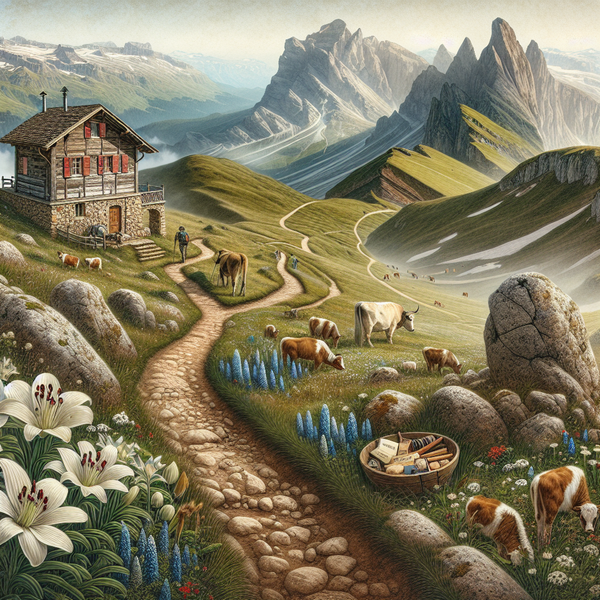
Italy’s most beautiful mountain plateaus are not merely scenic stops — they are journeys into the heart of the Alps and Apennines, where alpine villages, wildflower meadows, and Dolomitic cliffs reveal a slower rhythm of Italian life. From Alto Adige to Abruzzo, each plateau has its own dialect, cheese, and tempo. These are landscapes to hike, breathe, and photograph from sunrise to the long alpine twilight.
Go to the section
ToggleAlpe di Siusi (Seiser Alm) – The Heart of the Dolomites’ Mountain Plateaus
The Alpe di Siusi in South Tyrol is Europe’s largest high-altitude plateau, perched between 1,680 and 2,350 meters above sea level. The 56-square-kilometer expanse is framed by the Sciliar and Sassolungo ranges — views so dramatic you understand why UNESCO protected it as part of the Dolomites. Cars are restricted between Compatsch and Saltria from 9 a.m. to 5 p.m., which makes walking or cycling here blissfully quiet. Visitors staying in Siusi, Castelrotto, or Fiè allo Sciliar can ride the cable car up early morning when the peaks glow pink with the Alpenglow.
Locals ski in winter, but in late May and June, meadows explode with gentians and orchids. Stop for lunch at Gostner Schwaige, where the owner serves homemade alpine herb soup and butter churned on site. For easy exploration, follow Trail 9A, a 6-km circular path starting from Compatsch with minimal elevation gain — ideal for families and photographers.
Plateau of Asiago – History and Alpine Tradition in Veneto
The Asiago Plateau (Altopiano dei Sette Comuni) in the Veneto region rises to 1,000–2,000 meters and holds both pastoral beauty and poignant history. World War I left its traces here — tunnels, monuments, and open-air museums dot the high ridges near Monte Ortigara. The museum at Forte Corbin near Tresché Conca provides maps of well-marked historical trails that blend nature and memory.
Asiago town itself is known for its DOP-certified cheese, aged in wooden cellars and sold daily at Caseificio Pennar, where you can watch morning milk deliveries from surrounding mountain farms. Bikers favor the panoramic Route 52bis from Gallio to Foza for its quiet traffic and endless larch forests. From the Piazzale Lozze viewpoint, you can see all the way across the Brenta Dolomites on clear days — a 25-minute hike from the parking area near Malga Lunga.
Campo Imperatore – The ‘Little Tibet’ of Abruzzo’s Gran Sasso
The Campo Imperatore Plateau stretches across the Gran Sasso massif at more than 1,800 meters. Locals call it the “Little Tibet of Italy” for its vast, austere grasslands beneath Corno Grande, the country’s highest Apennine peak (2,912 meters). You reach the plateau from the town of Assergi via a winding 20-kilometer road that climbs above the clouds. The drive is cinematic — herds of cows wander freely, and roadside shepherds’ huts sell pecorino canestrato made from milk produced right there on the slopes.
In summer, the plateau becomes a magnet for hikers and stargazers. The nearby Campo Imperatore Observatory is one of Italy’s oldest mountain observatories, offering night visits on select weekends. You can base yourself at the historical Hotel Campo Imperatore, known for its 1930s Alpine architecture and for having hosted Mussolini’s brief imprisonment during World War II.
Plateau of Bletterbach and Redagno – Geological Wonders in South Tyrol
At first glance, Bletterbach Gorge doesn’t fit the traditional image of a plateau, yet its surrounding high meadows of Redagno and Aldino frame this grand canyon-like formation at 1,600 meters. Geologically, it’s one of Italy’s most valuable plateaus — a UNESCO World Heritage site revealing a nine-kilometer-long cross-section through the Earth’s history. The visitor center in Aldino distributes helmets for those walking into the gorge’s lower sections, where layers of red and ochre sandstone are visible like a natural textbook.
Above, the plateau’s alpine pastures welcome walkers on trails lined by larch trees and wooden shrines. A gentle 2-hour circular route begins at Malga Lahnersäge, passing viewpoints where you can glimpse the Dolomitic peaks of Latemar and Catinaccio. In autumn, the area bursts with mushrooms — locals from Bolzano come here to collect porcini under special foraging permits.
Lessinia Plateau – Limestone Villages and Shepherd Trails North of Verona
Barely an hour from Verona, the Lessinia Plateau (Altopiano della Lessinia) sits between 800 and 1,800 meters, offering walkers a quiet alternative to the Dolomites. Its charm lies in its stone-built hamlets like Camposilvano and Velo Veronese, where roofs are still layered with hand-cut local stone slabs. The natural park protects fossils and karst formations, including the Ponte di Veja, a limestone arch 29 meters high that may have fascinated Dante himself.
For cyclists, the old military road from Boschetto to Castelberto offers 360-degree views across both the Adige Valley and the Venetian plain. Don’t miss the family-run Rifugio Lausen, where you can try gnocchi di malga made with mountain herbs and enjoy sunset light over Monte Baldo. In winter, snowshoes replace hiking boots, and the same trails turn into silent white corridors.
Pian Grande and Castelluccio di Norcia – Umbrian Highlands in Bloom
In southern Umbria, near Norcia, the Pian Grande plateau blooms each summer with lentils, poppies, and cornflowers in a spectacle known simply as the *fioritura*. The altitude of around 1,450 meters keeps the area cool even in July. Reach it via the Forca di Presta pass; before descending, stop at the overlook deck to see the patchwork fields stretching toward Mount Vettore.
The small village of Castelluccio sits dramatically on a hill above the plain, rebuilt after the 2016 earthquakes. Here, trattorias such as Il Guerrin Meschino serve simple local dishes: lentil soup, sheep’s ricotta, and red wine from Montefalco. Hiking Route GEA-11 connects Pian Grande with the nearby plateaus of Pian Perduto and Pian Piccolo, creating a multi-day trekking circuit of blooming valleys and protected nature.
Plateau del Piani di Artavaggio – Lombardy’s Alpine Balcony
High above Lecco and Lake Como lies the Piani di Artavaggio, a compact alpine plateau accessible by cable car from Moggio in Valsassina. Sitting at about 1,700 meters, it offers a rare combination — wide open alpine meadows and views all the way to the Grigna massif. Locals often come for day trips to picnic near Rifugio Nicola, an easy 15-minute walk from the cable car station. From there, a moderate 2-hour trek leads to Monte Sodadura, a cone-shaped summit visible even from Milan on a clear day.
The plateau has light infrastructure — several rifugi serve polenta taragna (a hearty buckwheat version) and formaggi d’alpeggio in summer. In winter, the same trails double as snowshoe paths. For those seeking peace without extreme altitude or crowds, Artavaggio is a sweet spot between accessibility and solitude.
Plateau of Paganella – Trentino’s Gateway to the Brenta Dolomites
The Paganella Plateau rises above the Adige Valley, linking the villages of Andalo, Fai della Paganella, and Molveno. Ideal for those who prefer structured alpine resorts, Paganella combines trail networks, bike parks, and family-friendly infrastructure with exceptional scenery over Lake Molveno and the Brenta Dolomites. The Sentiero delle Aquile (Eagle’s Path) runs along the plateau’s ridge, offering a balcony-like route for experienced hikers. Cable cars from Andalo reduce the initial climb, making it feasible even for moderate walkers.
Stop by Rifugio La Roda for a lunch of canederli (bread dumplings) and regional wine, then descend via the Sentiero Botanico, a path marked with interpretive panels about local alpine flora. Evening strolls around Lake Molveno, with reflections of Cima Tosa on the water, are a serene reward after a day in the high air.
Piani di Pezza – Abruzzo’s Quiet Alpine Pasture
Less known even within Italy, the Piani di Pezza lies near the Sirente-Velino Regional Park at about 1,400 meters. A narrow road from Rocca di Mezzo leads to this plateau, framed by limestone cliffs and circular woods full of beech trees. Shepherds still graze sheep here in summer, producing ricotta affumicata smoked over juniper fires — sold directly from farm sheds on weekends.
The plateau is best visited early in the morning, when mists linger around the Monte Sirente ridge. Hiking route A7 crosses the plain in under two hours, ending at Rifugio Sebastiani, a cozy hut serving local dishes to hikers en route to the Velino summit. The area remains untouched by mass tourism, making it ideal for those seeking authentic rural Abruzzo.
Prá di Tori and Carezza Plateau – Alpine Meadows Beneath Rosengarten Peaks
The Carezza Plateau sits just west of the Costalunga Pass in the Dolomites, at around 1,600 meters. The famous Lake Carezza attracts crowds, but walk ten minutes beyond and you reach Prá di Tori, a natural meadow beneath the Rosengarten cliffs. Here, the alpine pastures smell of pine resin and wild thyme, and the evening light turns the mountains salmon-pink.
You can access the area by the Carezza cable car, then follow Trail 548 toward Malga Frommer Alm, where homemade strudel and apple juice await. Mountain bikes are allowed on specific signed routes. Families appreciate the easy loops to Malga Heinzen, no longer than 3 km but offering big Dolomitic drama with every turn.
Practical Tips for Visiting Italy’s Mountain Plateaus
Traveling between plateaus is easiest by rental car, as public transport thins at higher altitudes. For most alpine areas, roads remain open from late May through early November, though brief closures occur after heavy snowfall. Always check the forecast before a visit: thunderstorms form quickly at altitude, especially in the Dolomites. Carry cash — even many mountain rifugi still prefer contanti over cards.
When choosing where to stay, look for guesthouses bearing the *Garnì* or *Gasthof* sign in the north, or *Agriturismo* in central Italy — they usually include local breakfasts sourced from nearby farms. Late June and early September are the sweet spots for fewer tourists but accessible trails.
From Asiago’s dairies to the lens-shaped meadows of Castelluccio, Italy’s mountain plateaus are landscapes of meaning as much as beauty. Each one offers more than scenery — they are living pastures, cultural crossovers, and reminders that Italy’s soul is just as alpine as it is Mediterranean.