Spend just a few days in Italy and you’ll realize that so much of daily communication happens between the lines — or more accurately, between the hands. Italians express entire paragraphs with a raised eyebrow or flick of the wrist, and understanding this physical language can make the difference between feeling like a stranger and being welcomed like a friend. From greetings that vary between Milan and Naples to restaurant tipping habits that surprise most visitors, cultural etiquette in Italy is both subtle and deeply telling. If you want to blend in gracefully, knowing these unwritten codes is as significant as mastering basic Italian phrases.
Go to the section
ToggleHow to Greet Italians Without Committing a Social Faux Pas
Greetings in Italy aren’t one-size-fits-all — they shift with the region, formality, and even the time of day. The standard verbal greeting in northern Italy is the friendly ciao, but it’s best saved for peers or people you already know. When greeting colleagues, older adults, or anyone new, say buongiorno (good morning) until around 4 p.m., and buonasera afterward. In small Tuscan towns, people still nod to strangers on the street with a polite salve, an old-fashioned but respectful acknowledgment.
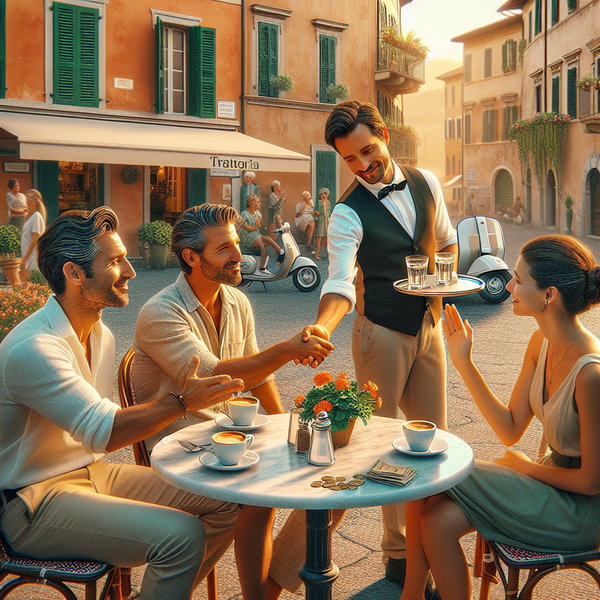
Physical greetings also follow an etiquette hierarchy. Among friends and family, a double cheek kiss — first on the left, then on the right — is the norm, though not between men in some northern areas where a handshake remains standard. In professional or unfamiliar settings, avoid initiating a kiss; instead, wait for the other person to lean in. Italian etiquette dictates that kisses are light — no audible smack — and should never involve full contact. A firm but not crushing handshake (lasting only two to three seconds) communicates confidence and warmth.
Something visitors often miss: Italians make strong eye contact during greetings. averting your gaze may seem shy or untrustworthy. If handed a business card, read it before pocketing it — a subtle display of respect common in Italian professional circles.
Hand Gestures in Italy: Expressive, Essential, and Occasionally Dangerous
Italy’s gestures are as much a part of daily life as espresso. They add rhythm to speech, underscore emotion, and often replace words entirely. Watch someone in a Roman café and you’ll see how quickly a conversation becomes theater. Yet misinterpreting a gesture can lead to accidental offense, so understanding their meaning is vital.
The famous closed fingers gesture — known as ma che vuoi? — with fingertips pinched together and hand moving upward, roughly means “What do you want?” It signals disbelief or frustration and should be used lightly or in comedic contexts only. Pointing directly at someone can appear confrontational; instead, Italians often gesture with an open hand when indicating a person or object. Rubbing the thumb against the fingertips (the international “money” sign) means someone is greedy or everything is expensive. You’ll see it often when locals talk about high tourist prices in Venice.
When in doubt, mirror gently. Italians tend to appreciate foreigners who make a modest effort to understand nonverbal cues but may find overuse theatrical. In Naples, locals gesture more energetically and closer to their body, while in Lombardy movements are restrained. Observing before imitating is the golden rule. And whatever you do, never flick your fingers from under your chin — it’s one of the rudest expressions in the country, meaning “I don’t care.”
Everyday Politeness: Saying Please, Thank You, and Handling Interruptions
Politeness in Italy relies less on strict formalities and more on tone and timing. You’ll rarely hear Italians say “please” (per favore) to friends; instead, softening your tone or adding a gentle “ti dispiace?” (do you mind?) sounds more natural. When interacting with shopkeepers or waiters, a casual “grazie” (thank you) and a smile go a long way. Failing to acknowledge small acts of service — like a cashier handing change — can seem dismissive. Likewise, using “buongiorno” when entering a store and “arrivederci” when leaving remains customary even in big cities like Milan.
Interruptions happen frequently in conversation — not out of rudeness but enthusiasm. Italian conversational etiquette allows overlaps as expressions of engagement, not dominance. This can surprise visitors accustomed to strict turn-taking. The best approach: keep talking, smile, and let the rhythm carry. It’s a lively verbal dance rather than a debate. In more formal exchanges, such as with government staff or at a hotel reception, waiting your turn and keeping your tone calm shows respect. Italians often judge character by how you react when things don’t go perfectly.
Restaurant and Café Etiquette: How Tipping Works in Italy
One of the biggest cultural surprises for travelers is that tipping in Italy is not obligatory. Service charges, known as coperto, are usually included in the bill, especially at sit-down restaurants. This surcharge, often between €1–3 per person, covers tableware and bread rather than tips for the staff. In major tourist cities like Florence, you might also see servizio incluso (service included); if that’s present, no additional gratuity is expected.
For excellent service or in smaller trattorias where the coperto is absent, rounding up the bill is customary. Leave coins to reach the nearest euro or add 5% at most. At a casual bar, Italians rarely tip when ordering espresso at the counter — maybe a few cents in the saucer if you linger to chat. However, at table service cafés where a waiter brings drinks, leaving a euro or two signals appreciation. In luxury settings or when a sommelier offers personalized advice, tipping €5–10 is acceptable but optional. What locals never do is hand over large bills for tips; it suggests showing off rather than gratitude.
For taxi rides, rounding up to the nearest euro is polite but not expected. Hairdressers might receive the same small gesture if you’re pleased. Importantly, tips are handed directly to the person, not left on the table as in the U.S. The entire tipping culture reflects Italy’s deeper value: excellent service is part of pride in one’s work, not something done only for extra money.
Body Language, Personal Space, and Eye Contact in Italian Culture
Italians are famously tactile and expressive, but this doesn’t mean everyone enjoys close contact from strangers. Personal space varies regionally: in southern regions such as Campania or Sicily, people stand closer during conversation, while in the north — especially Trentino or Friuli — maintaining a bit of distance feels more natural. When greeting, avoid hugging unless a relationship already exists; Italians reserve embraces for deep affection, not casual friendliness.
During conversation, gentle touches on the arm or shoulder are common among friends, though still restrained in formal situations. Eye contact is crucial. Sustained gaze indicates respect and sincerity, while darting eyes may appear evasive. Yet it should never drift into a stare; like much Italian etiquette, the key lies in balanced warmth. Observing couples, shopkeepers, or even drivers chatting at a traffic light reveals that nonverbal connection is as valued as words themselves. When entering a room or starting a conversation, the Italian custom is to acknowledge everyone present — even with a simple buongiorno a tutti — showing inclusion and attentiveness.
Social Dining Etiquette: From Toasting to Paying the Bill
Sharing a meal in Italy is as much about social harmony as it is about food. When Italians toast — usually with wine, never water — they maintain eye contact and say cin cin or sometimes salute. Missing the eye contact part is believed to bring bad luck, a superstition widely respected even among the young. If you’re the guest, wait for the host to raise their glass first. Italians prefer slower meals with conversation woven between courses, so checking your phone or rushing can feel disrespectful.
In most restaurants, everyone orders both food and drinks before beginning to eat. Serving oneself before others have been served is poor manners. When the bill arrives, Italians often use the phrase “Facciamo alla romana” — splitting equally — though in many regions the inviter insists on paying. Italians tend to settle bills at the table rather than at a cashier’s counter, unless in simple pizzerias. Always confirm whether the total includes bread or service to avoid confusion; asking, “Il servizio è incluso?” is direct yet polite.
Churches, Markets, and Public Etiquette: Respectful Conduct in Shared Spaces
Visiting churches in Rome or Florence requires a specific decorum even for nonreligious travelers. Shoulders and knees must be covered, and entering while chewing gum or speaking loudly is frowned upon. In active churches, avoid walking in front of people praying or taking photos during Mass. In open-air markets, vendors appreciate friendliness, but handling produce without permission is a breach of etiquette. Instead, point to what you’d like and let the vendor select it — they’ll often choose the ripest piece proudly.
On public transport, loud phone conversations are increasingly tolerated but still considered intrusive. Italians value personal presentation: attire might be casual, but cleanliness and style signal self-respect. You’ll notice even retirees in Bologna wearing pressed shirts for a morning espresso. Greeting bus drivers or shop cashiers with a brief “grazie” maintains that signature social civility that keeps Italy running smoothly despite its chaotic rhythm.
Blending In Gracefully: Small Habits That Earn Local Respect
Ultimately, Italian cultural etiquette isn’t a rigid list of dos and don’ts — it’s an instinct for warmth and timing. Being punctual by Italian standards usually means arriving within ten minutes of the appointed time, though formal dinners might start later. Modesty in tone and dress builds credibility more than attempting to appear overly sophisticated. Italians quickly spot authenticity: smiling, listening, and showing curiosity earn more goodwill than perfect grammar.
If you learn one principle to navigate social life here, it’s that relationships always come before rules. Greet sincerely, move with awareness, tip sparingly but thoughtfully, and engage with genuine attention. Do that, and even your local barista will start greeting you with the friendly, musical “Ciao bello” that means you’ve crossed from tourist to honorary neighbor.