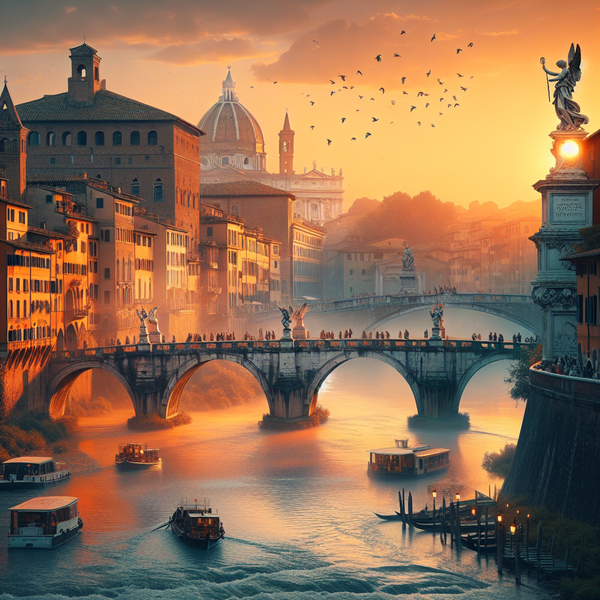
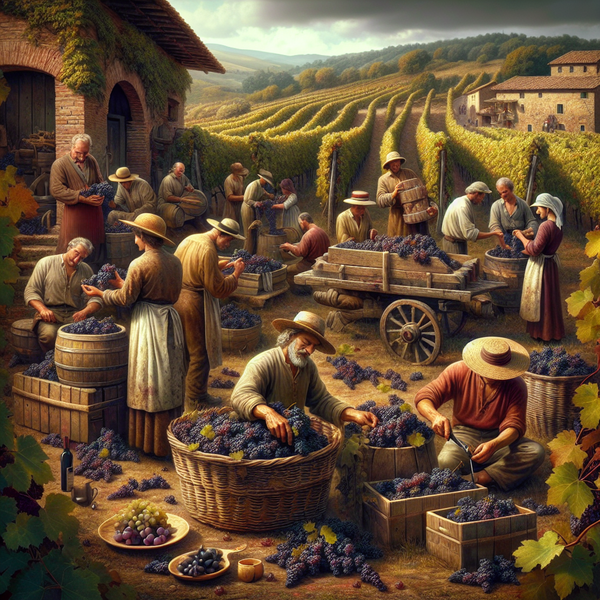
While Italy’s coastlines and art-packed cities grab international headlines, the country’s river valleys tell a quieter, more revealing story. These fertile corridors of water, surrounded by hillsides threaded with vineyards and medieval villages, have shaped Italy’s culture and cuisine as much as its cathedrals have. For travelers who want to trace living landscapes rather than museum walls, Italy’s river valleys offer immersion in heritage, gastronomy, and nature—all within easy reach by car or train.
Go to the section
ToggleThe Po Valley: Cycling Through Italy’s Agricultural Heart
The Po River Valley stretches across northern Italy from Piedmont to the Adriatic Sea, feeding one of Europe’s largest agricultural plains. It’s not the dramatic postcard Italy of cliffs and domes, but it’s the place where Parmigiano Reggiano is aged, balsamic vinegar slowly matures in attic barrels, and cycling along canals feels effortless. Starting near Turin, rent a bicycle in towns like Casale Monferrato or Piacenza, where flat terrain and well-marked bike trails let you glide past fields of maize and poplar groves. The 679-kilometer Po Cycle Path (Pista Ciclabile del Po) is being gradually completed, with some of the best-maintained sections between Ferrara and the Delta Po Park.
In and around Ferrara, where the Renaissance city wall remains fully intact, you can ride beside moated castles and end your day with a plate of cappellacci di zucca—pumpkin-filled pasta that tastes of the valley’s mellow autumns. Budget travelers can take regional trains connecting Parma, Cremona, and Mantua, each offering distinct variations on river cuisine: butter-rich risottos near Cremona, or Mantua’s sweet-spiced tortelli di zucca served beneath chandeliers at Osteria delle Chiavi. The Po’s midsummer humidity can be heavy, so spring and early fall are ideal for multi-day rides and photography when fog cloaks the water in soft silver light.
The Tiber Valley: Tracing Ancient Routes from Umbria to Rome
The Tiber River Valley carries stories older than Rome itself, winding from the Apennines through Umbria’s olive-clad hills and finally into the capital. North of Perugia, in Città di Castello, the Tiber begins as a mountain stream you can wade across in hiking boots. Travelers can follow its descent along scenic drives that pass through tiny towns like Umbertide and Deruta. Deruta’s ceramic workshops have been glazing tiles since the 14th century, and several still allow visitors to watch artisans paint geometric majolica patterns.
Between Todi and Orvieto, the Tiber carves through volcanic tufa cliffs, creating superb viewpoints for sunset photographs—especially near Pontecuti where a centuries-old bridge frames the valley below. History lovers can stop at the archaeological area of Carsulae (just off the SS3 route), an evocative Roman town half-buried under wild thyme. Continue south toward Orte, where the old quarter seems suspended above the river like a stone ship. For an eco-friendly twist, consider kayaking a short route operated by local outfitters in the Tiber Regional Park, an easy half-day trip that ends with homemade pecorino tastings at nearby farms.
The Arno Valley: Tuscany’s Artistic Flow Between Florence and Pisa
The Arno River Valley embodies the classic Tuscany many dream of—yet it holds more than Florence’s Renaissance landmarks. The valley begins high in the Casentino Forests National Park near Mount Falterona, where monks still occupy the 11th-century Camaldoli Hermitage. Hikers can stay at simple guesthouses amid fir-scented silence before descending toward Arezzo, known for Piero della Francesca’s Legend of the True Cross frescoes at San Francesco Church. From there, regional trains follow the Arno to Florence, passing vineyards producing Chianti Colli Aretini wines sold in small enotecas along the way.
Florence’s bridges, most famously Ponte Vecchio, are only the midpoint of the valley—westward, the Arno meanders through lesser-known towns such as Empoli and San Miniato. The latter is acclaimed for its white truffles, especially in autumn, and a visit to the Truffle Market in Piazza del Duomo can easily fit a day trip. Continue past Pontedera (where Vespa scooters are manufactured) to Pisa, where the river widens near the coast and local bars on Via San Martino offer riverside aperitivi. Traveling by regional train or cycling along small SP roads keeps you close to the Arno’s evolving scenery—vineyards giving way to wetlands and finally the Tyrrhenian Sea.
The Adige Valley: Alpine Culture and Wine South of Bolzano
The Adige River Valley in Trentino-Alto Adige is a mosaic of Alpine and Mediterranean influences. Just north of Verona, the river winds beneath castles and terraced vineyards growing Lagrein and Gewürztraminer grapes. In Bolzano, bilingual signs greet visitors in both Italian and German; cafés sell strudel alongside macchiato, reflecting the region’s Austro-Hungarian past. Rail travelers can board the regional train between Trento and Merano, one of Italy’s most scenic lines, which hugs the river and stops near orchards heavy with apples in late summer.
Just south of Trento, the Adige cuts through the rocky gorge known as Chiusa di Verona, where motorway travelers often miss the quiet lanes that parallel the river through Adige, Ceraino, and Volargne villages. Mountain bikers can connect here to the Adige Cycling Route, which eventually links to Austria’s Inn Valley paths. Winery visits are straightforward: book tastings at family-run estates around Caldaro or Termeno, both reachable by public bus. Pair a glass of chilled Müller-Thurgau with local speck for an authentic valley lunch under vine-covered pergolas. Winter travelers can mix skiing in nearby Val di Fassa with mellow wine cellar evenings in Trento’s old quarter.
The Nera River Valley: Umbrian Waterfalls and Quiet Hill Towns
Set in southern Umbria, far from the crowds, the Nera River Valley offers a mix of nature and medieval architecture. The star attraction is the Marmore Falls (Cascata delle Marmore), one of Europe’s tallest man-made waterfalls, engineered by the ancient Romans to regulate the Nera’s flow. Today, water releases are scheduled, so check times posted at the entrance to see the full torrent. From Terni, local buses reach the lower viewpoint within 20 minutes, and a trail system of over six paths connects terraces above the falls.
The valley narrows as it passes through Arrone and Ferentillo, charming villages wedged into limestone cliffs. Both are ideal overnight stops if you’re kayaking or canyoning with local guides along crystal-green sections of the Nera. Ferentillo’s tiny Mummy Museum, housed in a crypt with naturally preserved bodies, adds an eccentric touch to the trip. Hikers can link the Nera Valley Trail (Sentiero della Valnerina) from Spoleto, which offers quiet trekking amid chestnut woods and panoramic abbeys like San Pietro in Valle. The valley’s trattorie specialize in river trout grilled with sage and washed down with Grechetto wine from nearby Narni hills.
The Tanaro and Bormida Valleys: Piedmont’s Hidden Food Routes
In Piedmont’s southern folds, the twin Tanaro and Bormida River Valleys underpin the Langhe’s culinary fame but see far fewer tourists. Starting from Alba, the Tanaro cuts west toward Fossano, bordered by rolling rows of Nebbiolo vines that produce Barolo and Barbaresco. This is truffle country, and local guides offer autumn foraging walks followed by tastings in stone cellars. Driving north toward Ceva, the river traces old routes once used for salt trade to Liguria. Today that road, the SP661, offers one of the best scenic connections between Piedmont and the Riviera.
Nearby, the Bormida Valley’s slower rhythm suits travelers looking for thermal spas and rural stays. Acqui Terme, with its 74°C hot spring known as La Bollente, has been a spa destination since Roman times. Local cheese producers welcome visitors for tastings of robiola di Roccaverano, a soft goat cheese registered DOP. Hike the Alta Via dei Monti Liguri trail sections for sweeping valley views, ending your day in a farmhouse serving tajarin pasta—the rich egg noodles that define Piedmontese comfort food. Pairing this journey with the Po Valley offers an easy week-long itinerary focused entirely on rivers, flavors, and agriturismo stays.
The Sarca and Chiese Valleys: Lakeside Adventures North of Garda
North of Lake Garda, two crystalline rivers—the Sarca and Chiese—carve parallel valleys through the Trentino mountains. The Sarca River feeds directly into Lake Garda at Torbole, a magnet for climbers and windsurfers. Upstream near Arco, limestone cliffs provide over a thousand bolted climbing routes, and local guesthouses cater specifically to climbers with gear storage and hearty alpine breakfasts. Take a morning stroll along the riverside path to Varone Falls Cave Park, where a misty cascade plunges inside a cave illuminated for visitors.
The Chiese Valley, less developed, runs west of Garda through Storo and Condino. Its green meadows are dotted with cows whose milk produces Silter, an aged cheese from nearby Val Camonica. The cross-border cycle route connecting the Chiese Valley to Lake Idro offers family-friendly riding amid maize fields and alpine chalets. Kayakers can explore Lake Idro’s inlets in calm weather before sampling polenta di Storo, made with local red cornmeal admired by Italian chefs for its color and depth of flavor. Even a weekend here delivers the satisfying rhythm of rural mountain life intertwined with clear running water.
From the Alpine Adige to the tranquil Nera, Italy’s river valleys remind travelers that the country’s essence flows not only through piazzas but through living landscapes shaped by centuries of water, work, and tradition. Whether you travel by bicycle, kayak, or rental car, these valleys connect the Italy of postcards to the Italy of daily life—both equally captivating when you take time to follow the rivers’ slow, enduring course.