It’s easy to think of Italy in terms of food, art, and ancient architecture—but tucked into hillside hamlets and quiet valleys, the country also weaves another enduring story: threads of color and craft still handled by local artisans. From Sardinia’s strong-armed rug makers to Umbrian linen weavers whose looms haven’t stopped since the Middle Ages, Italy’s textile villages feel like living museums where the hum of a shuttle replaces the buzz of modern machinery. If you want to see authentic weaving traditions up close, the best way is to trade city crowds for narrow cobbled streets, where artistry hangs from wooden frames in open-air workshops.
Go to the section
ToggleTraditional Wool Weaving in Sardinian Villages
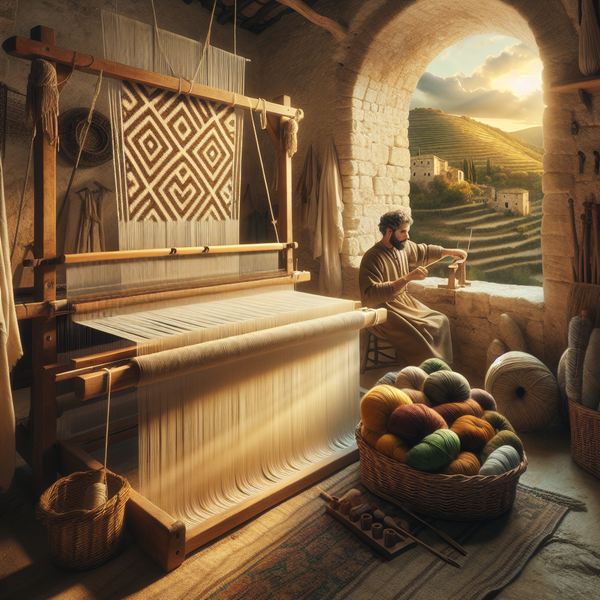
In Sardinia’s central Barbagia region, especially around the village of Nule and nearby Aggius in Gallura, weaving remains more than a pastime—it’s an identity. You’ll hear the rhythmic clatter of the telaio (loom) echoing from traditional stone houses. Local artisans, mainly women, still produce richly textured tappeti sardi, the handwoven rugs that once marked every important household moment from birth to marriage. Patterns tend to use geometric diamond or tree-of-life motifs, dyed with natural pigments made from walnut husks, saffron, or broom flowers. Visitors can stop by the Museo del Tappeto di Nule to see antique looms in action or buy directly from cooperatives like Cooperativa Tessile di Aggius.
If you visit in late summer, the village of Aggius hosts weaving demonstrations as part of its folklore festival. The artisans will often invite you to try beating the threads yourself, though don’t expect to master it quickly—the tension and precision take years. To reach Nule, take a bus from Nuoro or drive inland from Olbia along SS389; many visitors pair the stop with wine-tasting in Tempio Pausania, another local highlight.
Umbrian Linen and Jacquard Mastery in Perugia and Montefalco
Umbria’s rolling hills hide another stronghold of textile artistry. Between Perugia, Bevagna, and Montefalco, traditional linen weaving dates back to the 13th century, when the Benedictine monasteries introduced the craft. In Perugia, visit the Laboratorio Giuditta Brozzetti, housed in a former Franciscan church just inside Porta Sant’Angelo. The Brozzetti family still uses centuries-old jacquard looms powered by foot pedals. You can watch artisans create intricate patterns in linen, cotton, and silk threads, with designs often inspired by frescoes from the Umbrian School of painting. Every piece carries a regionally certified mark confirming its handwoven origin.
A 40-minute drive south brings you to Bevagna, where La Tela di Penelope continues the same tradition on wooden looms that date back to the late medieval period. Stop by their workshop near Piazza Silvestri to see cloth dyed with indigo and madder root, using recipes that avoid synthetic chemicals completely. In Montefalco, better known for Sagrantino wine, the museo del tessile inside the old convent of San Francesco showcases antique spinning wheels and a small teaching atelier where travelers can book short weaving courses in English.
Silk and Damask Weaving in Como and the Brianza Area
Northern Italy’s Como Lake basin might be internationally recognized for its villas and sunsets, but its reputation as Europe’s silk capital still holds. The Setificio di Como, established as a training institute for local artisans, offers guided tours where you can trace silk’s journey from cocoon to cloth. In nearby Cernobbio and Erba, small family firms still produce limited runs of damask, velvet, and brocade patterns for haute couture brands. While most modern production is mechanized, it’s possible to visit artisanal workshops such as Tessitura Serica di Sonvico on appointment for a demonstration of hand-drawn warp painting and jacquard setup.
Como’s Museo Didattico della Seta displays archive textiles that reflect centuries of design evolution, from Art Deco scarves to ecclesiastical robes. The museum shop sells smaller items—scarves, ties, and wall hangings—certified as handmade within the province. Getting there is easy: take the Trenord regional train from Milan (about 50 minutes) to Como San Giovanni and walk uphill 10 minutes toward Via Castelnuovo for the entrance.
Tuscan Handloom Revival in Pistoia and Casentino
In northern Tuscany, weaving traditions cluster around Pistoia and the Casentino valley. Pistoia’s Antico Setificio Fiorentino and smaller studios in Quarrata specialize in silk and cotton reinterpretations of Renaissance designs, some originally made for the Medici family. Meanwhile, the mountainous Casentino area, accessible via train from Florence to Poppi, is famous for its coarse, dense wool known as panno casentino. Traditionally bright orange or green, this fabric once lined the cloaks of Tuscan shepherds for warmth and water resistance. Today, workshops like Tessitura Tacs in Stia use original 19th-century looms to create both classic coats and modern accessories.
The Museo dell’Arte della Lana in Stia offers one of the country’s most engaging textile experiences. Visitors can tour the former Lanificio di Stia complex, exploring the mechanical looms restored to working order. The museum also runs brief workshops on yarn dyeing using local natural pigments—ideal for travelers seeking an interactive art experience rooted in true local skill rather than mass-market souvenirs.
Abruzzo and Molise: The Quiet Heart of Hand-Spun Wool
Few regions have preserved hand-spinning and weaving as tenaciously as Abruzzo and Molise. In the mountain village of Pescocostanzo, a cluster of artisans continue the tradition of tessitura abruzzese—a dense, plain-weave wool once used in shepherds’ cloaks. Drop by the La Fratelli Moretti boutique, where the owners weave right in front of the storefront window using wooden foot looms passed down through generations. Further south, in the town of Scanno, look for looms set up in private homes during the annual Costume Parade, when women wear intricately woven aprons and shawls as part of folk attire.
Travelers often miss the Museo delle Arti e Tradizioni Popolari in L’Aquila, which devotes several rooms to regional wool processing and tools dating from the 17th century. It’s worth combining with a visit to Campo di Giove, accessible via the Transiberiana d’Italia scenic train route from Sulmona. The slow, panoramic trip mirrors the pace of the craft itself—unhurried, deliberate, and full of texture.
Venetian Lace and Lagoon Threads in Burano
Although lace technically differs from weaving, no itinerary exploring Italy’s textiles is complete without Burano’s needlework. A 45-minute vaporetto ride from Venice, the island’s brightly painted houses hide quiet studios where lacemakers still follow centuries-old stitching charts. Inside the Museo del Merletto, you can see needle-made lace evolving into modern designs, and some artisans—often elderly women—allow visitors to watch as they craft entire motifs by hand. The Scuola Merletti next door runs short two-hour classes introducing basic techniques for anyone interested in handling fine linen threads.
Combine your visit with a meal at Trattoria al Gatto Nero and take time to browse the local lace cooperatives before catching a late return boat to Venice. The fact that production remains entirely manual, with fine stitches counted thread by thread, links Burano’s lace heritage to the same ideals of patience and artistry found in Italy’s most traditional weaving communities.
How to Ethically Shop and Support Italian Weaving Communities
Supporting authentic weaving traditions in Italy means buying directly from workshops, cooperatives, or certified museum stores rather than online middlemen. Look for the tags Handmade in Italy and Marchio Artigiano, both signaling verified local artisan production. Always ask if dyes are natural; many small producers proudly explain their recipes using plant or mineral bases. For shipping, artisans usually partner with national courier services (Poste Italiane or BRT), so even bulky throws or rugs arrive securely back home.
When in doubt, ask whether the workshop participates in the Botteghe Artigiane regional association—many do, and your purchase directly sustains a family tradition. Even a single table runner can carry a fragment of Italy’s intangible heritage, linking you to a living history passed from one set of hands to another.
Practical Travel Tips for Weaving Trail Explorers
Plot your itinerary around proximity. Umbria, Tuscany, and Abruzzo link efficiently by regional train lines, while Sardinia and Molise require car travel. Budget travelers should plan for workshop appointments at least a week ahead; many artisans operate by request rather than set hours. Summer and early autumn bring more local festivals where weaving is showcased publicly, especially in mountain areas where tourism remains small-scale yet highly personal.
Bring small gifts—local sweets, a photograph, or even printed postcards—when visiting family-run studios. These gestures often lead to longer conversations and the chance to learn insights rarely mentioned in guidebooks. And allow time. Weaving in Italy is slow for a reason: every piece carries generations of rhythm, and every visit becomes a quiet, textured exchange rather than a simple transaction.