From the moment you step onto the island, Mount Etna dominates the Sicilian skyline — smoking gently above vineyards, stone towns, and lemon groves. Whether you’re approaching from Catania’s airport runway or driving along the coastal road near Taormina, the volcano’s presence feels alive and magnetic. Finding the best viewpoints of Mount Etna isn’t about chasing a single perfect photo; it’s about discovering how the volcano shapes every line of Sicily’s eastern horizon.
Go to the section
TogglePanoramic Views of Mount Etna from Taormina’s Ancient Theatre
The most iconic and accessible viewpoint of Mount Etna is from the Teatro Antico di Taormina. This third-century BC Greek amphitheatre faces the mountain directly, framing Etna behind its ancient arches. Visit early, around 8:30 AM when the gates open, to catch the morning light hitting the snow-tipped summit before the coastal haze builds. From the uppermost tiers, you can look past the curve of Giardini Naxos Bay, with Etna centered perfectly beyond. To enhance the experience, bring binoculars—on clear winter mornings, you can see steam rising from the central craters.
Just outside the theatre, the public terrace at Piazza IX Aprile offers a free alternative. Locals gather here for evening aperitivo, glass in hand, as the volcano fades into deep pinks at sunset. For photographers, the golden hour from this terrace—roughly half an hour before sunset in summer—consistently provides the best balanced lighting between Etna and the sea.
Mountain Villages on the Northern Slopes: Linguaglossa, Castiglione di Sicilia, and Randazzo
While Taormina delivers the postcard view, the northern villages deliver intimacy. The town of Linguaglossa sits around 550 meters above sea level and marks the entry to the Etna Nord roads. From the scenic point near Chiesa Madre di Sant’Egidio, you can see the black lava flows frozen mid-descent. In spring, almond blossoms surround them—a reminder that volcanic soil feeds some of Sicily’s richest vineyards.
A 20-minute drive inland, Castiglione di Sicilia gives another dimension. Walk to the lookout behind the ruined Castello di Lauria; from there, the view captures Etna’s full cone framed by medieval rooftops. Clear mornings after rain are ideal—rain cleans the air and reveals sharp contours of the summit. Even the locals pause on their errands to admire it.
Further west, Randazzo impresses with scale. Its dark basalt buildings seem carved from the volcano itself. The best panoramic angle is from the road SP116 toward Floresta; pull into one of the designated outlook bays around kilometer marker 11. Here, the entire northern flank spreads across the horizon, and you can trace individual lava routes from past eruptions.
Southern Access Through Rifugio Sapienza and the Silvestri Craters
The south side of Mount Etna, reached via the SP92 road from Nicolosi, offers the closest and most dramatic views for visitors who don’t plan to climb. The road climbs to Rifugio Sapienza at about 1,900 meters, the main base for guided summit excursions and the cable car station. Park near the lower lot (expect a €3–4 fee) and walk uphill toward the Crateri Silvestri. These extinct cones provide a surreal vantage: the lower crater rim gives you a near-360° panorama, stretching to the Ionian coast and, on clear days, even to Catania’s city port 30 kilometers away.
For the best light, arrive mid-afternoon when the sun illuminates the western slopes, emphasizing Etna’s textures. The air temperature here is roughly 8–10 degrees Celsius cooler than Catania, so bring a jacket even in summer. In winter, snow often blankets the paths—local rental shops in Nicolosi can provide crampons for short walks if needed.
Coastal Vistas from Cyclops Riviera to Aci Castello
Many travelers overlook that some of the best views of Etna come at sea level. The stretch of coast between Acireale and Aci Castello—known as the Riviera dei Ciclopi—provides a spectacular combination of sea, lava cliffs, and volcano. At the fishermen’s harbor in Aci Trezza, grab a coffee at Bar Eden and sit facing the sea: Etna rises diagonally behind the jagged “faraglioni” rocks, the remnants of ancient lava plugging the coastline.
Locals say the clearest views appear in winter, especially after the Tramontana wind clears coastal humidity. When conditions align, you’ll see smoke plumes reflecting in the ocean at dawn. Walk north along the promenade toward Aci Castello’s Norman fortress; from its ramparts, you can photograph Etna framed by the castle walls—a composition few tourists capture.
Etna Wine Roads: Vantage Points Among Vineyards
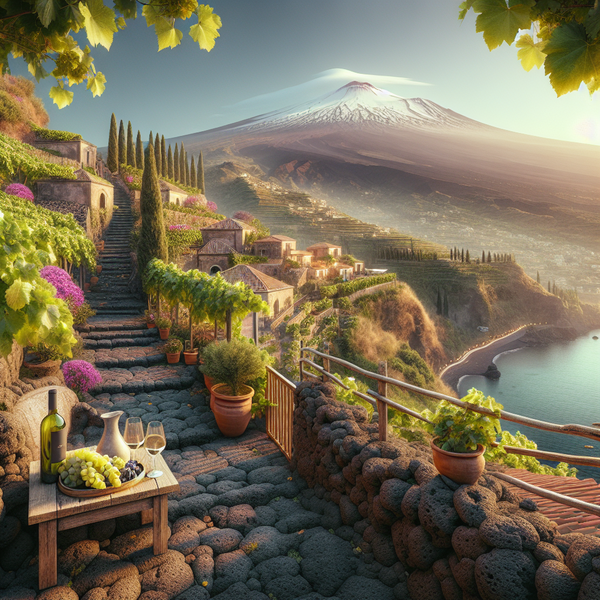
Exploring the vineyards surrounding Etna offers a slower, often more privileged perspective. The official Strada del Vino dell’Etna routes pass through villages like Passopisciaro, Solicchiata, and Milo. Here, the views change with every curve in the road: terraced rows of Nerello Mascalese vines fall away beneath Etna’s smoky plume. Wineries such as Benanti (near Viagrande) and Graci (in Passopisciaro) often allow short walks through their vines—always book ahead—and from those paths, you get a layered panorama of vineyards, black earth, and snowline.
If you want the late-afternoon “soft light” that Sicilian photographers love, travel between 4–6 PM in late spring. The direction of the sun flattens shadows but keeps Etna visible, turning ash-gray slopes gold. Several wineries serve apericena (light dinner with wine) where you can sit outdoors facing the volcano until twilight. These are working landscapes, quiet except for farmers pruning vines—an ideal contrast to the busier tourist viewpoints.
Hiking and Cable Car Viewpoints: From Rifugio Sapienza to Torre del Filosofo
For close-up perspectives of Mount Etna’s crater zone, hire a certified guide and combine the cable car with a 4×4 shuttle to Torre del Filosofo, roughly 2,900 meters high. This is the upper limit accessible without a full summit permit. The organized tours depart from Rifugio Sapienza throughout the day, though weather often restricts afternoon departures due to cloud formation. Bring sunglasses and gloves—even in summer, the wind chill bites. From this plateau, you can see not only the main crater but also the lunar-looking Valle del Bove stretching toward Zafferana Etnea.
Independent hikers preferring solitude can explore the southern rim trails, like Sentiero Schiena dell’Asino. The trailhead lies just above the SP92 road, about five kilometers below Rifugio Sapienza. It’s a gradual 4-kilometer climb (about 90 minutes one way) with sweeping views over the entire Ionian coastline. The best time to hike is early morning when volcanic clouds form later in the day.
Secret Dawn and Dusk Spots Around Zafferana Etnea
If you seek atmosphere over altitude, Zafferana Etnea—a village built partly on the lava of 1991—offers extraordinary dawn views. The terrace near Villa Comunale gardens faces east, making sunrise photography ideal. At first light, Etna appears lavender before shifting to silver as the sun rises over the sea. Locals often begin their day here with espresso from Pasticceria Russo, famous for honey pastries made from bees thriving on volcanic flora.
For sunset, drive five minutes uphill to the crossroads above the village along the SP8 road. On clear evenings, the entire cone glows red as the fading sun hits it from the opposite side. You’ll often have it to yourself—just you, cicadas, and another lucky traveler who knew where to look.
Practical Tips for Photographing Mount Etna’s Best Views
Because Etna creates its own microclimate, a practical viewing plan helps. Aim for post-rain mornings when the air is cleanest. Always carry a light jacket—temperatures at 2,000 meters can drop below 10°C even in June. Public transport to mountain villages is limited, so renting a car at Catania Airport is your best option if you plan to chase views independently. The main roads—SP92, SP59, and SP64—are well maintained, though mountain fog can roll in suddenly.
If your goal includes nighttime photography of glowing lava, check the Osservatorio Etneo webcams before heading up. When the volcano is active, safest observation points remain below 2,000 meters; the car park above Nicolosi often serves as an impromptu viewing site for locals, with headlights off and tripods ready. For less dramatic but wide nocturnal views, the seaside promenade at Acireale provides both safety and reflection shots in the water.
Conclusion: Choosing Your Perfect Etna Viewpoint
Whether you watch from a cafe terrace in Taormina or a vineyard in Passopisciaro, Mount Etna continually reshapes both the geography and identity of eastern Sicily. Each vantage tells a story—the theatre’s ancient frame speaks to centuries of awe, while the lava-strewn paths of Linguaglossa speak of renewal. The best view depends on your rhythm: sunrise seekers should stay near Zafferana or the coast, while those chasing dramatic afternoon contrasts will prefer Rifugio Sapienza or the vineyards of the north. What’s certain is that, wherever you stand, Etna will remind you that Sicily itself is alive underfoot.