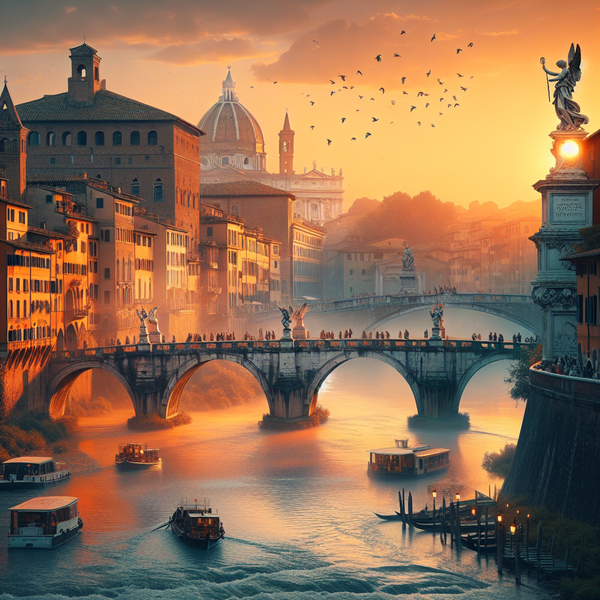
Few towns in Italy condense beauty, history, and serenity as gracefully as Orvieto, perched dramatically atop a cliff of volcanic tufa in southwestern Umbria. The first glimpse of the town from the valley floor is breathtaking — a honey-hued city floating above the countryside. Compact enough to experience fully in a single day, Orvieto rewards unhurried curiosity. This guide lays out how to spend a perfect day here, with local spots and small details that make all the difference.
Go to the section
ToggleStart Your Morning: Arriving in Orvieto and Riding the Funicular
Most visitors reach Orvieto by train from Rome in about 90 minutes. The Orvieto Train Station sits in Orvieto Scalo, the modern-level town below the cliff. Directly opposite the station you’ll find the Funicolare di Orvieto, a remarkably efficient hill-climbing funicular that has been connecting travelers to the old town since 1888. The trip takes about two minutes and saves an uphill hike. At the top, a small electric bus (Line C) often waits outside the funicular station, shuttling passengers toward Piazza Duomo.
If you prefer to wander, walk uphill along Via Postierla for 15–20 minutes, passing medieval brick walls and panoramic viewpoints toward the Umbrian countryside. Stop at the belvedere near Porta Rocca to watch the morning mist lift off the vineyards.
Exploring the Duomo di Orvieto and Its Surroundings
Your first priority should be the Orvieto Cathedral (Duomo di Orvieto), a masterpiece of Italian Gothic architecture. The façade dazzles with mosaic tiles, intricately carved reliefs, and alternating black-and-white stone stripes. Step inside to see frescoes by Luca Signorelli in the Chapel of San Brizio; his depictions of the Last Judgment predate and arguably influence Michelangelo’s Sistine Chapel. Purchase a combined ticket at the Duomo museum, which also grants access to the archaeological museum and the adjoining Palazzo Soliano.
Before leaving the square, grab a quick espresso and flaky cornetto at Bar Montanucci on Corso Cavour, a long-established café known for serving travelers and locals alike since the early 20th century. Sit under the small portico to people-watch as tour groups come and go — Orvieto’s rhythm is calmer than larger Italian towns, even at midday.
Delving Underground: Orvieto Underground Caves and Pozzo di San Patrizio
Hidden beneath Orvieto lies a honeycomb of more than 1,200 caves, carved over millennia into the soft tufa rock. Join a guided tour of Orvieto Underground from Piazza Duomo, which takes roughly one hour and uncovers ancient cisterns, olive presses, and pigeon holes once used to harvest birds for food. The air stays cool year-round, making it a refreshing late-morning activity in summer.
After resurfacing, walk east along Via Postierla to the monumental Pozzo di San Patrizio (St. Patrick’s Well). Designed in the 16th century by Antonio da Sangallo the Younger, this double-helix well allowed donkeys to carry water without crossing paths. Descending its 248 steps feels like stepping into a spiraling architectural riddle — and the climb back up guarantees you’ve earned lunch.
Lunch and Wine: Umbrian Flavors in the Heart of Orvieto
A perfect lunch in Orvieto means sitting down somewhere where the house wine really is made nearby. Try Trattoria del Moro Aronne on Via San Leonardo, a rustic spot beloved by locals. Their umbrichelli al tartufo, a hand-rolled pasta served with black truffle, pairs superbly with a chilled glass of Orvieto Classico, the local white wine produced in the surrounding hills. Expect generous pours and a warm welcome from the small family team running the restaurant.
If you prefer something lighter, walk to La Bottega di Giovanni for artisanal sandwiches made with porchetta from nearby Norcia or pecorino cheese flavored with wild herbs. Grab your meal to go and find a bench along Via della Cava, where stone arches frame natural shade and cool breezes roll through the narrow lane.
Afternoon Discovery: Small Museums and Secret Corners
Orvieto is compact but rich in quiet corners beyond the main cathedral square. After lunch, stroll toward the Orvieto Archaeological Museum inside Palazzo Faina, which displays Etruscan pottery excavated from the nearby Necropolis of Crocifisso del Tufo. Each ceramic piece tells of the city’s ancient wealth long before the Romans arrived. Across the piazza, the Museo dell’Opera del Duomo holds religious art and sculptures originally part of the cathedral decoration.
Continue along Corso Cavour until you reach Torre del Moro, Orvieto’s central clock tower. For a small fee, climb its 47 meters to survey the rooftops and the flat plain beyond. You’ll spot the Duomo’s striped façade glinting in the sun and trace your morning route from above. The climb’s narrow stairs are manageable for most visitors, with intermediate landings for short rests.
Evening Golden Hour: Views and Aperitivo Above Umbria
As the afternoon eases into golden hour, make your way to the panoramic terrace near Albornoz Fortress (Fortezza Albornoz), just a short walk from the top of the funicular. From here, the view stretches over vineyards, olive groves, and cypress-lined country roads. Bring your camera — the sunlight catches the tufa cliffs in honeyed tones you’ll remember long after leaving.
For aperitivo, step into Il Vincaffe on Via Filippeschi, known for pouring Orvieto Classico by the glass alongside small bruschetta topped with crema di fagioli or sun-dried tomato. Alternatively, find a seat at Il Malandrino near Piazza della Repubblica, where locals gather from 6 p.m. onward. The pace is easy, and everyone eventually ends up chatting with someone at the next table — a reminder that Orvieto remains deeply social despite its small size.
Dinner Under the Stars: Traditional Umbrian Dishes
For dinner, consider Trattoria La Palomba on Via Cipriano Menente, a long-standing favorite among serious Umbrian food lovers. Their signature dish, piccione alla leccarda (pigeon in a rich reduction sauce), is distinctly regional and surprisingly tender. The menu also features seasonal porcini mushrooms and strangozzi pasta. Reservations are wise, especially on weekends.
If you’re in the mood for a quieter evening, Osteria da Mamma Angela offers terrace seating with a gentle breeze and a well-chosen wine list heavy on small Umbrian producers. Ask for the Sagrantino di Montefalco if you want to try something with serious structure. Finish with a slice of homemade tozzetti cookies dipped in sweet Vin Santo — a fitting farewell for your day.
Practical Tips: Getting Around and Timing Your Visit
Orvieto is easily explored on foot. Streets are steep in some areas, so comfortable walking shoes are essential. Public restrooms are available near Piazza Duomo and at the funicular station. If you’re driving, park at the large Campo della Fiera parking lot and ride the escalators or elevators into the center — it’s well signposted from the SS71 road.
Arrive in the morning to enjoy the best light and least crowded hours at the Duomo. If possible, avoid major Italian holidays, when tour buses fill the Piazza del Duomo. Orvieto’s calmest days tend to be Tuesdays and Wednesdays, when many day-trippers head elsewhere. Plan your departure so you can catch one of the evening trains back to Rome or Florence, which run until about 8–9 p.m.
Why Orvieto Feels Like Old Italy in Every Sense
Spending a day in Orvieto reminds you how Italy can still feel intimate, even in well-known destinations. The town’s manageable pace, artisan traditions, and architectural unity are untouched by hurry. Every stone alley leads to a view, every café to a conversation. One day is enough to fall in love, but not enough to exhaust the discoveries waiting underfoot and above the cliffs.