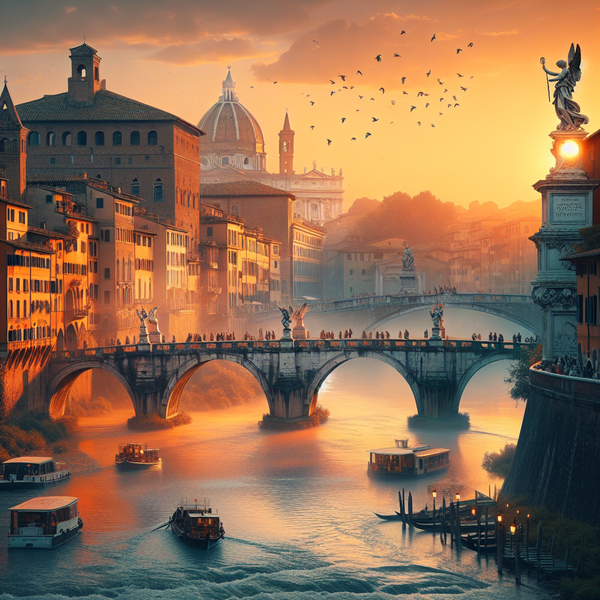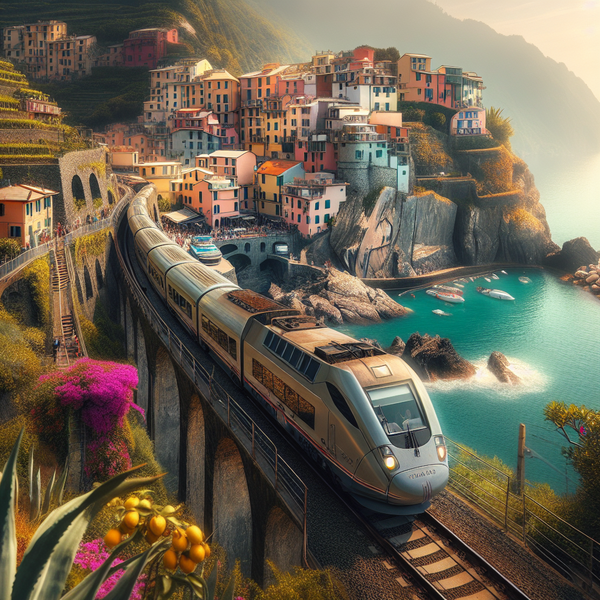
Few countries offer such cinematic rail travel as Italy, where the tracks hug cliffs and curve along turquoise waters. For travelers who love the rhythm of the sea and the hum of a regional train, Italy’s coastal routes offer a front-row seat to landscapes once reserved for fishermen and poets. Beyond mere transport, these are journeys where the view becomes the destination—each stretch revealing a distinct coastline and tempo of Italian life.
Go to the section
ToggleRiding the Cinque Terre Express Along the Ligurian Coast
The Cinque Terre Express might be short, but every kilometer counts. The line connects La Spezia, Levanto, and the five seaside villages—Riomaggiore, Manarola, Corniglia, Vernazza, and Monterosso al Mare. The train tunnels through the cliffs before suddenly opening onto glimpses of pastel houses clinging to rock faces. Most of the ride lasts less than 30 minutes end to end, but frequent stops make it ideal for exploring on foot. A regional ticket—purchased from Trenitalia or at any station kiosk—covers unlimited rides between April and November, meaning you can hop between villages to catch the light as it moves across the coast.
Travelers often find the best views on the right-hand side when heading north. From Manarola, the sea shimmers below vineyards reachable only by ancient mule paths. Avoid midday crowds by starting early—before 9 a.m.—when fishermen still unload their catch at Vernazza’s tiny harbor. Seat reservations aren’t required, but trains can fill quickly during weekends, so stepping aboard just after the morning commuter rush ensures breathing room and photography opportunities.
The Naples to Sorrento Circumvesuviana Line: Everyday Life with a Bay of Naples View
The Circumvesuviana train from Naples to Sorrento is not a luxury ride—but it’s one of the most authentic windows into southern Italian life. This narrow-gauge line departs from Napoli Porta Nolana or Napoli Garibaldi station and curves past Mount Vesuvius before running parallel to the Bay of Naples. Tickets cost only a few euros and can be bought from ticket booths or automatic machines labeled “EAV Campania.” Expect at least an hour’s journey, depending on stops, with the most photogenic coastal segment between Meta and Sorrento.
Unlike the sleek Frecciarossa, this train is often full of chatter—students, vendors, and families laden with shopping bags. Keep your camera ready as the train snakes past the terraces of citrus trees near Sant’Agnello and glimpses Capri’s silhouette in the distance. Arriving at Sorrento station places you within a 10-minute walk from viewpoints over Marina Grande, where fishing boats bob beneath ochre cliffs. For travelers combining archaeology and sea views, the stops at Pompei Scavi and Ercolano Scavi provide direct access to ancient ruins before continuing toward the coast.
The Spectacular Tyrrhenian Route from Rome to Reggio Calabria
Few realize that Italy’s longest uninterrupted coastal rail view lies on the Rome–Reggio Calabria Tyrrhenian route. This line runs along the entire western spine of the country, often meters from the sea. From Roma Termini, trains pass the Etruscan ports of Civitavecchia, the olive-clad hills of Campania, and the glittering Gulf of Policastro before crossing into Calabria. To witness the best panoramas, book a seat on the left-hand side when heading south; you’ll trace the shoreline from Paestum’s ancient temples to the rugged Costa Degli Dei near Tropea.
Frecciabianca and Intercity trains operate daily, with travel times varying from 5 to 9 hours. For comfort, travelers prefer Intercity compartments that allow the window to open slightly—perfect for photographers aiming to capture the changing blues of the Tyrrhenian Sea. Food offerings onboard include local snacks like taralli and small bottles of Calabrian mineral water sold by the train attendants. If time allows, break the journey overnight in Salerno, whose waterfront promenade is a calm prelude to the more dramatic stretches further south.
The Adriatic Riviera Line from Venice to Lecce: A Journey of Contrasts
Running down Italy’s opposite coastline, the Adriatic railway crosses regions that each reinterpret the sea differently. Starting from Venice Santa Lucia, trains glide over the Venetian Lagoon, then pass the beaches of Rimini, the maritime port of Ancona, and the fishing towns of Abruzzo and Molise before reaching Puglia. The most scenic segment sits between Pescara and Trani, where the tracks nearly touch the waterline, separated only by narrow stretches of sand and pine groves. Watch for trabucchi—wooden fishing platforms typical of the Abruzzo coast—that appear like sculptures on stilts above the waves.
Intercity and Frecciabianca trains depart several times a day and can be booked online at trenitalia.com. For the smoothest viewing, choose a window seat facing east during morning departures; sunrise glows over the Adriatic and silhouettes palm-lined esplanades. South of Bari, the journey becomes slower and more rural, winding through limestone villages before ending in Lecce, known as the Florence of the South. Time your arrival before dusk to catch golden light on its Baroque façades—fitting scenery for the end of such a cross-country passage.
The Amalfi Coast via Vietri sul Mare to Salerno Branch
Although the famous Amalfi Coast lacks a direct train line along its cliffs, travelers can still capture dramatic vistas on the Salerno–Vietri sul Mare branch. This short regional ride, only about 10 minutes, descends from Salerno’s station toward a platform that practically peers over the Gulf. From Vietri, local buses or ferries continue to Amalfi and Positano. The train’s short run is particularly beautiful around sunset, when the orange-walled ceramics workshops of Vietri glow against the sea. Trains run roughly twice per hour, operated by Trenitalia’s regional division, and tickets cost just a couple of euros.
Once in Vietri, step outside the station for a five-minute walk downhill to a terrace beside the Church of San Giovanni Battista. From here the tiled dome reflects in the sea below—an easy detour before continuing by road along Italy’s most photographed coast. Staying overnight in Salerno lets you appreciate a side of the Amalfi coastline less trafficked by international tours yet perfectly connected by both rail and ferry.
The Sicilian Coastal Routes: Messina to Palermo and Catania
Sicily offers two of the most underrated coastal train journeys in Italy. The northern line from Messina to Palermo tracks the Tyrrhenian Sea almost continuously for 230 kilometers, weaving past Cefalù’s Norman cathedral and small coves where locals swim beside the rails. Seats on the right-hand side deliver endless sea views; fares are inexpensive, but slower regional trains allow you to open windows during summer breezes. Stops like Santo Stefano di Camastra tempt pottery lovers, while Cefalù invites a half-day pause for seafood couscous at seaside trattorie.
The eastern line from Messina to Catania is shorter—about two hours—but runs dramatically beneath Mount Etna’s looming slopes and along beaches of black volcanic sand. Start in Messina around mid-morning to see fishermen pulling in swordfish boats with traditional crescent-shaped bows. The coastal station at Taormina-Giardini offers access to the island’s most famous viewpoint, reachable in 10 minutes via shuttle bus or taxi. Traveling onward to Catania, you’ll smell orange groves drifting through the window just before the train curves into Catania Centrale, one of Italy’s few stations that faces the sea directly.
Practical Tips for Italy’s Coastal Train Travelers
Coastal trains in Italy are mostly run by Trenitalia and Italo, though smaller networks like EAV and Ferrovia Circumetnea cover regional routes. Most tickets can be bought from vending machines that accept cards or cash, or via official apps. Always validate regional tickets in the small green or blue machines before boarding to avoid fines. Long-distance trains have reserved seating; if flexibility matters, opt for regional services that allow open boarding.
To maximize views, identify which side of the train faces the sea based on your direction of travel. Morning departures on east-facing routes like the Adriatic line accentuate soft light, while late-afternoon rides along the Tyrrhenian side frame golden reflections on the water. Pack small binoculars for spotting coastal towers and switchbacks unreachable by road. Trains are reliable year-round, but late spring and early autumn offer fewer crowds and clear skies, ideal for photographers and slow travelers alike.
Why Italy’s Coastal Railways Remain Timeless
Unlike high-speed corridors that rush between cities, these Italian coastal rail journeys encourage the traveler to linger—to watch olive nets drying beside tracks or fishermen waving from coves unreachable by car. The lines were engineered decades ago, sometimes hewn directly into sea cliffs, and this intimacy with landscape is what modern travelers crave. Rail travel along the coast lets you breathe at the pace of Italy itself: village to village, view to view, connected by salt air and steel tracks. Whether you’re tracing the Riviera, looping around Vesuvius, or circling Sicily, these journeys remind you that in Italy, even the ride itself can be the most vivid memory.