In Italy, thermal waters have always been more than just a wellness trend—they’ve been part of everyday life since Roman times. Across the country, mineral-rich springs bubble up through ancient volcanic rock, creating steaming outdoor pools where locals have bathed for centuries. What surprises many travelers is how many of these hot springs are completely free to visit, often set in wild countryside or hilltop scenery, accessible to anyone willing to venture off the main tourist circuit.
Go to the section
ToggleNatural Hot Springs in Tuscany: Saturnia’s Cascate del Mulino
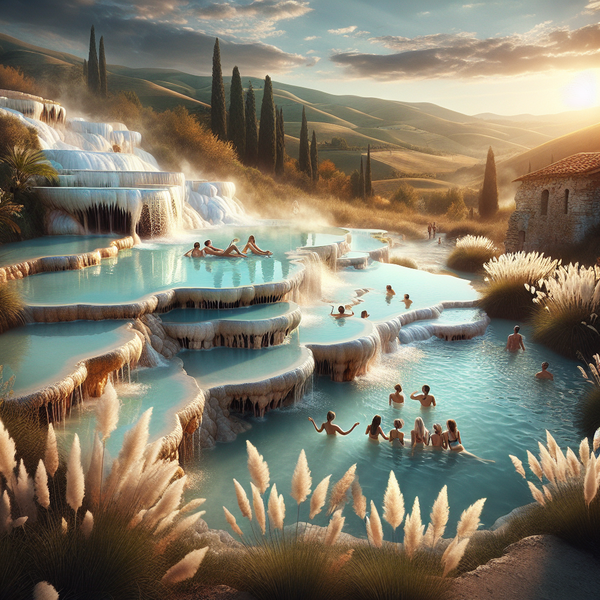
If there’s one place that consistently tops lists of Italy’s wild thermal experiences, it’s Cascate del Mulino near the village of Saturnia in southern Tuscany. This collection of limestone terraces looks almost sculpted by hand, but it’s purely the result of centuries of flowing, mineral-rich water at a steady 37°C (98.6°F). The springs are completely open to the public—with no entry fee or closing hours—and they sit just off the SP10 road, about 3 km from the town center of Saturnia.
The water flows from an ancient Roman thermal source, reputedly therapeutic for the skin and muscles. Arrive early in the morning or around sunset when the light strikes the pools through the mist rising from the falls. There are no formal changing rooms, but a small car park, bar, and toilets just across the road provide basic facilities. In colder months, locals soak year-round; in summer, it becomes a popular overnight stop for camper vans.
Bagni San Filippo: Hidden Gem in Val d’Orcia
A short drive from Monte Amiata and about 20 minutes by car from Bagno Vignoni, Bagni San Filippo offers a more intimate experience than Saturnia. The path to its free pools starts from Via San Filippo, just beyond the village center, and winds through a wood before revealing the famous “White Whale” formation—a dazzling cliff of calcified calcium deposits. The hot water here, around 48°C (118°F) where it emerges, cools slightly by the time it reaches the pools, making it perfect for a long soak even in winter.
Because the pools lie in a wooded ravine, they’re less visible from the road and retain a wilder charm. Bring flip-flops and a towel you don’t mind staining with the naturally white minerals. After your bath, stop at a local trattoria in Bagni San Filippo to try pici pasta—a thick Tuscan noodle handmade in every kitchen nearby. Parking along the roadside is free but limited, so plan to arrive before 10 a.m. on weekends.
Tuscany’s Other Thermal Spots: Petriolo and Sasso Pisano
For travelers who prefer fewer crowds, two other free hot springs in Tuscany are worth seeking out. South of Siena, along the Ombrone river, the Terme di Petriolo lies where medieval stone arches meet steaming turquoise water. The hot water, reaching up to 43°C (109°F), flows beneath a historical bathhouse that dates to the 15th century. You can access the natural pools just a few steps below the official spa facility without paying an entrance fee. The contrast between the hot spring and the cold river makes alternating soaks an invigorating ritual among locals.
Further west, Sasso Pisano near Volterra feels like a geological playground. The area sits on a geothermal field dotted with fumaroles and bubbling mud pots. The free pools, accessible from the village’s Parco Biancane trail, are smaller but atmospheric—perfect after a hike through sulfur-scented hills. In the evening, you can see steam rising all around the valley under a fading orange sunset, a reminder that Tuscany’s underground world is still very active.
Lazio’s Thermal Secret: The Bullicame of Viterbo
North of Rome, the city of Viterbo has long been known as the “City of Popes,” but it’s also home to one of central Italy’s most accessible natural spa areas. Just outside town, on Strada Terme, you’ll find the Bullicame springs, a geothermal site mentioned even by Dante in the Divine Comedy. While part of the area feeds paid spa complexes, a free public zone known as Pozze di San Sisto offers natural pools where locals bathe early in the morning. The water is around 58°C (136°F) at the source and cools to about 40°C (104°F) as it spreads through shallow channels.
Visitors usually bring folding chairs or picnic blankets to relax between soaks. It’s easy to reach by car from Viterbo’s historic center—about a 5-minute drive—and there’s an informal gravel car park by the entrance. Avoid weekends if you want peace and space to stretch out. Early winter mornings, when mist curls over the fields, are especially atmospheric.
Bagni di San Casciano dei Bagni and Lazio’s Border Zone
On Tuscany’s southeastern edge, close to the Lazio and Umbria borders, San Casciano dei Bagni harbors more than 40 thermal springs, many still used by locals today. The free pools, known as Bagni Libero, sit right below the village, down a short cobblestone path from Via della Fontanaccia. The site recently gained archaeological fame after the discovery of well-preserved Etruscan and Roman statues submerged in the mud, now housed in the town’s museum. The water temperature at the free baths hovers around 42°C (108°F), ideal for cool evenings.
For a more isolated experience, drive about 20 minutes toward the border where small wild pools emerge near Acquapendente. These are less marked on maps but are known locally—ask in San Casciano’s main piazza for directions to “le pozze del bagnetto.” Be prepared for dirt-track access and no lighting, so daytime visits are safest.
Campania’s Volcanic Baths: Baia and Ischia’s Hidden Corners
In southern Italy, near Naples, hot springs are tied to volcanic activity around the Phlegraean Fields. At Baia, once an imperial Roman resort now partly submerged underwater, hot mineral water still seeps up along the shoreline. Just outside the archaeological park, local bathers take advantage of spontaneous warm spots on the beach. This is as close as you can get to Rome’s ancient luxury without paying an entry fee. A towel and an adventurous spirit are all you need.
Across the bay on Ischia Island, thermal activity feeds numerous spas, but a few natural, no-cost spots remain. The easiest to reach is Sorgeto, near Panza village, where stone steps descend to a small cove where hot springs mix directly with seawater. Because temperatures fluctuate with the tide, stand close to the rocks for the warmest zones. Even at night, locals gather here with lanterns and wine, taking advantage of the always-warm water. To reach Sorgeto, you can hike from Panza in 15 minutes or take a water taxi from Sant’Angelo harbor.
Free Alpine Hot Springs: Pré-Saint-Didier and Bagni di Bormio
Italy’s northern mountains also hide geothermal surprises. In the Aosta Valley, near the French border, the town of Pré-Saint-Didier is famous for its luxury spa, but the same thermal water that feeds the private complex flows into a small stream below the bridge on Strada delle Terme. Hikers and cyclists often stop here to soak their feet in the naturally warm current, framed by views of Mont Blanc. The water is about 37°C (98°F) at source, though cooler downstream, and access is free. A small gravel lay-by along the road accommodates a few cars.
Further east in Lombardy, near the Swiss border, lie the Bagni Vecchi di Bormio. While the main site is a paid resort, a natural spring flows nearby into the creek along the trail toward Premadio village. Local outdoor enthusiasts call it Fonti di Bagni Liberi. The water temperature averages 39°C (102°F), and you can bathe even when snow covers the valley. Reaching it involves a 15-minute walk from the roadside; bring sturdy shoes and a flashlight if visiting in the early evening.
Practical Tips for Visiting Italy’s Free Hot Springs
These open-air spas are public, free, and mostly unmanaged, so a few precautions ensure a pleasant experience for everyone. Always bring a bag to carry away any waste—no rubbish bins are usually provided. Avoid soaps or shampoos in the pools, as they damage the delicate natural ecosystem. In many sites, the thermal minerals stain swimwear; choose dark colors or older suits. Keep valuables out of sight, and consider visiting during shoulder seasons like early spring or late autumn for fewer crowds and milder temperatures.
If you’re planning a road trip through Tuscany or Lazio, a typical itinerary could include Saturnia, Bagni San Filippo, and Bullicame over three days. Many agriturismi nearby welcome wellness travelers and provide insider directions to lesser-known springs. Combining these free baths with small-town stays—Civitella Marittima, Sovana, or Canino—adds a genuine local rhythm to your journey.
The Last Word: Healing Waters, Rural Rhythms
What makes Italy’s natural hot springs remarkable isn’t just their beauty but their accessibility. They’re democratic spaces where shepherds, artists, and travelers share the same steaming pool, often under the same Tuscan stars. You can move from mountain valleys to volcanic beaches without ever opening your wallet, following the ancient thermal veins that still pulse across the peninsula. Whether you come for health, history, or sheer curiosity, these free springs connect you to a slower, tangible Italy—one that’s been soaking in its own magic for millennia.