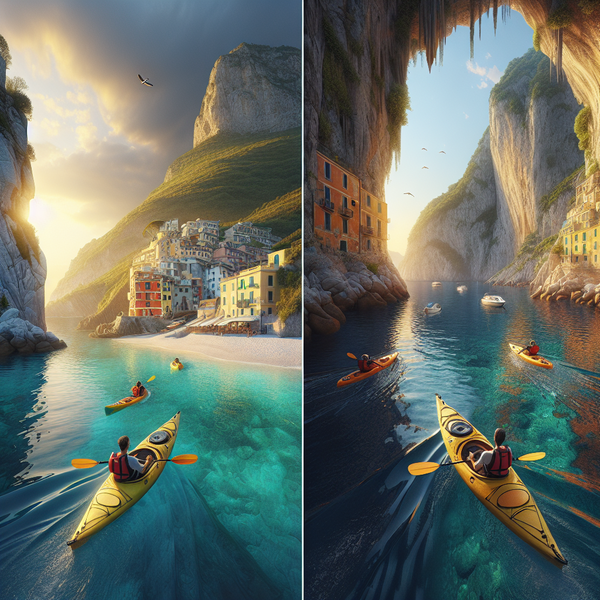
For travelers who want to experience Italy from the waterline, few adventures are as rewarding as sea kayaking. With its 7,600 kilometers of coastline, Italy offers a mosaic of marine landscapes — volcanic coves, limestone cliffs, and emerald lagoons — all accessible by paddle. Whether you’re navigating the calm bays of the Ligurian Riviera or exploring hidden grottos near Sicily, kayaking lets you experience coastal Italy with intimacy no crowded ferry can match. Here’s how to choose the best kayaking routes along Italy’s shores, based on first-hand experience and local insight.
Go to the section
ToggleKayaking Among the Cinque Terre Cliffs in Liguria
Stretching between Monterosso and Riomaggiore, the Cinque Terre Marine Protected Area is one of the most striking stretches of the Italian Riviera to explore by kayak. From April through October, you can launch early from Vernazza harbor before the crowds arrive and paddle south along the cliff line. The sea caves near Corniglia’s foot are easily reached within 20 minutes on a calm day, and the view of pastel terraced villages stacked above you is unforgettable. As tides here can change quickly, it’s wise to check the updated forecast at the Parco Nazionale delle Cinque Terre visitor center before departure.
Most local outfitters — such as CinqueTerreDalMare Kayak in Monterosso — provide half-day guided trips, typically lasting 2.5 hours and covering 6–8 km. A great insider tip is to continue beyond Riomaggiore toward the lesser-known village of Campiglia, where you’ll find a tiny pebble beach accessible only by kayak. Avoid mid-August when boat traffic is heaviest and opt for early mornings for glassy conditions.
Exploring Sardinia’s Emerald Coast by Kayak
The Costa Smeralda in northern Sardinia is famous for its crystalline water, but there are still quiet bays reachable only by paddle. Launching from Cala Capriccioli, near Arzachena, you can head north toward Spiaggia del Principe. The granite formations here shine rose-pink in the afternoon light, and snorkeling stops between beaches are effortless, as visibility often exceeds 25 meters.
Experienced kayakers can continue to the small islands of the La Maddalena Archipelago National Park, a protected marine area of turquoise channels. Permits are mandatory for entering certain zones; these are easily purchased online through the park’s official site or from kiosks in Palau. Wind conditions can shift suddenly with the maestrale (northwest wind), so early departures before 10 AM are recommended. Bring at least two liters of water per person, as few beaches here have facilities.
Sea Kayaking Through Amalfi’s Hidden Coves
South of Naples, the Amalfi Coast offers dramatic paddling routes beneath limestone cliffs dotted with lemon terraces and watchtowers. A favorite half-day loop starts at Amalfi’s harbor and follows the coastline west toward Conca dei Marini. About halfway there, you’ll encounter the Grotta dello Smeraldo (Emerald Grotto), whose vivid green reflections are best viewed from inside your kayak around midday when the sun hits at the right angle. Local guides stationed near Amalfi’s pier rent single and double kayaks with waterproof bags included — an essential item as ocean spray is unavoidable along the rocky stretches.
For a quieter route, continue from Conca dei Marini toward Furore Fjord, a narrow inlet under a towering arched bridge. It’s a 90-minute paddle each way, so plan for four hours round trip with rest stops. Avoid weekends when small motorboats crowd the fjord entrance. Parking in Amalfi can be tight, so consider overnighting in Minori, where you can rent kayaks directly on the beach for sunrise departures.
Find all the best hotel deals here.
Kayaking Past Sea Caves and Tuna Nets in Western Sicily
The western coast of Sicily, between San Vito Lo Capo and the Zingaro Nature Reserve, offers one of the island’s most rewarding stretches for sea kayaking. Here, routes trace limestone cliffs riddled with natural arches, and the transparency of the Tyrrhenian Sea lets you see the shadow of fish beneath your hull. From San Vito’s small port, paddle west for 3 km to reach the Grotta dell’Uzzo, known for prehistoric cave paintings in its interior. Several local guides operate small-group tours that include snorkeling and picnic stops at Cala Tonnarella dell’Uzzo, a cove that cannot be reached by road.
Kayak rentals cost around €25 for half a day and usually come with dry bags and life vests. Because this area falls within a reserve, overnight camping is forbidden; however, B&Bs in San Vito Lo Capo and Scopello are within 10–15 minutes of all main launch sites. The calmest season for paddling is from late May through early July, before the scirocco wind turns stronger and temperatures rise above 30°C.
Discover the best local experiences here.
Paddling the Volcanic Shoreline of the Aeolian Islands
North of Sicily, the Aeolian Islands form a volcanic archipelago ideal for multi-day kayaking expeditions. The route from Lipari to Vulcano Island is about 9 km and takes 2.5 hours in calm seas. Along the way, you’ll pass steaming fumaroles and black sand beaches — clear reminders of the islands’ active geology. Many outfitters on Lipari’s Marina Lunga rent sea kayaks for self-guided travelers, but if you plan to circumnavigate the islands, it’s best to join an organized trip that includes support boats, since distances between islands can exceed 15 kilometers.
In the evenings, the town of Vulcano Porto offers thermal mud baths, perfect for soothing salt-tired muscles. Always carry a marine chart and monitor ferry schedules, as weather can close crossings with little notice. Most paddlers base themselves on Lipari, where you can find kayak-friendly lodgings near the marina, allowing for pre-dawn departures before the tourist ferries start moving.
Kayaking the Calm Lagoons of the Venetian Coastline
For calmer waters, the northern Adriatic coast provides a completely different kayaking experience. Starting from Cavallino-Treporti, you can paddle the shallow canals leading into the Venetian Lagoon, a network of tidal flats and islands where fishermen still use traditional wooden huts called casoni. This route suits beginners, as tides are gentle and boat traffic thins beyond the main vaporetto routes. Bring binoculars — during spring and autumn you can spot flamingos and herons near Lio Piccolo and Sant’Erasmo.
To make the most of this route, plan for half-day paddles timed around the tide: high tide allows easier navigation through marsh channels. Kayak rentals are available right on the beach at Cavallino, typically starting at €20 per half-day. For a longer journey, continue toward Burano’s colorful lagoon village, about 8 km one way — a perfect blend of soft adventure and postcard views.
Adventuring Along the Gargano Peninsula’s Sea Arches
If you’re looking for a mix of dramatic cliffs and turquoise inlets, the Gargano Peninsula in Puglia deserves a place on your itinerary. Base yourself in Vieste, whose whitewashed old town perches above the sea. From the main beach, paddle west toward Baia San Felice (7 km round trip) where you’ll pass sea stacks like the famous Pizzomunno and natural arches carved into the limestone. Mornings are generally glassy until 10:30 AM, after which the wind picks up from the south.
The Gargano National Park authorities maintain mapped kayak routes with safety recommendations on launch conditions. You’ll also pass small sea grottos such as Grotta Campana, accessible only at low tide. Kayak rentals and guided tours are available directly on Vieste’s lungomare, making logistics simple even without a car. If you want a multi-day circuit, Vieste to Pugnochiuso and back (around 18 km) provides camping-friendly beaches like Baia di Portogreco — still rare in southern Italy.
Best Tips for Planning a Coastal Kayak Trip in Italy
Because Italy’s coastal conditions vary widely, it’s important to match your skill level and timing to the region. Here are some essentials:
- Season: Late May to early October offers the best combination of calm seas and reliable services, though July and August bring heavier motorboat traffic.
- Gear: Bring a 1.5–2 liter dry bag, reef-safe sunscreen, and lightweight gloves to prevent blistering. Some beaches have no freshwater rinse points.
- Regulations: In marine protected zones like Cinque Terre or La Maddalena, stay at least 100 meters from marked reef areas and keep plastic waste on board until landing zones.
- Safety: Check the hourly marine forecast on meteoam.it or local harbor boards every morning. Italian coast guard stations (Capitaneria di Porto) handle emergencies at channel 16 VHF or number 1530.
When possible, support local outfitters that use low-impact practices such as beach cleanups and recycled-plastic kayaks. These small businesses are often family-run, offering insider knowledge that enhances your trip’s authenticity and sustainability. Above all, paddling in Italy is about savoring pace — letting each bay, grotto, and fishing village unfold in its rhythm, from sunrise calm to the golden light of late afternoon.