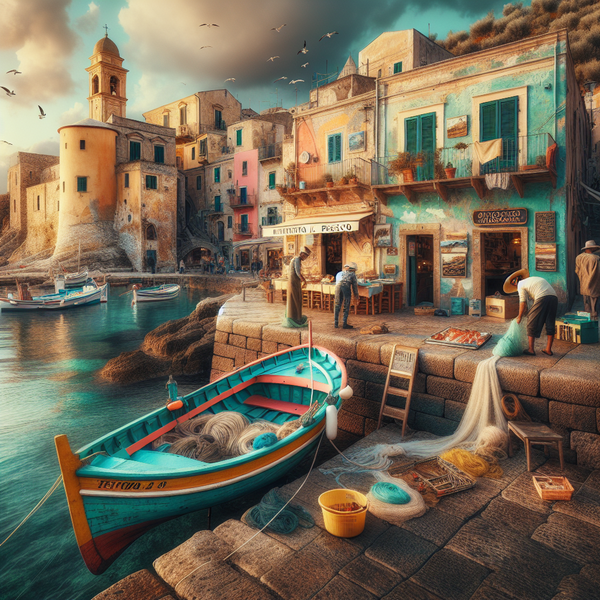
Italy’s coastline stretches for nearly 7,500 kilometers, yet many travelers stick to its well-known resorts or cruise stops. The real magic, however, lies in discovering the small harbors—quiet inlets where fishing boats nod gently against stone quays, and evening life revolves around a single trattoria serving the catch of the day. These charming small harbors along the Italian coast offer both authenticity and accessibility, a reminder that Italy’s maritime soul still thrives beyond the tourist routes.
Go to the section
TogglePorto Ercole in Tuscany’s Argentario: A Noble Harbor of Fishermen and Fortresses
Porto Ercole, set on the Monte Argentario peninsula, is a pocket-sized harbor that once attracted the Spanish navy and still keeps traces of their defense system. The old Spanish Fortress of La Rocca, built in the 16th century, watches over pastel houses stacked neatly around the small port. Early morning is the best time to watch fishermen unloading their haul of red mullet and cuttlefish at the quay. A short climb up Via della Marina rewards you with a quiet terrace at Bar Il Pellicano, where locals sip espresso as sailboats depart toward the nearby Giglio Island.
For the evening, reserve a table at Ristorante Il Gambero Rosso, famed among Tuscan sailors for its spaghetti alle vongole prepared with just-caught clams from nearby lagoons. Drive fifteen minutes inland to the village of Orbetello if you seek a sandy beach escape between harbor strolls.
Camogli on the Ligurian Riviera: Bright Facades and Family Boats
Camogli, less than half an hour by train from Genoa, has all the romance of Portofino with fewer manicured yachts and more fishing nets drying under balconies. The harbor forms a perfectly sheltered curve, lined with maritime houses painted in trompe-l’œil—an old Ligurian tradition designed to make the facades appear grander. Locals still maintain their wooden boats here, painting each one with bright stripes.
If you visit in May, you might witness the Sagra del Pesce, when an enormous frying pan in the harbor square produces thousands of portions of fried anchovies for visitors. The small promenade behind the port leads to the start of the Monte di Portofino trail, offering a two-hour hike with sweeping views toward San Fruttuoso Abbey—a monastery accessible only by foot or boat from this harbor.
Marina Corricella on Procida Island: Naples’ Pastel Fishing Jewel
Reached by ferry in about 40 minutes from Naples, Marina Corricella feels untouched by time. It’s Italy’s oldest surviving fishing harbor, its pastel houses stacked like theater backdrops connected by narrow stairways rather than streets. The harbor has retained its daily rhythm: fishermen mending nets, families sharing coffee on docks, and small eateries serving lunch straight from their boats. One local institution, Ristorante La Lampara, sits under the pink dome of Santa Maria delle Grazie, offering grilled seafood facing the bobbing fishing fleet.
Visitors should note that no cars enter Corricella. You reach it by staircase from the upper village, so pack light. Come in the late afternoon to see the houses blush gold under the setting sun. From February onward, many film crews base here, yet it keeps its peaceful atmosphere thanks to a local network restricting large-scale tourism.
Find all the best hotel deals — click here
Marina di Pisciotta in Cilento: A Hidden Harbor Between Sea and Olive Groves
South of the better-known Amalfi Coast lies Cilento, where the rhythm slows and olive trees reach right to the sea. Marina di Pisciotta, at the foot of its medieval village, remains primarily a working harbor. The fishermen here are known for their traditional tuna nets—still raised manually from wooden piers during summer. On the small curved beach beside the pier, elderly locals play cards under straw umbrellas while children fish with cane poles.
Try Locanda Tre Gufi, a seaside trattoria that serves anchovies marinated in local lemon juice, a Cilento specialty protected under the Slow Food movement. From here, the coastal road climbs toward Palinuro, giving panoramic views of this intimate port and its turquoise bay.
Discover the best local experiences — click here
Porto Venere in Liguria: A Medieval Harbor Framed by Cliffs and Churches
Although technically larger than a fishing cove, Porto Venere retains the scale of a true harbor town. Arriving by ferry from La Spezia—an easy 30-minute ride—you’re greeted by the colorful waterfront called Calata Doria. Fishing boats share space with small excursion vessels, and the scent of focaccia drifts from Pasticceria Lamia near the old stone gate. Behind the harbor, the stairway to San Pietro Church offers perhaps the Ligurian coast’s most photogenic perspective: a Gothic church perched above the waves, with Capraia Island in the background.
To avoid crowds, come for a midweek evening stroll when local families gather along the quay for gelato. The nearby sea grotto of Byron’s Cave, reachable by a five-minute path from the port, recalls the poet who famously swam here during his stays in Italy.
Marina Corta on Lipari: The Aeolian Islands’ Liveliest Little Port
Lipari, the largest of the Aeolian Islands north of Sicily, shelters two small ports—the more functional Marina Lunga for ferries and the picturesque Marina Corta for local life. In the late afternoon, fishermen unload baskets of squid and swordfish right onto the stone steps, often selling directly to restaurants lining the square. Gelateria Tano serves pistachio granita best enjoyed before sunset when church bells from San Giuseppe echo across the bay.
Marina Corta also hosts small wooden gozzi boats that visitors can hire for half-day coastal trips to the pumice bays or Vulcano Island. Early risers can join these trips before ferries begin, ensuring calm seas and fewer crowds. The harbor’s scale keeps human proportions—ten-minute walks cover everything from café to beach.
Santa Maria di Leuca in Puglia: Where Two Seas Meet
At Italy’s southernmost point, Santa Maria di Leuca marks the junction of the Adriatic and Ionian Seas. The small harbor nestles under a lighthouse and the Sanctuary of Santa Maria de Finibus Terrae—literally the “end of the land.” Morning fishermen here head east toward Albania, while others dive in the blue grottos under the cliffs. In the marina, diving schools rent small boats for exploring the caves of Diavolo and Gigante, both within a 15-minute sail.
For lunch, Ristorante Lido Azzurro serves spaghetti topped with sea urchin in season, sourced from divers you might have met an hour earlier. Evenings bring a local custom: strolling the breakwater lined with glowing lamps that mirror the stars above. The harbor’s calm sea allows safe swims even after sunset.
Marina di Maratea in Basilicata: A Hidden Gem of the Tyrrhenian Coast
Between Calabria and Campania lies one of Italy’s most underrated stretches of coast, where the cliffs of Basilicata drop dramatically into clear waters. Marina di Maratea sits quietly amid this theater of rock and sea. The small harbor welcomes only modest yachts and fishing boats, preserving a tranquil rhythm. Its whitewashed church, Santa Maria in Portosalvo, stands right on the pier, blessing sailors as they leave.
A scenic road climbs from the port to the giant Christ the Redeemer statue above Maratea town—a drive of about 15 minutes. From that terrace, the harbor sparkles below like a handful of pearls against green hills. Back at sea level, the local Osteria I Sapori del Porto serves grilled amberjack and Lucanian wines from Matera, a pairing you rarely find outside this hidden region.
Porto Azzurro on Elba Island: A Relaxed Tuscan Harbor with Spanish Heritage
Not all small harbors feel remote. Porto Azzurro, on the island of Elba, balances liveliness with intimacy. Its square, Piazza Matteotti, opens directly onto the marina lined with cafes. The harbor’s structure—built under Spanish rule in the 1600s—remains intact, with Fort San Giacomo still looming at the entrance. Locals anchor small fishing vessels beside visiting yachts, giving the waterfront a democratic charm.
From the dock, small ferries run to secluded coves like Barbarossa or Terranera Beach, reachable in less than 10 minutes. Many travelers stop here on a sailing route between Tuscan islands, yet the village remains community-oriented. In the evening, the sound of guitars often drifts across the quay from informal gatherings of musicians near the gelateria Zero Gradi.
Choosing and Visiting Italy’s Most Charming Small Harbors
When planning a trip to explore these Italian harbors, consider how each region’s rhythm differs:
- Liguria offers easy public transport links, so day trips from Genoa or La Spezia are simple.
- Tuscany and Elba combine harbors with inland wine routes, making them ideal for road trippers.
- Southern regions like Puglia, Basilicata, and Cilento reward slower itineraries—best by rented car or local bus if you time connections carefully.
The best seasons are late spring and early autumn, when harbors welcome local life without the summer congestion. Always check local ferry schedules; small island routes may change due to weather. Staying at small family-run hotels next to the marinas lets you join fishermen for early-morning coffee and watch the tides shift below your balcony—a simple, enduring ritual that never feels staged.
Italy’s small harbors capture what many travelers seek but rarely find: a sense of belonging at the edge of the sea, where life flows at a steady pace, and authenticity moors itself with every returning boat.