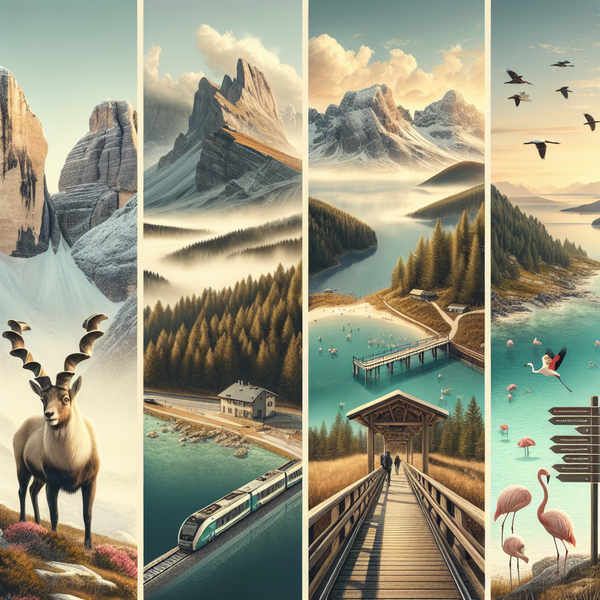
Italy’s national parks stretch from the Alpine peaks of the north to the volcanic ridges of the south, protecting some of Europe’s most diverse ecosystems. Each park feels like a small, self-contained world—whether you’re hiking through Abruzzo’s silent forests filled with deer tracks or diving among Sardinia’s coastal meadows of sea grass. These parks preserve not only the country’s landscapes but also the rhythms of rural life, where shepherds, wolves, and orchids coexist in the same frame.
Go to the section
ToggleGran Paradiso National Park: Alpine Wilderness and Ibex Encounters
Gran Paradiso National Park, straddling the regions of Piedmont and Valle d’Aosta, was Italy’s first national park. Founded to protect the Alpine ibex—a mountain goat species once hunted to near extinction—it now shelters more than 4,000 of them. Hikers can spot these sure-footed animals around the Nivolet Pass, especially early in the morning when the alpine meadows are still frosted over.
The park is best explored from villages like Cogne or Valsavarenche, both reachable by bus from Aosta. Trails begin right at the edge of town, threading through larch forests and up to glaciers such as the Lauson or Gran Serra. For those with stamina, the Rifugio Vittorio Sella, perched at 2,588 meters, offers sweeping views of the Gran Paradiso peak itself. Even in high summer, the snow-capped horizons remind you this was once a royal hunting reserve.
Wildlife photographers often wait along the Savara Valley streams for red foxes or the rare golden eagle to appear. Late June through early September offers the widest trail access, while autumn paints the slopes in shades of copper and scarlet.
Abruzzo, Lazio and Molise National Park: Heartland of the Apennines
Few places in Europe offer as genuine a wilderness experience as the Parco Nazionale d’Abruzzo, Lazio e Molise. Located about two hours east of Rome by bus or car, this park is home to the Marsican brown bear, a subspecies found nowhere else in the world. Villages like Pescasseroli and Civitella Alfedena make ideal bases for guided bear-spotting walks at dawn, organized by local naturalist associations.
The landscape seems designed for drama: dense beech forests, sharp limestone ridges, and high-altitude pastures dotted with gentian flowers. In spring, wild orchids bloom across the meadows, while in winter the same trails transform into silent snowshoe routes. If you want a car-free visit, local park transport connects most villages, a rare convenience in rural Italy.
Despite its relative remoteness, the park has excellent eco-lodges powered by wood pellet heating or solar energy, reflecting the area’s long-standing respect for sustainable living. The local cuisine—caciocavallo cheese and honey from the Valle di Comino—is reason enough to linger an extra night.
Cinque Terre National Park: Coastal Cliffs and Marine Ecosystems
Unlike the rugged interior parks, Cinque Terre National Park in Liguria merges land and sea protection in one continuous UNESCO landscape. The five fishing villages—Monterosso, Vernazza, Corniglia, Manarola, and Riomaggiore—cling to cliffs that drop nearly 300 meters into the Ligurian Sea. Regular regional trains link all villages, making car-free exploration simple and environmentally friendly.
The park’s classic blue trail, or Sentiero Azzurro, now segments into booking-based sections to manage erosion and crowd impact. Less-traveled routes such as the trail from Volastra to Corniglia reward hikers with terraced vineyards and quiet churches only reachable on foot. In summer, sea kayaking from Vernazza’s harbor allows close-up views of nesting cormorants and crabs along volcanic sea walls.
The marine area protects Neptune grass beds that host seahorses and colorful wrasses. Snorkelers can join local guides for eco-tours departing from Monterosso, while ensuring minimal reef disturbance by using reef-safe sunscreen—a necessity enforced by park regulations.
Stelvio National Park: Glaciers, Passes, and Alpine Marmots
High in Lombardy and South Tyrol, Stelvio National Park forms the largest protected area in the Alps, encompassing heroic slopes like the famous Stelvio Pass. Cyclists challenge themselves against its 48 dramatic switchbacks, while hikers follow gentler routes through Val di Rabbi and Val Martello. The region is accessible via trains to Tirano or Merano, then local buses to trailheads such as Trafoi or Santa Caterina Valfurva.
Wildlife thrives even near the paved roads: marmots whistle warnings from stone walls, chamois leap through scree, and occasionally a bearded vulture patrols the sky. The Ortler-Cevedale mountain group still carries substantial glaciers, which glisten pink at sunrise due to mineral-rich snow—an effect that’s both eerie and photogenic.
Energetic visitors can book overnight stays in alpine huts like Rifugio Pizzini or Forni, both serving robust polenta taragna with regional Valtellina wine. Late summer offers the clearest trails once the snowmelt subsides around August. Always carry layers—the temperature can drop from 20°C to near freezing within an hour near the peaks.
Pollino National Park: Southern Italy’s Untamed Giant
Stretching between Basilicata and Calabria, Pollino National Park covers over 1,900 square kilometers—the largest in Italy. Its symbol, the loricato pine, grows gnarled and windswept on ridges over 2,000 meters high, looking almost prehistoric. These trees can be seen from the summit of Serra del Prete, a challenging half-day hike from Colle Impiso that rewards you with views stretching to the Ionian coast.
The villages of Rotonda and Civita serve as comfortable gateways, both reachable by train and bus connections from Naples or Cosenza. Here, Albanian-speaking communities preserve ancient dialects and bread-making traditions introduced centuries ago. Local guides offer rafting along the Lao River’s canyon, where you might spot peregrine falcons nesting in the cliffs.
Visit from late May to October for accessible mountain trails, or in winter if you want to witness snow-covered beech forests without crowds. The park’s mix of Mediterranean and Alpine flora makes it a living museum of Italy’s varied climates in one place.
Asinara National Park: Wild Donkeys and Solitary Shores
Once a quarantine island and later a penitentiary, Asinara—just off the northwest tip of Sardinia—has gradually reverted to wilderness. Now a national park managed by the Italian state, it is reachable by ferry from Porto Torres or Stintino. Cars are prohibited, and electric minibuses, mountain bikes, or walking trails provide the only means of exploration.
The island’s standout inhabitants are the albino donkeys, descendants of domestic stock that adapted to Asinara’s harsh environment. Watching them graze near Cala d’Oliva, with turquoise water behind them, feels both surreal and serene. The crystalline coves—Cala Sabina, Cala dei Ponzesi—host posidonia meadows crucial for marine biodiversity.
Diving centers in Stintino offer boat trips to underwater wrecks along Asinara’s coasts, as long as divers adhere to park guidelines limiting group size. Overnight stays are possible in repurposed prison quarters, modest but atmospheric, offering sunsets few mainland hotels can match.
Val Grande National Park: Italy’s Last True Wilderness
Tucked north of Lake Maggiore in Piedmont, Val Grande is officially Europe’s largest wilderness area devoid of permanent human settlement. Abandoned centuries ago by shepherding families, it’s now a labyrinth of steep valleys accessible only on foot. Trails like the one from Premosello-Chiovenda to Alpe Pra provide a sense of total remoteness just two hours by train from Milan.
There are no roads or shops within the park, so you must carry everything in and, importantly, out. This commitment to low-impact travel attracts hikers who want to disconnect completely. The park visitor center in Vogogna issues wilderness permits and provides weather forecasts—a crucial resource where mobile coverage is virtually nonexistent.
At night, the absence of artificial light turns Val Grande into one of the best stargazing spots in northern Italy. On clear summer nights, the Milky Way is visible without binoculars, a rare privilege so close to urban areas.
Cilento and Vallo di Diano National Park: Ancient Myths and Marine Reserves
Heading south again, Campania’s Cilento and Vallo di Diano National Park fuses natural and cultural heritage. Here, Greek temples at Paestum sit within the park’s boundaries, a reminder that humans have cherished these landscapes for millennia. Inland, the Calore River carves deep gorges where otters thrive, while coastal hamlets like Acciaroli and Marina di Camerota safeguard centuries-old fishing traditions.
The park’s long-distance trail, the Sentiero del Mediterraneo, connects mountain hamlets with sea cliffs covered in evergreen scrub. During late spring, entire hillsides are illuminated by broom bushes in bloom. For swimmers, the protected bays around Punta Licosa host colonies of loggerhead turtles, which nest under careful surveillance by local biologists.
The combination of archaeological depth and ecological variety makes Cilento unique: one day you explore the Valle delle Orchidee above Sassano, the next you kayak past sea caves where myth credits the Sirens’ songs. Towns along the park are linked by the Naples–Sapri rail line, offering a practical backbone for sustainable travel without a car.
Practical Tips for Visiting Italy’s National Parks Responsibly
- Pack for variable terrain: Even in summer, mountain parks like Gran Paradiso or Stelvio can experience sudden temperature drops. A lightweight waterproof jacket can save your day.
- Use public transport links: Many parks connect with regional train or bus networks. Cinque Terre’s train line, for example, reduces traffic and protects fragile footpaths.
- Respect local wildlife: Maintain at least 50 meters distance from large mammals, avoid feeding any animals, and stay on marked trails to prevent soil erosion.
- Support park-based services: Hiring local guides or staying in certified eco-lodges directly funds conservation and keeps rural communities alive.
Each of Italy’s national parks tells a story that goes beyond scenery: they reveal how Italians live with nature, not apart from it. Visiting them isn’t just sightseeing—it’s joining a deeper rhythm of the land, one where every footprint matters.