Walk just a few kilometers beyond the Colosseum, and Rome begins to whisper secrets older than its ruined temples. The arcs rising above the southern city parks aren’t medieval walls or forgotten viaducts — they’re the ancient aqueducts of Rome, timeless arteries that brought spring water to a thirsty empire. These structures, built with mathematical precision and audacious ambition, still shape the landscape today. Visiting them is one of Rome’s most quietly thrilling experiences: open-air museums where you can touch the very stones that carried water to Caesars and citizens alike.
Go to the section
ToggleRome’s Ancient Aqueducts — Where Engineering Met Empire
Rome’s survival depended on fresh water flowing from distant hills. Eleven main aqueducts once fed the imperial city, tapping sources in the Apennines and Alban Hills. Gravity did the work — no pumps, just a perfect slope measured to less than a centimeter per meter. The Aqua Claudia, for instance, stretched about 69 kilometers from the Anio valley to the heart of Rome, supplying the imperial palaces atop the Palatine Hill. Meanwhile, the Aqua Marcia, prized for its crystal clarity, began near present-day Subiaco. These aqueducts weren’t only vital infrastructure — they were political statements of control over nature, celebrated through grand arches and decorative termini like the still-standing Porta Maggiore.
If you stand today beneath the aqueduct arches cutting across suburban Rome, it’s easy to grasp their ingenuity. Brick-faced concrete, arranged in rhythmic spans, helped maintain pressure and even out topography. Rain trickles through the still-visible channels, a ghostly echo of the aqueduct’s function two millennia ago.
Parco degli Acquedotti — The Open-Air Sanctuary of Rome’s Waterways
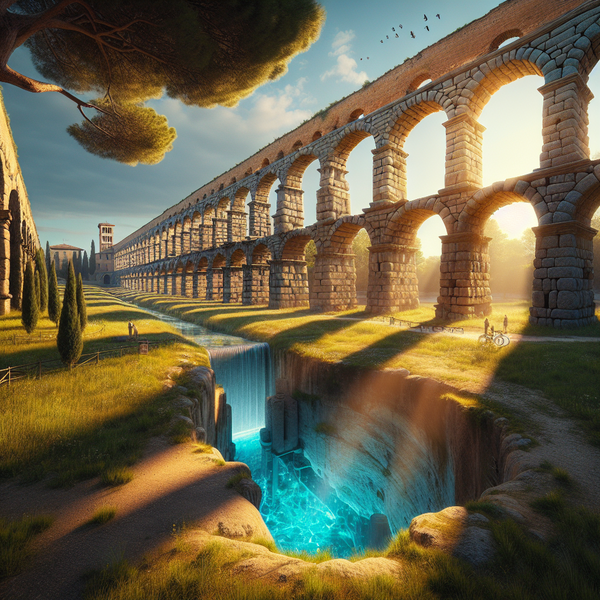
For any traveler intrigued by Roman engineering, Parco degli Acquedotti in the south of the city feels like a pilgrimage site. It’s part of the Appian Way Regional Park (Parco Regionale dell’Appia Antica), and remarkably easy to reach: take Metro A to Giulio Agricola or Subaugusta, then walk ten minutes. In the wide grassy fields you’ll find the unmistakable silhouettes of Aqua Claudia and Aqua Felice. Early mornings are best, when joggers and local dog walkers share space with photographers capturing arches lit by rising sun. The juxtaposition of olive trees and ancient stonework tells a precise story — this was the artery that made Rome’s baths, fountains, and households possible.
Bring water, because the park’s scale is deceptive. The visible stretches run for nearly a kilometer. Near the Via Lemonia entrance, you can still see where modern builders integrated ancient channels into twentieth-century farm walls. No other site in Rome offers such an unmediated experience of ancient infrastructure — just sky, stone, and silence punctuated by trains on nearby tracks.
Porta Maggiore and the Hidden Layers Beneath Modern Rome
Many travelers pass Porta Maggiore by tram without realizing they’re crossing a monument to Roman hydraulics. Originally an aqueduct junction, it carried two major systems — Aqua Claudia and Anio Novus — side by side atop its monumental double arch. It now forms part of the Aurelian Walls, but if you pause at the traffic circle, you can still follow the lines of Roman concrete that channeled water toward the city center. Look for the distinct tufa and brick layering on the eastern face — physical proof of historical maintenance phases.
Below the gate lies something few know about: the Basilica of Porta Maggiore. Discovered accidentally during railroad work, it’s an underground sanctuary carved in the early imperial period, possibly for an esoteric cult celebrating purity and resurrection. Visits must be booked through Rome’s cultural heritage office (Sovrintendenza Capitolina), but stepping below the aqueduct arches into a buried marble chapel ranks among Rome’s most atmospheric hidden experiences.
Aqua Virgo and the Trevi Fountain Connection You Can Still See
Few realize that when they toss a coin into the Trevi Fountain, they’re continuing the story of an ancient aqueduct still in use. The Aqua Virgo, originally built to feed Roman baths, still channels water from springs near Salone, east of the city, into central Rome. Of all the ancient systems, it’s the only one still functioning, now feeding modern fountains through a later reconstruction known as Aqua Vergine. Walk along the narrow Via del Nazareno beside the Trevi district, and you’ll find a small, often-overlooked plaque reading “Acqua Vergine — Restauro.” Behind it hides a current inspection point for this 2,000-year-old system.
If you want to trace the Virgo’s route, start from the modern aqueduct arches visible along Via del Tritone. They seem modest, but their continuity explains how Renaissance popes could revive Rome’s water supply without rebuilding from scratch. The purity of this aqueduct inspired countless artists and remains one of the few tangible threads linking Rome’s imperial and modern eras.
Aqua Felice — From Ancient Source to Papal Renaissance Vision
The Aqua Felice, constructed during the papal era using the path of ancient conduits, provides one of the clearest examples of aqueduct reuse. Beginning near the Alban Hills, it refitted defunct stretches of Aqua Claudia and Aqua Marcia, bringing water back to a city that had suffered centuries of neglect. Its terminal feature, the Fontana dell’Acqua Felice (also called the Fountain of Moses), stands on Via Venti Settembre near Piazza San Bernardo. Here, sculpted Old Testament figures symbolically celebrate the return of water to Rome. For travelers interested in the continuity between Roman and Renaissance engineering, this stop is essential.
Each papal aqueduct reused Roman tunnel galleries where possible — a reminder that the ancient network’s durability outlived empire and invasion alike. The Aqua Felice’s arches even intersect Parco degli Acquedotti, where they blend ancient Roman techniques with papal additions marked by travertine keystones.
How to Explore Rome’s Aqueducts Without a Tour Group
Most of Rome’s aqueduct remains are in public spaces, so independent exploration is perfectly feasible with a little preparation. For the Parco degli Acquedotti, bring a picnic and start early; summer afternoons can reach high temperatures, and shaded areas are rare. Download the free Parco Appia Antica map layer for offline navigation — it pinpoints arches of Aqua Marcia and Aqua Tepula still visible near Via delle Capannelle. Porta Maggiore is easiest to access by tram lines 5 and 14 from Termini, while the Aqua Virgo route through Trevi and Via del Corso reveals urban archaeology at street level.
In all cases, wear closed shoes: grass paths can conceal uneven masonry. If you want a more structured visit, small local cooperatives such as Culturalia Roma occasionally offer English-language walks through the Appia Antica aqueduct zones. The experience brings you close enough to smell the damp stone — a reminder these were living systems, not static ruins.
Photography and Practical Tips for Aqueduct Enthusiasts
Water and light define the atmosphere of Rome’s aqueducts, making them ideal subjects for photographers seeking contrast and rhythm. The best lighting occurs around dawn and again two hours before sunset, when the arches cast long curves across grassy plains. Bring a polarizing filter: it reduces glare from pale travertine stones. In Parco degli Acquedotti, drones are restricted, but handheld panorama shots from the Via Lemonia side yield wide perspectives with Rome’s modern skyline beyond.
For those interested in urban scenes, Porta Maggiore provides compelling juxtaposition: ancient engineering framed by passing trams. The fountain of Aqua Felice, meanwhile, shines under evening illumination, highlighting sculpted water motifs symbolizing the city’s enduring obsession with hydrology and faith.
Why Rome’s Aqueducts Still Matter
Visiting Rome’s aqueducts is less about ruins and more about relevance. These channels enabled not just survival but culture — baths, fountains, and sanitation systems that defined urban life. Their gradients taught later engineers in Europe how to control pressure and flow, influencing designs from the Pont du Gard in France to the Renaissance water gardens at Tivoli. Even modern Roman plumbing traces its lineage back to these ancient calculations.
Standing beneath the arches of Aqua Claudia, you not only see how an empire quenched its thirst but also how Rome continues to balance preservation and urban sprawl. The city expands, yet the aqueducts endure, inspiring both civil engineers and travelers seeking the bones of history beneath daily life. In their quiet persistence, the aqueducts prove that Roman ingenuity was never just about monuments — it was about delivering life itself.
So, the next time you raise your glass of Roman tap water, remember: somewhere beneath your feet, an ancient channel still hums with the same ghostly precision that once served emperors.