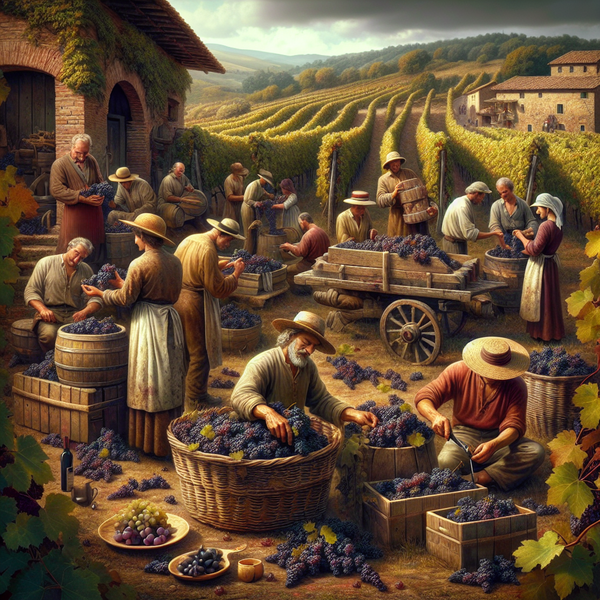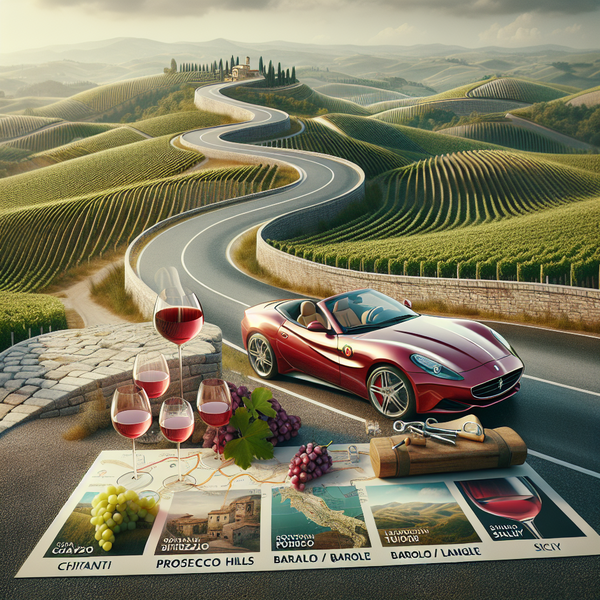
There’s no better way to taste Italy than by following its wine roads — the strade del vino that meander through hills lined with cypress trees, medieval villages, and vineyards producing some of the most celebrated wines in the world. Driving these routes connects you directly with winemakers, small trattorie, and centuries-old estates, where wine is still crafted with deep respect for the land. A self-drive tour along Italy’s wine roads lets you set your own pace: stop at spontaneous tastings, linger over long lunches, or sleep in century-old farmhouses with vineyards as your front yard.
Go to the section
ToggleChianti Classico Wine Road: Driving Through Tuscany’s Heartland
Few routes capture the romance of Italy’s countryside like the Chiantigiana, officially marked as SR222. Stretching roughly 70 kilometers between Florence and Siena, it threads through the core of the Chianti Classico zone. You can spot the region’s signature black rooster emblem on signs — the mark of authenticity for wines grown amid these rolling hills. Starting from Greve in Chianti, you’ll find the triangular Piazza Matteotti lined with enotecas offering vertical tastings of labels like Castello di Ama or Fontodi. In nearby Panzano, the hamlet’s butcher-restaurateur Dario Cecchini champions slow food in his rustic dining rooms where you can pair bistecca all fiorentina with local Sangiovese.
Plan your drive for late afternoon when sunlight glows on the vineyards near Castellina or Radda. Many estates, such as Castello di Brolio, mix modern tasting experiences with centuries of history — the castle here inspired the very creation of Chianti wine’s original blend. Parking is straightforward in most villages, though Siena’s ZTL limits require leaving your car outside the walls and walking in. Allocate at least two nights in a countryside agriturismo to enjoy morning walks among vines and olive groves before getting back on SR222.
Strada del Vino Nobile di Montepulciano: Renaissance Views and Noble Reds
In southeast Tuscany, the Strada del Vino Nobile di Montepulciano combines world-class wine with striking Renaissance architecture. The town’s elevation rewards you with staggering views across Val d’Orcia, a UNESCO-listed landscape recognizable from countless film scenes. Montepulciano’s cellars often stretch beneath town palaces; you can descend stone staircases lined with aging wooden barrels at names such as De’ Ricci or Contucci, both open for tastings without prior booking. The DOCG Vino Nobile itself must be made primarily from Sangiovese (locally called Prugnolo Gentile) and aged for at least two years before sale.
Beyond the main town, detour along the SP146 to nearby Monticchiello — a quiet hilltop village that leads naturally toward Pienza. This scenic road, dotted with wheat fields and cypress-studded ridges, invites relaxed driving. Try lunch at an osteria overlooking Val d’Orcia’s patchwork hills; dishes like pici al ragù pair beautifully with a glass of Riserva. Parking within Montepulciano’s stone gates is limited; use the lower lots and climb up on foot for spectacular photo angles across the rooftops. Staying overnight here gives you the extra treat of walking the main corso in the evening when crowds fade and winery lights shimmer under the terracotta skyline.
Strada del Barolo e Grandi Vini di Langa: Piedmont’s Gourmet Circuit
If Tuscany is about easy-riding beauty, Piedmont’s Langhe is pure gastronomic pilgrimage. The Strada del Barolo e Grandi Vini di Langa weaves through the UNESCO-listed hills of Cuneo province, anchoring around Alba, La Morra, and Barolo village. Expect dramatic switchbacks above misty valleys and rope-thin rows of Nebbiolo vines. Set your base in Alba, known for the annual truffle fair, then drive the SP3 toward Barolo itself, home to the WiMu wine museum housed inside the Falletti Castle. Tasting rooms here pour structured, long-lived wines with tannins strong enough to cut through Piedmontese dishes like braised beef in Barolo sauce.
The viewpoints along the route — notably at La Morra’s panoramic terrace — rival those of Tuscany. Stop also at small producers such as Mauro Molino or GD Vajra near Vergne; advanced bookings are often essential, especially on weekends. The strada is well-marked and easy to combine with detours into the Grinzane Cavour castle or Barbaresco village just east of the Tanaro River. Driving is comfortable year-round, but autumn offers the best visibility and the added bonus of truffle season.
Prosecco Road: Bubbles and Hilltop Beauty in Veneto
The Prosecco Road, or Strada del Prosecco e Vini dei Colli Conegliano Valdobbiadene, delivers something quite different: a sparkling journey through Veneto’s northeastern hills. It runs about 90 kilometers between Conegliano and Valdobbiadene — the area that recently earned UNESCO World Heritage recognition for its centuries-old viticulture. Begin in Conegliano with a visit to the Scuola Enologica, Italy’s oldest wine school, before tackling the winding SP635, which offers near-360-degree vineyard panoramas. Tasting stops such as Le Colture or Nino Franco welcome visitors for guided sessions introducing the DOCG’s unique Glera grape and its delicate perlage.
Valdobbiadene’s terraced slopes require focused driving: roads are narrow, and you’ll often encounter cyclists on weekends. It’s worth stopping at Osteria Senz’Oste, where visitors self-serve chilled bottles from a fridge overlooking one of the best lookouts in northern Italy. Pair a demi bottle with local cheese and salami while watching tractors navigate the steep vineyards. Note that driving between tastings demands moderation — many travelers hire a driver for part of the day or designate one group member to stay dry until evening. Spring and early autumn provide the clearest skies for photos and the friendliest cellar staff, as harvest brings busier schedules.
Strada del Nero d’Avola and Val di Noto: Sunlit Vineyards of Sicily
Down in Sicily, the Strada del Nero d’Avola e Val di Noto shows another Italy entirely — sunbaked, baroque, and hinting with sea air. Begin near Avola, the coastal town that lends its name to the island’s signature red grape. Drive inland toward Noto and Modica along SP19 and SP24, where carob trees and dry-stone walls characterize the terrain. Local estates like Planeta Buonivini near Noto or Marabino near Pachino showcase organic winemaking focused on native varieties such as Frappato and Nero d’Avola. Appointments here often include a walk through limestone cellars or tastings paired with local olives and caponata.
The towns on this route are minor architectural miracles rebuilt after the 1693 earthquake. Noto’s golden limestone glows at sunset, making it worth an overnight stay. When driving, keep an eye out for goat herds crossing secondary lanes, and avoid midday heat by scheduling tastings early or late. The combination of rugged landscapes and generous hospitality makes this route particularly rewarding for independent travellers who want to escape mainland crowds while still enjoying world-class wine.
Strada del Sagrantino: Umbria’s Compact Wine Route
Central Umbria packs serious flavor into a small geographic area, best explored along the Strada del Sagrantino. Centered on Montefalco and extending through Bevagna and Gualdo Cattaneo, it covers just 60 kilometers — perfect for a weekend self-drive. The Sagrantino grape is notoriously tannic and deeply colored, produced under DOCG regulations that require years of barrel aging. Start from Montefalco’s panoramic ring road, where signs direct you to family-run estates like Arnaldo Caprai and Romanelli. Both offer tours that clearly explain the transition from Montefalco Rosso (lighter, easier drinking) to full-bodied Sagrantino di Montefalco.
Bevagna, only 10 minutes away, provides a glimpse into medieval Umbria with cobblestones leading to vineyards right at the town’s edge. Traveling this circuit in spring brings blooming wildflowers between the rows, while autumn means cellar doors open for the annual Frantoi Aperti olive oil festivities. Roads are well paved but narrow, and parking can be tricky in high season; early morning starts help secure easy spots. A two-night stay in an agriturismo with a pool offers the ideal rhythm — taste, drive, relax, repeat.
Practical Tips for Driving Italy’s Wine Roads
Renting a small car is essential for comfortable navigation through tight village streets and hillside turns. Manual transmissions dominate the Italian rental fleet; if you prefer automatic, reserve well ahead. Gasoline is pricey, so compact cars help with economy on longer routes like Piedmont to Tuscany. GPS coverage can be patchy in rural zones; download offline maps before leaving major towns. Italy enforces strict blood alcohol limits: 0.5 g/L for standard drivers and zero for those under three years licensed — making designated drivers a necessity, not a suggestion.
Many wineries close midday between 13:00 and 15:30; plan tastings around those breaks. Bringing a small cooler lets you safely store a few bottles for later enjoyment rather than buying heavily at the first stop. Toll roads (autostrade) will likely connect you between regions, and rest areas often surprise visitors with espresso and pastries of respectable quality. For spontaneous travelers, the blue and white Strada del Vino signs make identifying local routes straightforward — each region’s tourism office offers free printed maps that differ subtly in layout but share that familiar bunch-of-grapes logo.
Driving Italy’s wine roads transforms an ordinary tasting trip into something far more intimate. Behind every estate gate lies a story told through landscape, weathered hands, and decades of practice. Follow these routes not with haste, but with curiosity — and you’ll discover that the finest souvenir from Italy is not the bottle you bring home, but the road that taught you to appreciate it.