Walk across an ancient Roman bridge in Italy, and you’re literally stepping over millennia of history still serving their original purpose. From the Tiber in Rome to the rugged valleys of Umbria and the swift rivers of the north, these structures remain testaments to the Roman art of blending utility, engineering, and beauty. Each bridge tells a different story of empire, trade, and continuity — and they’re not trapped behind museum ropes but part of daily Italian life.
Go to the section
TogglePonte Sant’Angelo in Rome – The Eternal Bridge Over the Tiber
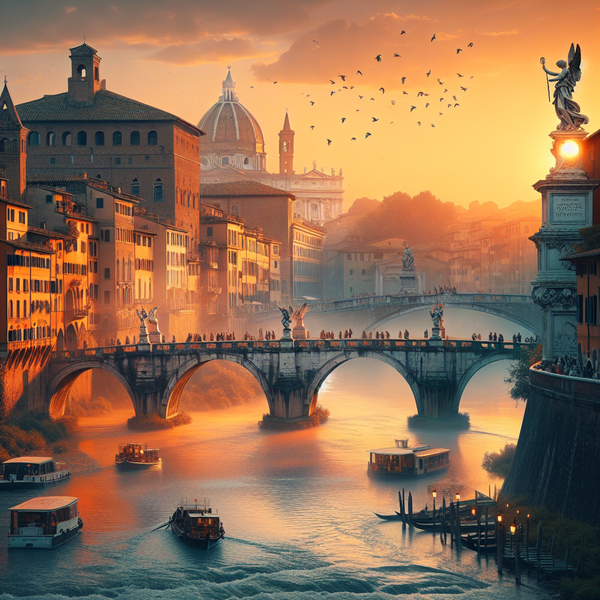
Few places in Rome bind antiquity and modern devotion as seamlessly as the Ponte Sant’Angelo. Built to connect the city with the Mausoleum of Hadrian — today’s Castel Sant’Angelo — this graceful structure still carries pedestrians across the Tiber River. Take a slow walk at dawn, when the morning light gilds the statues of angels added in the Baroque era. You’ll notice the original Roman arches beneath, made of travertine stone quarried near Tivoli, each block fitted without mortar.
Travelers can easily access the bridge from Piazza Navona or Campo de’ Fiori; both are within a ten-minute walk. The bridge’s position also makes it a perfect photo stop with St. Peter’s Basilica rising behind. For anyone interested in Roman civil engineering, the subtle camber of its deck — slightly convex — ensured rainwater could drain without eroding the surface, a detail still visible today.
Ponte di Augusto in Narni – The Lost Giant of Umbria
The Ponte di Augusto in Narni, although partly in ruin, remains one of the most extraordinary feats of Roman bridge construction. Only a single arch out of four survives, but its gigantic stone voussoirs stand almost defiant above the Nera River valley. To appreciate its scale, drive or walk down Via della Stazione and look back from the riverbed: that single arch alone rises higher than a nine-story building.
Narni itself is a train stop along the Rome–Ancona line, making this detour easy for travelers heading between Lazio and the Adriatic coast. The remnants of the bridge reveal how Roman engineers balanced form and function — using carefully cut limestone blocks that required no iron clamps. Bring sturdy shoes; you can descend a marked path behind the medieval fortress for the best viewing angle.
Ponte di Tiberio in Rimini – Engineering That Outlasted Empires
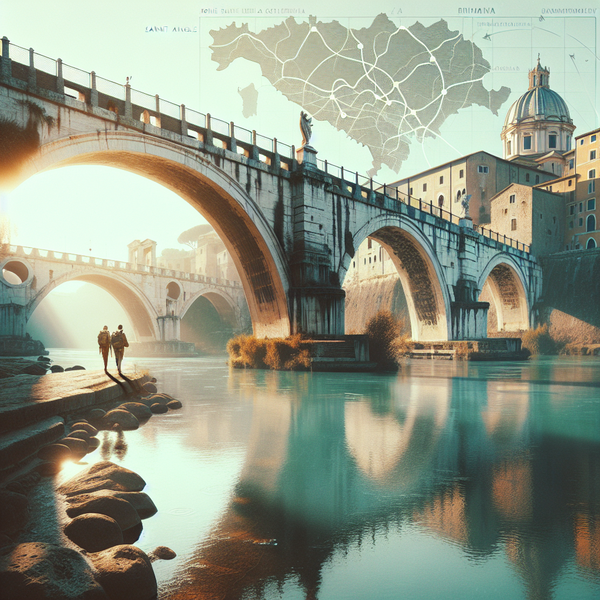
In the coastal city of Rimini, the Ponte di Tiberio quietly demonstrates what sound Roman engineering looks like when it’s allowed to keep doing its job. Spanning the Marecchia River, the bridge still handles light vehicle and pedestrian traffic centuries after its construction. Each of its five arches reflects perfectly in the tranquil water at sunrise, forming a complete circle beloved by photographers.
The bridge’s stone parapets show faint wheel ruts — carved not by the modern Fiats that cross it today, but by Roman chariots. Rimini’s city planners rerouted the modern road network around, rather than through, the bridge, preserving it as both a living monument and a functional crossing. If you’re in Rimini for the beaches, plan an early-morning stroll here before the crowds head for the sand. You’ll find interpretive panels explaining the Roman construction method using angled piers to reduce current stress.
Find all the best hotel deals
Booking.com
Ponte Fabricio in Rome – The Last Original Bridge of the Republic
Within Rome’s historic center stands the Ponte Fabricio, connecting the left bank of the Tiber to the tiny Tiber Island. It’s easily the oldest bridge in the city still in continuous use, its Latin inscription identifying the curator responsible for its construction still readable on the stonework. Look for the twin four-headed herms near the center — these are ancient guardians of crossroads, a surviving nod to Rome’s pagan past.
Approaching from the Jewish Ghetto side through Via del Portico d’Ottavia, you can cross to Tiber Island in under a minute, following the same route Romans did two thousand years ago. The island itself, once home to a temple of Asclepius, now hosts the Fatebenefratelli Hospital — a continuity of healing that mirrors the bridge’s endurance. The bridge’s dual arches are built of tuff and travertine; note how the builders left narrow grooves between blocks, allowing the structure to adjust to seasonal changes in the Tiber’s flow.
Ponte di Alcantara in Sicily – A Roman Bridge Framed by Lava
Deep in the canyons of eastern Sicily near Motta Camastra lies the Ponte di Alcantara, a bridge that feels more at home in myth than in masonry. It spans the Alcantara River, whose bed is carved through columnar basalt formed by ancient volcanic flow. The Romans built their single-arch bridge directly atop these black lava formations, fusing human engineering with raw geology in a way that still astonishes modern geologists.
Reaching it requires either a rental car from Taormina (about a 40-minute drive) or joining a guided jeep excursion that explores the surrounding gorge. The bridge was designed with a semicircular arch and ashlar masonry that perfectly distributed the weight into the natural rock walls. Standing beneath it, you can hear the river echoing between basalt columns — a soundscape unchanged since the empire’s height. Nearby, local kiosks sell almond granita and small bottles of honey from the nearby Nebrodi hills, tying the ancient to today’s Sicily.
Discover the best local experiences
Guided tours & activities
Ponte Augusto di Subiaco – Hidden Above the Aniene
Tucked away in the hills east of Rome, the Ponte Augusto di Subiaco no longer carries traffic, but its mighty piers still rise over the Aniene River. To find it, follow the scenic road from Tivoli toward Subiaco; just before entering the town, look for a small sign indicating the Roman bridge remains. The structure once supported the main approach to Emperor Nero’s villa and the later Benedictine monasteries that still cling to the steep rock faces nearby.
Even in partial ruin, its proportions are majestic — you can see how Roman military engineers reused local limestone blocks interlocked with subtle curves, so the bridge could flex under shifting mountain soil. Subiaco’s current pedestrian bridge runs parallel; standing there lets you compare the old and the new. It’s a quiet site, best visited early morning before the buses arrive for the monasteries of San Benedetto and Santa Scolastica.
Ponte di Traiano in Benevento – A Symbol of Southern Roman Mastery
In Benevento, a city steeped in Roman relics, the Ponte di Traiano spans the Calore River just outside the ancient walls. Often overshadowed by the Arch of Trajan nearby, this bridge still forms part of the old Via Appia Traiana, the strategic route connecting Rome to the Adriatic. Stand mid-bridge and look downstream — the stone piers cast near-perfect reflections in the water when it’s still, a beautifully symmetrical reminder of classical precision.
Local engineers restored portions of the parapet using limestone in exactly the same texture and color as the original Roman stone, preserving the uniform aesthetic. Getting here is simple: walk fifteen minutes from Benevento’s train station, passing through the Arch and following Corso Garibaldi down to the river. While the traffic has moved to modern overpasses, residents still cross it daily on foot or bicycle, proving the endurance of Roman design in southern Italy’s humid climate.
Pons Aemilius (Ponte Rotto) – Rome’s Most Evocative Fragment
Just south of the Tiber Island, the Pons Aemilius, also known as the Ponte Rotto or “broken bridge,” survives as a single mighty arch jutting from the river. It’s Rome’s oldest stone bridge, and although floodwaters eventually carried away its eastern half, the remaining span remains visible from the modern Ponte Palatino. Come at sunset and watch the fiery sky turn the travertine golden; the current swirls at its base, tracing the invisible path of a vanished empire.
For visitors staying in Trastevere, it’s just a short walk via Lungotevere degli Alberteschi. Interpretive boards explain how the bridge once linked the bustling Forum Boarium to the Aventine Hill. The engineering lesson here is about adaptation: even partial collapse hasn’t erased it from the city’s skyline. Many couples today pause here on evening walks, proof that Roman architecture still shapes how people move through Rome’s emotional geography.
Planning Your Roman Bridge Itinerary Across Italy
These bridges aren’t isolated ruins but integral to Italy’s diverse landscapes — each accessible enough to add to a regional itinerary. For an efficient route:
- Start in Rome to see Ponte Fabricio and Pons Aemilius.
- Take the train to Narni for Ponte di Augusto.
- Continue north to Rimini’s Ponte di Tiberio.
- Fly to Sicily for the Ponte di Alcantara.
Renting a small car from Bologna or Catania makes side trips easier, especially where public transport thins out. Always check local tourist offices for access updates, as some bridges may be closed after heavy rains. Photographing them works best in early morning or late afternoon when raking light reveals the tooling marks on ancient stone.
Walking across these Roman bridges connects you not just with emperors and legions, but with generations of Italians who never stopped using them. They’re architecture made meaningful by endurance — and by the modern traveler willing to stop and listen to the centuries humming beneath each step.