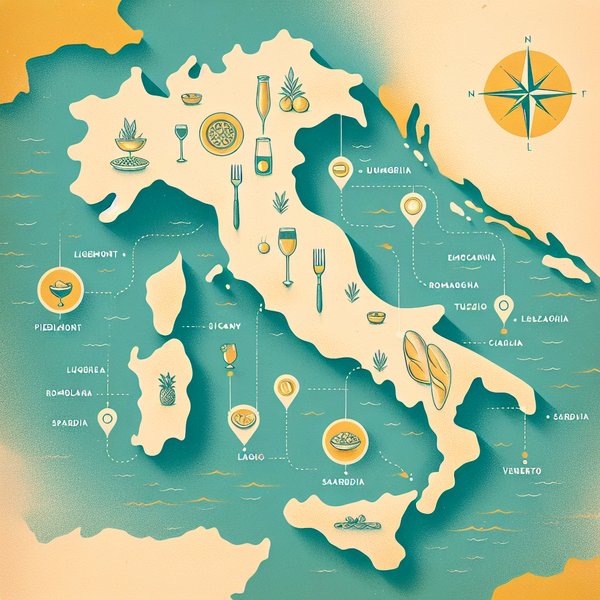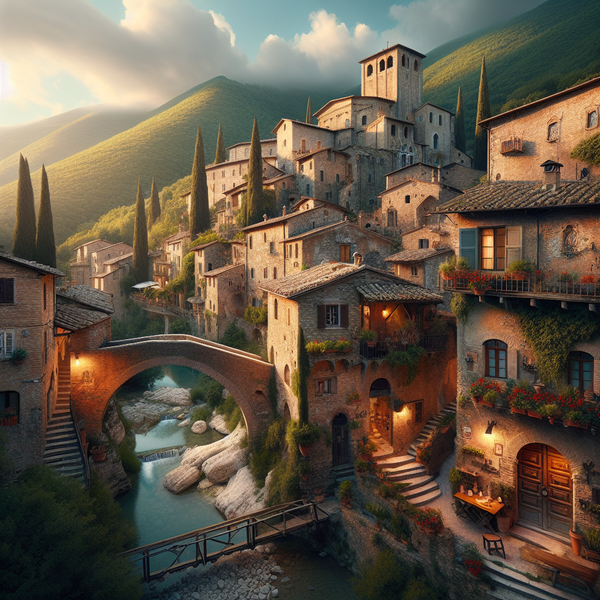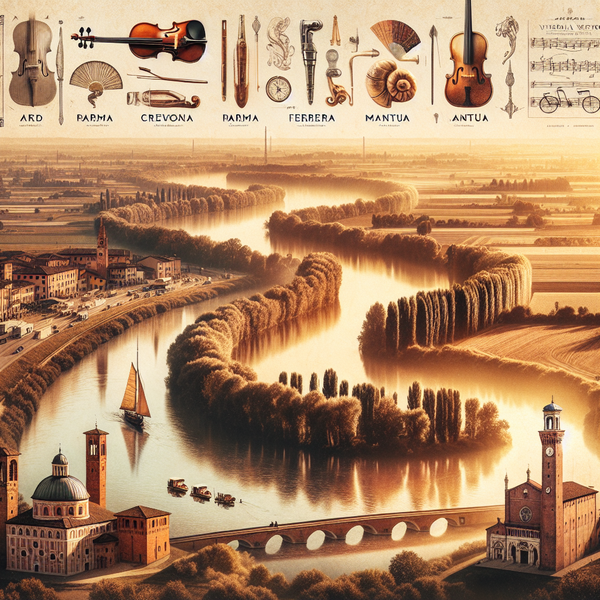
The Po Valley (Pianura Padana) stretches from Piedmont to Veneto, forming the fertile heart of northern Italy. It’s a land often passed over by travelers speeding between Milan, Venice, and Bologna, yet it holds some of Italy’s most quietly beautiful towns. Here, medieval towers rise above endless maize fields, trattorias serve tortellini handmade that morning, and the rhythm of life still follows the river’s slow current. Traveling through the valley means tracing the history of Italian trade, cuisine, and art across cities that have long lived in the shadow of their famous neighbors.
Go to the section
ToggleCremona: City of Violins and Baroque Harmony in Lombardy
Cremona, just an hour by train from Milan’s Centrale station, feels worlds away from the capital’s rush. Known for its fine violin-making tradition, this elegant Lombard town still hosts workshops where descendants of Antonio Stradivari’s students shape maple and spruce into instruments coveted worldwide. You can watch artisans work behind glass at the Museo del Violino on Piazza Marconi, a must-stop for any music lover. Every autumn, the museum organizes the Stradivari Festival, where contemporary luthiers compete and performers fill the Teatro Ponchielli with concerts.
Food here carries the same level of craftsmanship. Try mostarda di Cremona, candied fruit preserved in mustard syrup, paired with aged Grana Padano. Locals favor Osteria del Melgrano on Via Sicardo for its seasonal menu and traditional Cremonese desserts like torrone, a nougat originally created here for a noble wedding.
Ferrara: Po Valley Renaissance Town of Wide Streets and Cyclists
Eastward, the Po bends toward Ferrara, a UNESCO World Heritage city planned by the Este family in the 15th century. The Este Castle, complete with a working moat and drawbridge, sits in the historic center surrounded by streets so broad they still reflect their Renaissance urban layout. Many visitors rent bikes at the station — Ferrara is among Italy’s flattest and most cycle-friendly towns. Riding the medieval walls’ 9-kilometer circuit offers a perfect overview of city and countryside merging into one.
Inside Palazzo dei Diamanti, you’ll find the National Gallery of Art with works by Cosmè Tura and Ercole de’ Roberti, masters of the early Ferrarese school. Between cultural stops, locals retreat to Osteria Savonarola near the cathedral for cappellacci di zucca, pumpkin-filled pasta served with butter and sage. The best time to visit is late spring when the Ferrara Buskers Festival fills the streets with music.
Parma: Refined Elegance from Opera to Prosciutto
Few towns encapsulate the Po Valley’s refinement as fully as Parma in Emilia-Romagna. Easily reached by a 40-minute train ride from Bologna, Parma is both cultured and delicious. Its Romanesque cathedral features carved reliefs by Benedetto Antelami, best viewed midday when sunlight from narrow windows illuminates the pink Verona marble. Across the piazza, the octagonal Baptistery’s frescoed dome rivals anything in northern Italy for delicacy of color.
Culinary pilgrims come for more than art. In the surrounding countryside, the Consorzio del Prosciutto di Parma and Parmigiano Reggiano dairies offer guided tastings. Book a morning tour through a certified dairy outside Collecchio to see how milk becomes the region’s signature cheese. Afterwards, lunch at Trattoria Corrieri, where locals order tortelli di erbette stuffed with ricotta and chard, topped with melted butter. Exploring food here isn’t an activity — it’s a way of life practiced with quiet confidence.
Find all the best hotel deals here
Pavia: Ancient University Town Along the Ticino River
Pavia, only 30 minutes south of Milan by regional train, combines academic atmosphere with riverside calm. Founded by the Romans, it later became a capital of the Lombard Kingdom, traces of which remain in the San Michele Maggiore basilica with its distinct pale sandstone façade. Today, the University of Pavia, one of Europe’s oldest, fills the city with students and bicycles. Walk down Via dei Mille in the early evening when students meet for an aperitivo at Bar Italia, ordering local Bonarda wine.
The Certosa di Pavia, a 10-minute ride north of town, is essential viewing. This massive Carthusian monastery gleams with multicolored marble and intricate reliefs. Morning visits are best since the monks close the cloisters by noon. In summer, take advantage of the Ticino River paths — they stretch south toward the natural park, lined with willows and fishermen, ideal for a relaxed afternoon walk.
Discover the best local experiences here
Piacenza: The Gateway Between Emilia and Lombardy
Often overlooked by drivers heading to the Ligurian coast, Piacenza offers one of the most authentic glimpses of the Po Valley’s civic pride. Its main square, Piazza dei Cavalli, takes its name from two bronze equestrian statues of Farnese dukes sculpted in 1620. City life unfolds around them: office workers grab pastries from Pasticceria Falicetto, while locals pick up coppa piacentina cured meat at the daily market. A short walk from the square brings you to Palazzo Farnese, home to the Civic Museums and a treasury of Roman mosaics from nearby Velleia.
Wine enthusiasts shouldn’t miss the Colli Piacentini hills, a 30-minute drive south. This lesser-known DOC region produces crisp Ortrugo and bold Gutturnio reds. Book a tasting at Azienda Vitivinicola La Tosa, where owners provide insightful tours on how the valley’s clay soils shape flavor. For dinner, Osteria del Trentino near Piazza Borgo serves robust dishes such as anolini in brodo and seasonal mushrooms fried in batter.
Mantua: Cultural Jewel Surrounded by Lakes
Though geographically compact, Mantua (Mantova) in Lombardy feels monumental. The city sits encircled by three artificial lakes fed by the Mincio River, forming a natural moat that glows golden at sunset. Arriving by train from Verona or Padua, it’s an easy day trip or a weekend escape. The Palazzo Ducale complex, once residence of the Gonzaga family, houses frescoes by Andrea Mantegna. Don’t rush — the Camera degli Sposi’s illusionistic ceiling demands patient viewing. The city’s second palace, Palazzo Te, is a triumph of whimsical mannerist decoration designed for leisure rather than rule.
Visitors often discover Mantua’s culinary side by accident. Try risotto alla pilota, a simple yet satisfying dish of rice and sausage, at Trattoria Cento Rampini overlooking Piazza Erbe. In autumn, local bakeries display sbrisolona, an almond and cornmeal crumble cake meant to be broken by hand and shared. Mantua also makes a good base for cycling along the trail leading to Lake Garda through the Mincio River park, a scenic 45-kilometer route dotted with water lilies and herons.
Comacchio: The Little Venice of the Po Delta
At the far eastern end of the Po Valley, near the Adriatic, lies Comacchio — a lagoon town built on thirteen islands joined by arched bridges. Though smaller than Venice, it offers a similarly entrancing play of light and reflection but with the serenity of the countryside. The Trepponti Bridge, built in the 17th century, connects the historic canals and serves as a landmark. Most houses retain their pastel hues, mirrored in the still water below. Boats from the nearby Po Delta Park depart here for tours through salt marshes, where pink flamingos feed during migration.
Comacchio’s local specialty, anguilla marinated eel, appears in nearly every trattoria. Visit during the Eel Festival in early autumn, when open-air grills line the canals and residents in traditional costumes recount local fishing tales. For a final treat, walk to the Manifattura dei Marinati, a restored 19th-century smokehouse, and view its preserved roasting ovens still used for demonstrations. Sunset here feels cinematic — gulls crossing the lagoon as the air smells faintly of salt and wood smoke.
Guastalla and Sabbioneta: Two Rare Gems of the Lower Po
South of Mantua, Guastalla and Sabbioneta show how smaller towns in the Po Valley combine noble ambition with rural modesty. Guastalla, once a Gonzaga stronghold, preserves its baroque Duomo and the Palazzo Ducale along a quiet square shaded by plane trees. Walk five minutes to the levee for panoramic river views — depending on water levels, you might see fishermen’s huts on stilts known as bilance. The town hosts the Festival of the Little Publishing Houses each autumn, drawing Italian bibliophiles for niche editions and discussions.
Sabbioneta, by contrast, is a planned Renaissance city designed by Vespasiano Gonzaga as an ideal fortified town. Its grid layout is still visible from the ancient gates. The Teatro all’Antica, Europe’s first purpose-built indoor theater, seats fewer than 400 yet feels monumental inside with its painted perspective stage. A visit here pairs beautifully with Mantua, forming a UNESCO World Heritage duet rarely crowded even in peak season.
How to Explore the Po Valley’s Lesser-Known Towns Efficiently
The valley’s flat geography and efficient train network make independent travel easy. Regional services run frequently between Milan, Bologna, Parma, and Ferrara, so buying separate point-to-point tickets is cheaper than national passes. For those wanting flexibility, renting a car near Piacenza or Modena gives access to rural abbeys like the Abbazia di Chiaravalle della Colomba, famous for its rose gardens in early June. Driving allows detours to farm shops selling Lambrusco directly from producers — look for hand-painted signs reading “Vendita Diretta.”
Spring and autumn are the most rewarding seasons: fog rises over the fields at dawn, and local festivals celebrate asparagus, pumpkins, and river fish. Beyond these practical notes, what stands out is the Po Valley’s understated rhythm — a balance between land, labor, and leisure that has defined northern Italy for centuries. Whether listening to violins in Cremona, tasting Parmigiano near Parma, or watching flamenco-colored sunsets in Comacchio, each Po Valley town rewards curiosity with authenticity that can’t be staged.