Just beyond the ancient walls of Rome, where day trips usually mean seaside escapes or Etruscan ruins, lie mountain villages that feel worlds away. Within two hours of the capital, you can trade the traffic of the Grande Raccordo Anulare for chestnut forests, alpine lakes, and hilltop medieval towns where life moves with the rhythm of church bells and espresso spoons. These mountain villages near Rome offer a perfect blend of history, quiet adventure, and hearty local cuisine — all set against the backdrop of the central Apennines.
Go to the section
ToggleMedieval Charm in Subiaco: A Hidden Benedictine Retreat
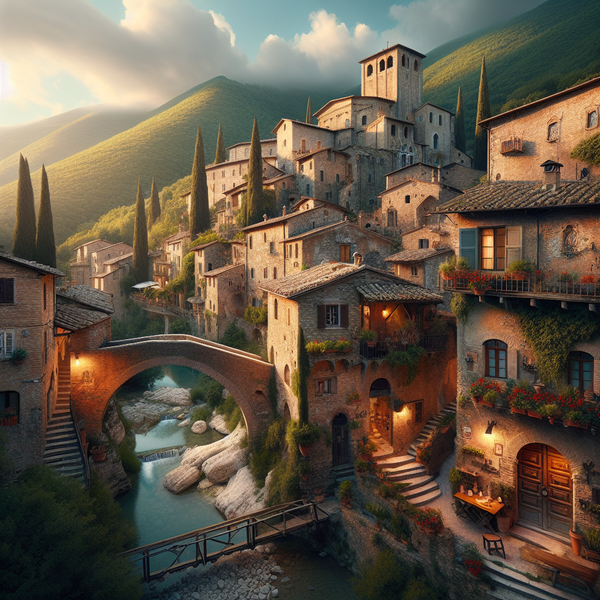
About 75 kilometers east of Rome in the upper Aniene Valley, Subiaco clings to the mountainside like a stone swallow’s nest. Reachable by car in roughly 90 minutes, the drive winds through the Simbruini Natural Park, past oak woods and tiny roadside trattorias serving strangozzi pasta with porcini. Subiaco is famed for the Sacro Speco Monastery, a breathtaking complex built directly into the rock where Saint Benedict first lived in a cave. The frescoes here predate Giotto and shimmer with Byzantine color in natural light from narrow mountain windows.
Walking through Subiaco’s centro storico feels like stepping into another century: cobblestone steps, geraniums in terracotta pots, and small piazzas where you’ll still see card games played under linden trees. In winter, the air smells of woodsmoke; in summer, the Aniene River below becomes a cool refuge where locals picnic on flat rocks.
An Unexpected Alpine Scene in Filettino and Trevi nel Lazio
For travelers craving a taste of the Italian Alps without leaving Lazio, the adjoining towns of Filettino and Trevi nel Lazio sit nearly 1,000 meters above sea level on the border of Abruzzo. Both are within the Simbruini Mountains, about two hours by car from Rome. Filettino feels like a microcosm of alpine life — with stone chalets, snow in winter months, and a tiny ski resort at Campo Staffi. Even in early spring, the scent of pine needles and melted snow seeps through the narrow medieval lanes.
Trevi nel Lazio, just fifteen minutes away, offers castle ruins with views over the Aniene Valley and a 12th-century bell tower you can climb for a sweeping panorama across both Lazio and Abruzzo. The drive between the two towns meanders past walnut groves and roadside cheese stalls that sell pecorino stagionato wrapped in fig leaves — evidence of a mountain culinary tradition that has endured for centuries.
Pescasseroli and the Gateway to the Abruzzo National Park
While technically just across the regional border in Abruzzo, Pescasseroli remains one of the most beautiful and accessible mountain villages near Rome, reachable in around 2.5 hours by car. Nestled in the heart of the Parco Nazionale d’Abruzzo, Lazio e Molise, it serves as the park’s unofficial capital. The village itself is a delight: pastel façades, a bustling main square lined with wooden balconies, and easy access to walking trails where Marsican brown bears still roam.
For a practical morning itinerary, stop at Bar Centrale for a cornetto filled with mountain honey, then head on foot to the Sentiero E2 trailhead, a moderate three-hour loop that passes shepherd huts and mountain meadows. In late autumn, mist rolls through the valley and the air smells of crushed pine cones and wet earth — a cinematic reminder that this landscape is among Europe’s oldest protected ecosystems.
Find all the best hotel deals here
Ovindoli and Rocca di Mezzo: Outdoor Adventures Above the Clouds
Continue eastward from Pescasseroli for about an hour, and you’ll reach Ovindoli and Rocca di Mezzo in the Sirente-Velino Regional Park. At around 1,400 meters altitude, these villages blend mountain sport with local authenticity. Ovindoli is known for its ski slopes — the nearest proper ski resort to Rome — while Rocca di Mezzo remains a base for summer hiking and cycling, with the Piani di Pezza plateau offering stark karst landscapes that look more Swiss than Italian.
Both villages have artisanal butchers specializing in mountain lamb, known locally as agnello di montagna. Order it grilled over open coals at Trattoria Anemone in Rocca di Mezzo, where the owner might share stories of shepherding routes that link the valley to Puglia. Driving here from Rome requires navigating the A24 autostrada toward L’Aquila, then climbing through a tunnel that suddenly opens onto a panorama of snowy peaks — a transition so sharp it feels like crossing a continent in minutes.
Discover the best local experiences here
Castel di Tora and the Reflections of Turquoise Lake Turano
If your idea of mountain tranquility includes water views, Castel di Tora in the Sabine Hills delivers exactly that. Perched above Lake Turano, only 80 minutes from Rome by car, the village curves around a rocky peninsula that juts into turquoise water. The lake, created by a dam in the 1930s, looks natural enough to fool even geographers at first glance. Its calm surface mirrors the stone houses of the town, creating postcard-perfect reflections that change color with the seasons.
Visitors often combine Castel di Tora with a stop in Colle di Tora, on the opposite shore, where trattorias serve lake fish stewed with tomatoes and olives. Rent a pedal boat or kayak near the lakeside bridge; even a short paddle offers unforgettable views of eagles nesting along the cliffs. In autumn, chestnut festivals fill the alleys with aroma from roasting fires, and local nonne sell pastries made with honey from nearby apiaries.
Cervara di Roma: The Stone City of Art and Silence
Perhaps the most poetic of all mountain villages near Rome is Cervara di Roma, another treasure inside the Simbruini Mountains Park, about 75 minutes’ drive from the city center. Known as the “stone city,” Cervara seems to emerge from the rock itself. Sculptures carved directly into the limestone walls line the steep streets, each created by artists who’ve been drawn here for decades to work in open air. The panoramic staircase at Via Maggiore leads to an overlook called La Scalinata degli Artisti, where you can see all the way back toward the plains of Rome on a clear day.
Practical travelers should wear good walking shoes — the village rises from 500 to 1,050 meters in elevation. The higher you climb, the quieter it gets, until only the distant clang of church bells remains. On weekends, the local bar beside the main arch serves mountain herbal liqueurs made from wild gentian and juniper gathered nearby, ideal for toasting a day of exploration.
Driving Routes and Transport Tips for the Mountain Villages Near Rome
While most of these villages near Rome are accessible by regional bus, renting a car allows greater freedom to link several in a weekend. The A24 and A25 autostrade are the main routes east toward Abruzzo, offering safe, well-maintained tunnels through the Apennines. For Subiaco and Cervara di Roma, take the Via Tiburtina through Tivoli, stopping in Arsoli for a quick espresso at Bar Cavour — a spot so unchanged it’s been using the same neon sign since the 1950s.
Parking in historic centers is generally limited; look for “P” signs outside the old walls and walk the final stretch. Always carry cash for smaller trattorias, many of which still don’t accept cards in remote mountain areas. If you’re visiting in winter, pack snow chains — required by law in certain stretches of the Simbruini and Abruzzo parks between November and April.
Food, Festivals, and Slow Living in the Apennine Villages
Every one of these mountain villages near Rome has a signature dish or celebration tied to the seasons. In Subiaco, locals celebrate San Benedetto with a candlelit procession and honey-drenched pastries called donutelle. Castel di Tora’s weekends bring fish stews made from freshwater perch, while in Ovindoli, autumn means truffle hunting accompanied by steaming plates of polenta con salsiccia. Spending even one overnight stay allows you to experience this rhythm — the small-town trattoria dinners that drift into conversations under the stars, uninterrupted by traffic or crowds.
The reward for venturing into these highlands is not just scenic variety but a connection to a slower, enduring Italy — one that remains surprisingly close to Rome yet feels worlds apart. From Subiaco’s monastic walls to Pescasseroli’s bear-inhabited forests, the mountain villages surrounding the capital promise landscapes and traditions that linger long after you return to the city below.