Stepping into one of Italy’s historic cafes feels like walking into a living museum — gilded mirrors, marble counters, and the faint scent of roasted coffee beans that have inspired generations of writers, artists, and politicians. Yet beyond their aesthetic grandeur, these cafes remain deeply woven into the social fabric of Italian life. To experience them well, you need to understand where to go, how to order, and what stories hide behind every porcelain cup.
Go to the section
ToggleUnderstanding the Culture of Italy’s Historic Cafes
Italian cafes, or *caffè storici*, are not merely coffee bars; they are time capsules of civic identity. In the 18th and 19th centuries, intellectuals gathered in these establishments to debate politics, literature, and philosophy. Today, locals still prefer them for their sense of continuity and ritual. For example, at Turin’s Caffè Fiorio, established in 1780 along Via Po, the elegant red velvet seating and intact stucco ceilings immerse you in Piedmontese history while you sip a frothy *bicerin* — a layered drink of espresso, chocolate, and cream served in a small glass. Learning to drink it slowly, standing at the marble counter, is as important as the taste itself.
When you enter a historic Italian cafe, you’ll notice two prices listed — *al banco* (standing at the bar) and *al tavolo* (sitting at a table). The difference can be substantial; a cappuccino that costs 1.50 euros at the bar may reach over 6 euros if you sit in a prime piazza seat. Observing how Italians order gives you the rhythm of local life: quick greetings, small coins ready, no to-go cups in sight.
Historic Cafes in Northern Italy: From Venice to Turin
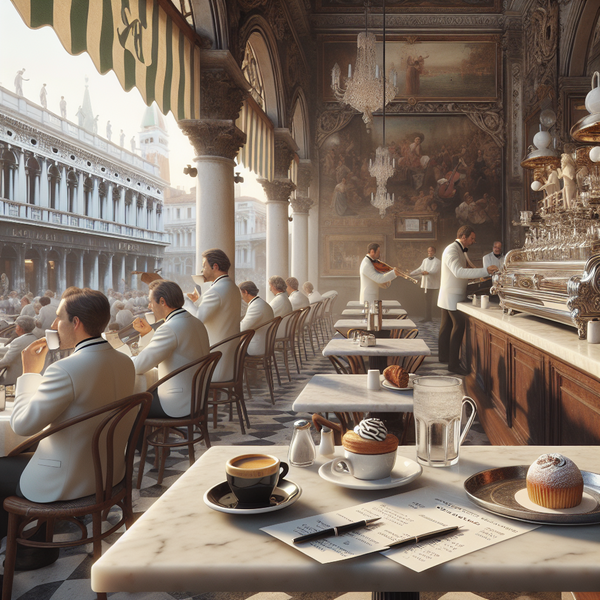
Venice’s Caffè Florian deserves its iconic reputation. Founded in 1720 under the arcades of Piazza San Marco, its mahogany-paneled rooms once welcomed Casanova and Lord Byron. Order a small pot of rich hot chocolate and enjoy it with a view of the Basilica’s mosaics shimmering outside. If you come on a weekday morning before 10 a.m., you’ll often find the marble tables uncluttered and the waiters less hurried — ideal for soaking in the baroque décor. Just remember there’s a cover charge if the orchestra is playing.
In Milan, Caffè Pasticceria Cova, steps from Via Montenapoleone, has been caffeinating artists and fashion icons since the early 19th century. The counter glistens with trays of *babà al rum* and *cannoncini* cream pastries. Locals often stop by mid-morning for a *macchiatone*, an intermediate between an espresso and a cappuccino, paired with a buttery brioche. Learning the unspoken rule — don’t linger long during rush hours — will keep you in good standing with the Milanese pace.
Turin’s traditions run deeper still. At Caffè San Carlo, under the arcades of Piazza San Carlo, you can order an authentic *Piemontese gianduiotto* — a small hazelnut chocolate — alongside your espresso. Turinese coffeehouses often have coopered ceilings and silver trays, remnants of when they hosted dukes and ministers. Early evenings around 6 p.m. attract regulars who sip vermouth instead of caffeine, tracing Turin’s link between cafe culture and aperitivo traditions.
Central Italy’s Grand Salons: Florence, Siena, and Rome
Florence’s Caffè Gilli faces the marble arcades of Piazza della Repubblica and has been serving locals since the late 1700s. Its glass display of pastries includes the Florentine *schiacciata alla crema*, a custard-filled bun often eaten with a *caffè lungo*. Choose a counter spot by the window to watch locals cross the square, and note that Florentines often avoid ordering cappuccino after 11 a.m. — a cultural cue worth respecting.
A short train ride away in Siena, Caffè Nannini offers a more low-key historic experience. The Nannini family, known for combining pastry-making and opera fame, keeps its tradition alive with *ricciarelli* almond cookies and robust Sienese espresso blends. Mornings are best for a calm visit before the city’s medieval lanes fill with tour groups.
Rome elevates cafe culture to theatrical art. Caffè Greco, just off the Spanish Steps on Via dei Condotti, opened its doors in the 18th century and became a haunt for Goethe and Keats. Today, the mirrored walls and velvet banquettes remain almost untouched. Try a simple espresso *ristretto* while browsing the framed sketches of past visitors. For a modern contrast, Tazza d’Oro near the Pantheon roasts beans on-site and crafts arguably the best *granita di caffè con panna* — espresso granita topped with whipped cream, a Roman summer institution.
Find all the best hotel deals → Book here
Southern Italy’s Caffeinated Heritage: Naples, Palermo, and Bari
Naples may be the capital of espresso intensity. The historic Gran Caffè Gambrinus, opposite the Royal Palace on Piazza del Plebiscito, epitomizes the Neapolitan ritual. Here, the baristas rhythmically pound espresso grounds into gleaming brass machines as marble mosaics glitter overhead. Don’t leave without ordering a *caffè alla nocciola* — espresso laced with hazelnut cream — or witnessing the *caffè sospeso* tradition, in which locals prepay a coffee for a stranger in need, a practice rooted in Neapolitan generosity.
In Palermo, Caffè Spinnato on Via Principe di Belmonte combines art nouveau interiors with Sicilian exuberance. Order a *granita di mandorla* with freshly baked *brioche col tuppo* early in the morning; Sicilians often treat this as breakfast during hot months. The nearby Teatro Massimo provides the perfect spot to enjoy your coffee outdoors while the city awakens.
Down the Adriatic coast, Bari’s Caffè Vergnano 1882, though part of a national brand, honors local identity through its seaside location and emphasis on traditional *caffè corretto* — espresso “corrected” with a splash of grappa or anise liqueur. Sitting along Corso Vittorio Emanuele, you’ll see locals chat animatedly about football while balancing porcelain cups on tiny saucers, reminding travelers that in southern Italy, the cafe doubles as a social stage.
Discover the best local experiences → Join here
How to Experience Italian Historic Cafes Like a Local
Understanding the etiquette is as essential as recognizing the buildings. Italians rarely linger at the counter — a few minutes is normal unless you’re seated. If you sit, expect table service and a higher bill that includes *coperto* (cover charge). The barista is the unspoken conductor of the experience. A simple “Un caffè, per favore” suffices; specifying milk drinks after 11 a.m. can mark you as a visitor, though no one will mind if you smile.
To deepen your appreciation, notice how regional differences reflect local temperament. In Bologna, for instance, students fill Caffè Zamboni between lectures, turning marble tops into mini study desks. In contrast, Trieste’s Caffè San Marco still hosts literary presentations — you can pick up a new Italian novel while sipping their signature *nero* (the Triestine word for espresso). Observing these nuances turns coffee drinking into cultural translation.
Practical Tips for Planning a Historic Cafe Itinerary
If you plan to visit multiple cities, consider structuring your itinerary around iconic cafes rather than major museums. Many are conveniently located near train stations or main squares, making them perfect rest stops. For instance:
- Venice to Milan by Frecciarossa train takes just over two hours, allowing a breakfast at Caffè Florian and a midday pastry at Cova.
- Florence to Rome is 90 minutes — ideal for morning coffee at Gilli and a sunset espresso at Caffè Greco.
- Naples to Palermo overnight ferries let you compare mainland espresso speed with island leisure.
To avoid crowds, visit cafes before 10 a.m. or after 4 p.m. Weekdays tend to be quieter than weekends. Dress neatly — Italians notice. Even in tourist centers, you’ll see older regulars in pressed jackets having their *cappuccino chiaro* at the bar, upholding standards that date back centuries.
What Makes Italy’s Historic Cafes Timeless
The allure of historic cafes in Italy lies not just in their architecture but in their resilience. Many survived wars, floods, and political upheavals yet continue to serve daily coffee without interruption. Their polished counters tell stories of endurance. Each espresso poured in Caffè Florian or Gambrinus is a link between past and present, between traveler and local.
If you take time to understand the cadence — the swift knock of porcelain cups, the murmur of morning papers, the clink of sugar spoons — you’ll see that these places are not simply backdrops for nostalgia. They’re living theaters of Italian life, accessible to anyone who pauses long enough to listen, taste, and belong for a moment.
Visiting Italy’s historic cafes, therefore, isn’t about checking landmarks off a list. It’s about learning to inhabit a national ritual that values beauty, precision, and conversation — one espresso at a time.