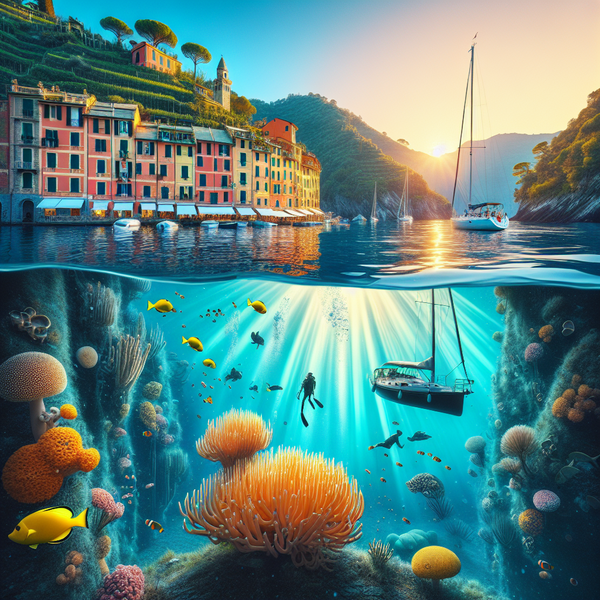
Italy’s marine reserves are some of Europe’s best kept secrets. These protected stretches of coastline—from the Ligurian cliffs to the turquoise coves of southern Sicily—offer a glimpse of a wilder Italy few visitors ever see. With over 30 officially designated marine protected areas, the country has quietly created an aquatic network where biodiversity thrives, fishermen adapt ancient skills, and travelers can swim, snorkel, or sail in harmony with nature.
Go to the section
ToggleExploring Portofino Marine Reserve: Liguria’s Jewel Beneath the Cliffs
The Portofino Marine Reserve extends from Camogli to Santa Margherita Ligure along the Ligurian Riviera. It’s a compact yet deeply diverse zone where the seabed drops dramatically from rocky cliffs into deep blue waters only meters offshore. At Paraggi Bay, snorkelers can see sea bream schooling around submerged posidonia meadows, while divers head for the statue of the Christ of the Abyss near San Fruttuoso Abbey—a bronze figure resting 17 meters below the surface.
Getting here is straightforward: frequent trains stop at Santa Margherita Ligure-Portofino, and from there you can take a 15-minute boat or hike the scenic path through the park’s pine-scented trails. The area has strict zoning rules, so plan your swim or dive with one of the licensed local operators such as Dive Passione or Bubble Lounge Diving.
The Vibrant Ecosystem of Cinque Terre Marine Protected Area
While most visitors rush to photograph the pastel villages of Monterosso, Vernazza, and Manarola, the true magic of the Cinque Terre Marine Protected Area lies below the surface. This strip of protected Ligurian Sea—about 40 kilometers of coastline—hosts over 90 fish species and several types of sea fans. Snorkeling near Punta Mesco reveals moray eels peeking from rocky crevices, and kayak tours from Monterosso let you paddle through the marine corridors separating each village.
Access is simple: entry to the marine area is automatic when visiting the Cinque Terre National Park, but swimming and boating are regulated. Rent kayaks or small electric boats from Vernazza or Riomaggiore harbors; fossil-fuel engines are banned in some zones, a rule that keeps waters startlingly clear even in high summer.
Isola d’Elba and the Tuscan Archipelago Marine Reserve: Mediterranean Biodiversity Unfolded
Few travelers realize that the protected waters around Isola d’Elba, Giglio, and Capraia form part of Italy’s largest marine reserve: the Tuscan Archipelago National Park. This vast sanctuary—spanning seven islands and over 56,000 hectares of sea—is home to dolphins, loggerhead turtles, and occasionally sperm whales passing through the Pelagos Sanctuary. Elba’s north coast near Sant’Andrea is ideal for shore snorkeling; you can see bright sponges and even urchin nurseries in just two meters of water.
Elba is easily reached by ferry from Piombino (one hour crossing), with frequent connections to Portoferraio. Car-free travelers can rely on the summer bus network that connects main beaches with mountain trails. Capraia Island, meanwhile, is more remote—two and a half hours by ferry from Livorno—but rewards divers with pristine canyons like Punta delle Cote, accessible only with park-approved guides.
Ustica Marine Protected Area: The Black Pearl of the Mediterranean
Off Sicily’s northern coast, Ustica Island offers some of the Mediterranean’s most celebrated diving conditions. Established as Italy’s first marine reserve, Ustica’s volcanic origin gives it remarkable underwater topography—arches, caves, and lava walls carpeted with yellow gorgonian coral. The Grotta della Pastizza and Grotta Azzurra are favorites among experienced divers, though even beginners can explore shallow bays like Cala Sidoti where visibility often exceeds 30 meters.
Ustica is reached by hydrofoil from Palermo in just over an hour. There are no large hotels; most visitors stay in family-run guesthouses like Sea House or rent small apartments near the port. The absence of mass tourism keeps the island relaxed and prices fair, even in August. Local cooperatives strictly manage mooring buoys and waste collection, making Ustica a model for sustainable island tourism in Italy.
Tavolara–Punta Coda Cavallo Marine Reserve: Sardinia’s Crown of Crystal Waters
North of Olbia, the Tavolara–Punta Coda Cavallo Marine Reserve encircles a limestone island said by locals to be the world’s smallest kingdom. Its waters shimmer with greens and cobalt blues—thanks to shallow sandbars and offshore seagrass meadows teeming with rays, seabream, and octopus. The reserve is strictly divided into A, B, and C zones: in the most protected areas only research and guided snorkeling tours are allowed, while others permit boating and free diving.
Reach the area via Porto San Paolo, where small boats and guided tours depart hourly in summer. Avoid weekends if possible: parking fills quickly and rental boats sell out. Bring reef-safe sunscreen, as rangers do check for it—a practical detail that makes a genuine difference in water quality. After your swim, locals head to Loiri or San Teodoro for freshly grilled fish and mirto, the myrtle-berry liqueur that defines Sardinian evenings.
Plemmirio Marine Reserve near Syracuse: Underwater Heritage and Culture
On Sicily’s eastern edge, the Plemmirio Marine Reserve protects 15 kilometers of shoreline south of Syracuse, in an area where ancient Greek amphorae still rest on the seabed. With more than 30 marked dive sites, it’s ideal for travelers who enjoy pairing history with marine life. Try Sea Spirit Diving in Ognina for guided dives; they often include archaeological briefings explaining the submerged remnants of the classical world.
Visitors without diving certifications can join snorkeling excursions departing from the Ortigia causeway or paddleboard along the reserve’s coastal cliffs. The nearby lighthouse, Faro di Capo Murro di Porco, offers some of the Mediterranean’s most thrilling coastal walks—its white stone paths overlooking water luminous enough to see urchins from the surface. Plemmirio combines accessibility with serenity, only 20 minutes by car from Syracuse’s bustling center.
Egadi Islands Marine Reserve: Italy’s Largest Protected Sea
The Egadi Islands Marine Reserve, west of Trapani, is Italy’s largest and arguably most community-driven marine sanctuary. It encompasses the islands of Favignana, Levanzo, and Marettimo—each with unique marine environments, from Favignana’s shallow flats to Marettimo’s coral walls. Locals here have turned traditional tuna fishing into eco-tourism: you can visit the restored Florio Tonnara Museum and learn how fishermen replaced once-destructive nets with research-led monitoring programs.
Regular ferries link Trapani and Marsala with Favignana (30 minutes), and daily crossings continue to the smaller islands. Snorkeling at Cala Rossa—marked by turquoise water under rust-red cliffs—feels like entering a natural aquarium. The park’s visitor center in Favignana provides clear maps of no-go zones for boats and lists of licensed diving centers. Even casual swimmers can appreciate the calm coves, where seahorses breed among the seagrass.
Mirto and Maintenance: How to Visit Italy’s Marine Reserves Responsibly
Marine reserves function only when visitors respect their fragile ecosystems. A few practical habits ensure your trip supports conservation rather than harms it:
- Avoid single-use plastic: many islands have limited recycling facilities; bring a refillable bottle and fabric tote.
- Use reef-safe sunscreens: check for zinc or titanium oxide instead of oxybenzone and octinoxate.
- Book guided tours through authorized centers: signage with the park’s blue logo indicates licensed operators who follow mooring and species protection guidelines.
If you’re renting a vessel, confirm the buoy color before anchoring: red buoys usually indicate highly protected zones where anchoring is prohibited. These small steps keep coral gardens intact for the next traveler who comes searching for the same pristine Italy you found.
Choosing Your Ideal Marine Reserve Experience
Each of Italy’s marine reserves carries its own rhythm. Portofino offers dramatic diving within a quick train ride of Genoa. The Tuscan Archipelago spreads wilderness across seven islands, ideal for longer stays. Sardinia’s Tavolara combines easy access with incredible clarity, while the Egadi Islands connect directly to Sicily’s cultural heartland. A useful approach is to align your choice with your travel style:
- Short trip or weekend: Portofino or Cinque Terre, accessible by public transport and full of diving schools.
- Family or mixed-activity holiday: Elba and Tavolara offer snorkeling, beaches, and island walks in equal measure.
- Adventure and solitude: Ustica and Marettimo deliver deep-blue silence and true island isolation.
Whichever you choose, Italy’s marine reserves invite you to experience the sea not as a backdrop but as the country’s most vital living landscape—one that rewards slow travel, respect for nature, and the quiet pleasure of swimming where conservation succeeds.