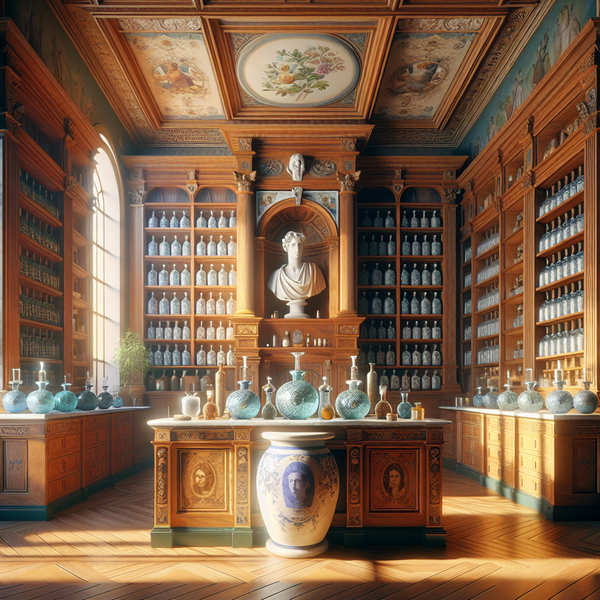
Step inside one of Italy’s historic pharmacies and you enter more than a shop — you’re stepping into centuries of healing, craftsmanship, and design. Many Italians still buy soaps or herbal tonics from these age-old institutions, where frescoed ceilings meet the scent of bergamot and lavender. Behind creaking doors and rosewood counters, monks once ground roots for elixirs and balms that still survive today, often with original recipes kept in secret drawers or parchment books.
Go to the section
ToggleFlorence’s Officina Profumo-Farmaceutica di Santa Maria Novella: The Origin of Italian Pharmacy Culture
In Florence, the Officina Profumo-Farmaceutica di Santa Maria Novella has been open to the public since the seventeenth century and remains an icon of Italian heritage. Located on Via della Scala, just a five-minute walk from the main train station, it began under Dominican monks who distilled medicinal herbs for their infirmary. Every marble floor tile seems to whisper of alchemy.
You can still buy the monks’ ancient blends — from rosewater that once soothed Queen Catherine de’ Medici to potpourri made from Tuscan rose petals and leaves aged in terra-cotta jars. Visitors can explore several frescoed rooms where colored liquids are displayed like jewels behind glass cabinets, and the small museum in back reveals retired stills and ceramic mortars once used to crush camphor and cinnamon.
Walk in on a weekday morning before 10 a.m. to feel the quiet before tourist groups arrive, and linger in the adjoining “Antica Spezieria” hall where local Florentines still come for their favorite amber bottles of cologne. Nearby, the Mercato Centrale is a good stop for a coffee if you want to balance all that floral fragrance with roasted espresso.
Venice’s Spezieria all’Ercole d’Oro: A Lagoon Treasure of Glass and Spices
In Venice, finding the Spezieria all’Ercole d’Oro on Calle delle Rasse, near Piazza San Marco, feels like uncovering a secret. The exterior might seem modest, but step inside and you’ll find carved cupboards lined with Murano glass jars painted with Latin inscriptions like “Pulv. Cinamoni.” The pharmacy dates back to the Republic’s apothecary guilds, when Venetian merchants imported cloves and nutmeg from the East Indies to mix into curative salves.
Today, the shop still sells artisan soaps made with bergamot oil, traditional elixirs for digestion, and small amber glass bottles of peppermint spirit. Ask the pharmacist about their historical “elixir veneziano,” once used to calm seasickness on gondola rides. They still prepare it on site using anise, ginger, and lemon peel.
Arriving early evening, when locals pick up hand cream or herbal teas after work, lets you see Venetians using the pharmacy as part of daily life — a rare look behind the postcard-perfect façades. The nearby Calle Larga XXII Marzo invites you to wander among boutiques inspired by the same Venetian design finesse.
Naples and the Art of the Monastic Pharmacy at the Certosa di San Martino
High above Naples, the former Carthusian monastery of Certosa di San Martino shelters one of Italy’s most atmospheric eighteenth-century pharmacies. Although it’s now part of a museum complex, the space still retains its original woodwork and painted tiles depicting medicinal plants like valerian and juniper. The apothecary operated for the monks who tended the city’s poor, crafting syrups from Amalfi lemon peels and tinctures drawn from Vesuvian herbs.
Inside, the Cabinet Room’s walls are covered with carved walnut and shelves of majolica jars from Vietri sul Mare, each labeled with the Latin name of a root or resin. Stepping into the main room with its star-shaped pattern of blue and white tiles feels like entering a geometry lesson in beauty. If you plan your visit on a weekday morning, the museum is quiet enough to hear the creak of each floorboard — a sound that seems to echo centuries of whispered prayers and pestle strokes.
Outside, a terrace overlooks the Gulf of Naples. The juxtaposition of turquoise sea and the solemn pharmacy interior tells a lot about how Neapolitans balance devotion and sensuality. Afterward, walk down the Pedamentina San Martino path to reach the Spanish Quarter in about twenty minutes: it’s steep, but filled with murals and fresh laundry drying in the breeze.
Find all the best hotel deals — click here
Rome’s Antica Farmacia di Santa Maria della Scala in Trastevere
Rome hides its own medicinal gem inside the Santa Maria della Scala convent in Trastevere, just steps from Piazza Santa Maria. You can only visit by guided tour, usually available on limited dates organized through the Discalced Carmelite friars. Known as Rome’s oldest functioning pharmacy, it opened several centuries ago to serve both monks and the poor.
The main laboratory room still looks ready for use: ceramic jars for herbs line the marble counters, and instruments lie on display beside faded Latin recipe scrolls. Look up to admire the ceiling fresco depicting the virtues of medicine, framed by wood motifs of poppy capsules and aloe leaves. The philosopher’s balance between body and spirit that guided early pharmacists is tangible here.
When you exit onto Via della Scala, take a detour into a nearby herbalist shop (erboristeria) where younger Roman pharmacists still mix essential oils based on centuries-old principles. Locals swear by chamomile tinctures for digestion after carbonara lunches in Trastevere trattorias.
Discover the best local experiences — browse here
Turin’s Farmacia del Leone: Belle Époque Elegance with a Piedmontese Heart
In Turin, the Farmacia del Leone stands proudly on Via Garibaldi, one of Europe’s longest pedestrian streets. The name comes from a marble lion that guards the entrance, a symbol of strength and healing. The pharmacy’s wooden shelves still hold hand-painted canisters lined in gold, while its ornate clock ticks above a counter carved from walnut and cherry wood.
This pharmacy epitomizes Piedmontese Art Nouveau flair: frosted glass panels etched with poppies and vines catch afternoon light, giving the space a dreamy patina. Customers come not only for classic tonics like digestive bitters infused with gentian root, but also for its small perfumery section offering violet essence — Turin’s signature fragrance. The staff, often pharmacists by family tradition, might offer a sample of lavender cream made locally in the Langhe hills.
Pop down the street to Caffè Mulassano for a bicerin — Turin’s signature chocolate and espresso drink — and you’ll understand how elegantly science and pleasure coexist here.
Palermo’s Farmacia di San Domenico: Sicilian Ceramics and Folk Remedies
In the heart of Palermo, near the bustling Vucciria Market, the Farmacia di San Domenico reveals the island’s centuries-long passion for natural cures. Founded by Dominican friars, the pharmacy’s walls shine with maiolica tiles depicting medicinal herbs — rosemary, rue, and myrtle — painted in the Sicilian baroque palette of cobalt blue, ocher, and green.
Behind the wooden counter rests a collection of blown-glass jars filled with herbal syrups once used to treat sailors returning from long voyages. The pharmacy still prepares traditional “acqua di mandorla” (almond water) used in Sicilian pastries and sometimes prescribed as a mild tonic. Conversations with the current pharmacist often drift into folkloric cures involving citrus peels or olive leaf infusions, reminders of the island’s Greek and Arab influences.
If you visit on a summer morning, step outside to the adjacent cloister courtyard where lemon trees grow — many locals come to sit here and sip granita while waiting for prescriptions, turning the pharmacy into part of daily routine.
Hidden Gems: Small-Town Pharmacies that Time Forgot
Beyond the famous cities, Italy’s countryside hides smaller apothecary treasures that survive through love rather than tourism. In Lucca’s Antica Farmacia Massagli, open since the late eighteenth century, you can still buy a cordial called Biadina served with pine nuts floating on top — historically a treatment for circulation, now a beloved digestif. The counter’s hand-carved angels and the shop’s dusty scales evoke a family-run intimacy that modern perfume boutiques could only dream of.
In Lecce, the Antica Farmacia Alvino near Piazza Sant’Oronzo stores behind glass cabinets rows of ceramic jars imprinted with Latin abbreviations like “Ung. Camph.” (camphor ointment). The pharmacist may tell you stories about local nuns who still make calendula balm for churchgoers. Every conversation becomes a tiny lesson in herbal Latin and southern generosity.
For travelers who want authenticity, these places offer more than architecture: they’re living museums where buying a small vial of cologne or herbal tonic supports generations of craft tradition. Bring cash — some prefer not to use cards — and always ask permission before taking photos inside.
Planning Your Historic Pharmacy Itinerary Across Italy
Organizing a route through Italy’s most beautiful historic pharmacies can be surprisingly convenient because many are close to other major landmarks.
- Start in Florence at Santa Maria Novella in the morning, then board a high-speed train to Bologna or Venice — both under two hours away.
- In Venice, spend half a day exploring the Spezieria and nearby museums of glass, before hopping a train south to Rome.
- Rome to Naples is just over an hour on the Frecciarossa; from Naples, those interested in monastic architecture can visit the Certosa di San Martino before evening.
- Finally, head west to Palermo or north to Turin for contrasting northern and southern pharmacy aesthetics — Turin’s Belle Époque vs. Palermo’s baroque folk art.
Pack light, carry a small notebook to record the names of tinctures you might buy, and don’t underestimate how welcoming pharmacists can be: many love to explain their recipes if you show genuine interest.
Each of these pharmacies tells a story — of monks grinding roots into cures, of merchants bringing exotic spices to Italian harbors, of families preserving recipes across centuries. More than just stores, they embody the Italian genius for merging art and daily life, scent and science. Even if you leave without a bottle in hand, you’ll carry home something more enduring: the memory of places where beauty and healing still meet under softly lit domes of time.