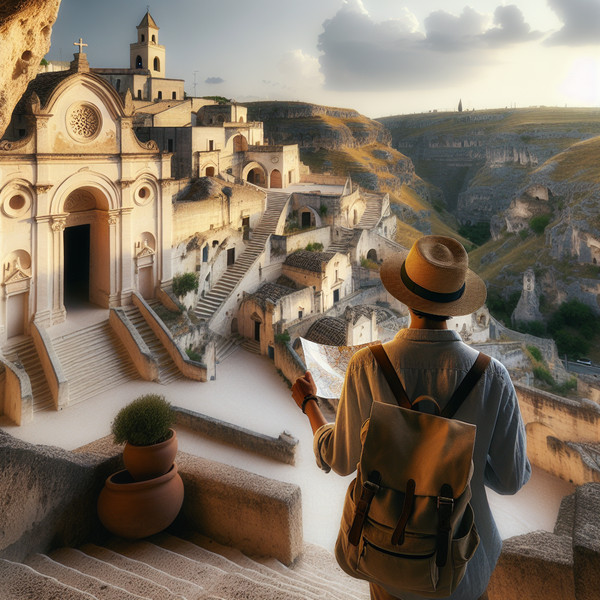
Italy’s cave dwellings and rock churches aren’t just relics of the past—they’re living proof of how ingenuity met geography. Carved into limestone hillsides and volcanic tufa cliffs, these ancient spaces show how people transformed geology into architecture. Exploring them means stepping into a fusion of art, faith, and survival, often far from the usual tourist crowds. Here’s how to plan an authentic journey through Italy’s underground heritage, from Basilicata’s honeycomb caves to the secret hermitages of the Marche countryside.
Go to the section
ToggleMatera’s Sassi: How to Explore the Cave City of Basilicata
The Sassi di Matera—two districts filled with cave homes—form the heart of southern Italy’s most astonishing cityscape. The original dwellings were carved from soft limestone, with layers of homes stacked into a labyrinth of alleys. Begin at Piazza Vittorio Veneto, where you can descend into Casa Cava, a restored cave turned cultural center that offers a clear sense of the city’s structure. For a deeper experience, stay overnight in a converted cave hotel, such as Le Grotte della Civita, which gives a glimpse into both rustic origins and modern comfort.
To explore independently, wear shoes with solid tread—polished limestone can be slick—and bring a flashlight for lesser-lit passages. The walk from Sasso Barisano to Sasso Caveoso takes roughly 45 minutes, but plan extra time for visits to cave churches like Santa Maria de Idris, whose frescoes date back centuries. Avoid driving in the Sassi; parking is restricted to the upper town, and exploring on foot is the only way to truly absorb the texture of the rock-cut landscape.
Puglia’s Rock Churches and Cave Sanctuaries Beyond Matera
Crossing into Puglia, you’ll find the landscape continues the story of sacred rock with less fame but equal intrigue. In the Gravina di Ginosa, natural ravines shelter hundreds of cave chapels with fading frescoes. The Cripta del Peccato Originale, often called the “Sistine Chapel of Rupestrian Art,” lies a short drive from Matera on the Via Appia corridor. Entry is by guided tour only, which must be booked in advance through local organizations like Cooperativa Oltre l’Arte—a must, as access is restricted to protect the fragile pigments.
Further east, the Parco Rupestre di Lama d’Antico near Fasano is a rewarding detour. Here, olive groves conceal rock-cut monasteries where monks once lived in silence. A two-kilometer walk through the archaeological park passes both chapels and medieval dwellings, giving travelers a ground-level sense of rural devotion. Early morning visits (around 8 a.m.) are best for light and solitude, particularly in summer when heat builds by noon.
Lazio’s Underground Etruscan and Medieval Sanctuaries
Central Italy hides its own subterranean heritage under the rolling fields of Lazio. In the tufa town of Civita di Bagnoregio, you can still explore cellars carved into volcanic rock, some turned into small museums or wine grottos. Equally compelling is the nearby Chiesa Rupestre di San Pietro in Soriano nel Cimino, accessible through a woodland trail lined with Etruscan tombs. These sites blend pre-Roman sacred spaces with early Christian reuse, showing how Italy’s underground evolved continuously rather than being abandoned.
For practical travel, rent a car in Viterbo or Orvieto to access these scattered ruins; public transport is limited. Bring a light jacket—temperatures inside the caves rarely exceed 14°C, even on hot days. Pair your visit with the Palazzo dei Papi in Viterbo to see how religion shifted from underground hermitages to papal palaces, illustrating Italy’s layered spiritual history.
Umbria and Marche: Hermitages Hidden in the Hills
North of Lazio, the regions of Umbria and the Marche hide their rock sanctuaries in forested mountains. Near Gubbio, the Eremo di San Girolamo clings to a cliff above the road, reachable after a steep 15-minute climb. Inside, you can still see hermits’ cells cut from the rock and a tiny church carved into the same wall. Visitors often light small candles left at the entrance, maintaining centuries-old rituals of solitude and devotion.
In the Marche, the Eremo di San Marco near Ascoli Piceno overlooks the Tronto Valley. The stone steps carved straight into the rock are uneven but manageable with steady shoes. The site is open year-round without entry fees, but it’s most atmospheric on quiet weekday mornings. The panoramic view alone makes the climb worthwhile—fields unfurl below like a natural fresco that rivals anything painted inside the chapels.
Sardinia’s Troglodyte Villages and Coastal Caves
Sardinia’s caves add a geological twist: many were coastal shelters before turning into habitations. Near Dorgali, the Grotta di Ispinigoli plunges 38 meters down a natural shaft, showcasing the connection between human settlement and the island’s karst roots. You can join guided tours departing hourly from the visitor center during the summer season. For something quieter, the Domus de Janas—literally “Fairy Houses”—dot the countryside around Alghero and Sassari. These prehistoric tombs predate even Matera’s dwellings, carved with bull’s head motifs symbolizing fertility. Visiting them requires a rental car, as many lie outside bus routes.
Coastal explorers can combine archaeology with adventure: kayaks from Cala Gonone reach Grotta del Bue Marino, once home to monk seals and Bronze Age engravings. Arriving by sea gives you the same approach ancient fishermen once took, emphasizing how deeply Sardinia’s people and rocks intertwine.
Practical Tips for Planning a Cave-Focused Trip in Italy
Exploring Italy’s cave dwellings and rock churches requires a mix of curiosity and respect for fragile heritage. Plan your route by clusters rather than long distances—combine Basilicata and Puglia in one journey, then perhaps Lazio and Umbria on another. Train travel connects major towns, but rural hermitages usually demand a rental car or private guide. Wherever you go, confirm opening hours; many sites are run by local cooperatives with seasonal timetables rather than standard museum hours.
Always carry cash for entry fees or small donations, as electronic payments may not be accepted at remote chapels. Dress modestly inside churches, and avoid touching frescoed walls. Winter brings clearer air and far fewer tourists; summer allows early morning exploration followed by long lunches in nearby agriturismi. By traveling slowly and sustainably, you support communities that preserve these rare cultural landscapes.
Linking the Underground: Why These Sites Matter Today
Italy’s rock heritage is more than a curiosity—it’s a living chapter of cultural resilience. Many caves that once housed poverty now anchor eco-friendly tourism and cultural revival. Visiting them adds depth to any Italian itinerary and balances well-known monuments with stories of adaptation. Whether you’re tracing cave frescoes by lamplight in Puglia or pausing at a hermitage above the Umbrian woods, you’re not just sightseeing; you’re witnessing how Italians have shaped, and been shaped by, their landscape for millennia.
Exploring Italy’s cave dwellings and rock churches is best done at an unhurried pace. The land rewards patience: the quiet drip of water in a grotto, the smell of limestone warming in the sun, and the echo of footsteps in ancient corridors tell stories no guidebook can fully capture. Pack curiosity alongside your hiking boots—Italy’s underground world is waiting right beneath your feet.