When you follow Italy’s rivers, you trace the very paths that shaped its cities. From the broad Arno cutting through Renaissance Florence to the tranquil Dora Baltea edging Aosta’s medieval walls, each waterway reveals another side of Italian life — quieter, more lived-in, and deeply local. The best river walks in Italian cities aren’t just pretty routes; they’re a way to understand how Italians actually inhabit their towns, morning cappuccino in hand and evening passeggiata along the embankment.
Go to the section
ToggleWalking along the Arno River in Florence: A Renaissance Stroll
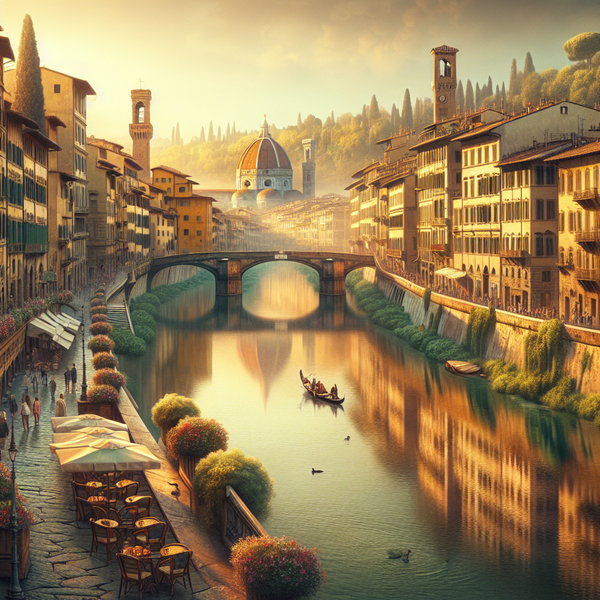
The Arno River in Florence offers one of Italy’s most evocative city walks. Start near Ponte alle Grazie where locals jog past 15th-century palazzi, and follow the river west. In the early morning, fog often hovers under Ponte Vecchio, softening the stone arcades that once housed butchers and now gleam with goldsmiths’ windows. Cross at Ponte Santa Trinita for views of Brunelleschi’s dome perfectly framed by the Arno’s curves.
For a more leisurely experience, continue west to the Cascine Park, Florence’s largest green space. It’s an easy 20-minute riverside walk from Piazza Ognissanti, with poplar trees and locals walking their dogs. On Tuesday mornings, the park hosts the city’s biggest open-air market, where you can buy fresh pecorino and sit along the riverbank watching rowers glide past the opposite shore.
The Tiber Walk in Rome: Urban History Unfolding Along the Water
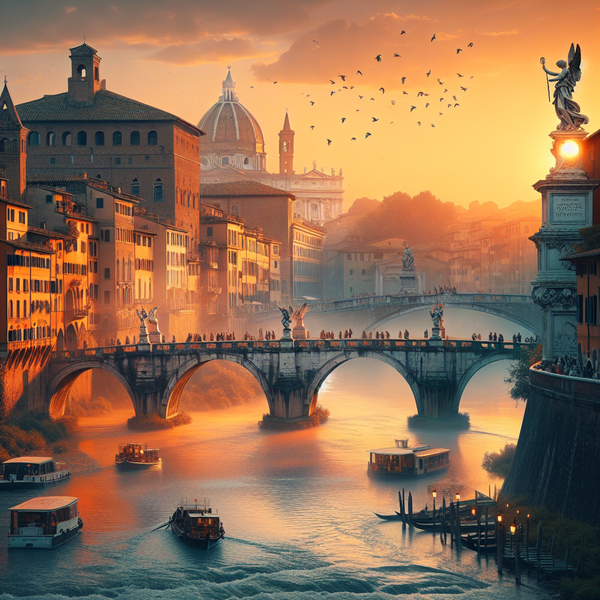
The Tiber River walk in Rome gives you a completely different energy: layered, monumental, and surprisingly calm below street level. Start at Ponte Sisto for a descent to the pedestrian path between Trastevere and the Jewish Ghetto. You’ll walk beneath bridges named for emperors, past moss-covered stone, with church bells above and joggers beside you. Few visitors realize you can walk uninterrupted from Isola Tiberina all the way north to the Flaminio district.
Each season changes the character of this walk. In summer, the Tiber hosts the Lungo il Tevere festival, with pop-up restaurants under strings of light. In winter, mist rising from the river gives the Ponte Sant’Angelo statues a haunting quality. Don’t miss a pause near Castel Sant’Angelo — originally Hadrian’s mausoleum — where the views of St. Peter’s dome reflecting in the water feel timeless.
Turin’s Po River: Where City and Nature Intertwine
Turin’s Po River walk offers a rare urban-nature balance. Begin from Murazzi del Po, a stretch once known for nightlife, now transformed with cafés tucked into the old embankment arches. From here, a broad walking and cycling path winds through Parco del Valentino, an elegant park designed in the 19th century. Locals picnic under chestnut trees while students from the nearby Politecnico jog alongside the river.
Halfway through, you’ll find the Borgo Medievale, a late 1800s reconstruction of a medieval village, charming rather than kitsch, with artisans selling handmade ceramics. Cross the bridge toward the Gran Madre di Dio church for a different perspective: Turin’s Baroque skyline mirrored on the Po’s silvery surface. At sunset, the distant Alps turn pink — an unforgettable sight.
Find all the best hotel deals
Book your stay in Italy’s most riverside cities
Verona’s Adige River Walk: Medieval Bridges and Hidden Gardens
The Adige River in Verona loops in soft curves around the old city, creating one of Italy’s most walkable urban river routes. Begin at Ponte Pietra, Verona’s oldest bridge, built by the Romans and rebuilt stone by stone after World War II. From the bridge, climb briefly up the Via San Giovanni in Valle; the viewpoint behind Castel San Pietro rewards you with a panorama of terracotta roofs and church spires hugging the riverbend.
Back at river level, the path along Lungadige San Giorgio feels quiet even in high season. Stop at Giardino Giusti, a 16th-century garden just a few minutes’ detour uphill, where you can look down to the Adige as water murmurs through marble fountains. The walk continues toward Borgo Trento, home to stylish cafés serving risino pastries and robust espresso — perfect for a local-style afternoon break.
Discover the best local experiences
Explore top river walks, guided tours, and cultural strolls
Bologna’s Reno Canal and Rivers: The Secret Waters Beneath the Towers
Bologna might not seem like a river city, but follow the Reno Canal and its tributaries, and you’ll find a hidden aquatic world. Start at the Finestrella di Via Piella, a small window opening onto the Moline Canal — a surprise view of turquoise water running between ochre buildings. Then walk along Via delle Moline to trace the route of the medieval water system that once powered silk mills.
For a longer stroll, head toward the Reno Canal near Via della Grada. This quieter stretch connects to DLF Park, a local favorite for aperitivo. The Reno eventually joins the Idice and Savena rivers outside the city, offering country extensions for cyclists. Bologna’s waterways may not be grand, but they reveal the city’s engineering spirit and the layers hidden beneath its porticoes.
Padua’s Piovego Canal and Naviglio Interno: A University Walk
In Padua, walkable waterways trace the city’s scholarly history. The Piovego Canal links the city’s center with the Brenta River — once the trade route to Venice. Start from Porta Portello, a 16th-century gate with carved lions of St. Mark. Students from the University of Padua often gather on the steps here, chatting with takeaway spritzes as boats pass below.
Follow the right bank to reach the Naviglio Interno. This circular canal still outlines the medieval city walls, lined with plane trees and historic villas. A leisurely two-hour walk brings you to Prato della Valle, one of Europe’s largest squares, encircled by water and 78 statues. Locals cycle, nap on the grass, or feed ducks from the marble balustrade — a quintessential Padua scene that blends city life and calm water.
Pisa’s Arno Promenade: Light, Geometry, and Local Life
Further down the Arno from Florence, Pisa offers gentler light and horizontal perspectives. Start your river walk in Pisa at Ponte di Mezzo, the central crossing, and follow the Lungarno Galilei southwards. The embankments, lined with ochre and mustard-colored façades, are some of the city’s most photogenic spots, especially just before sunset when the light flattens into gold.
Between Ponte Solferino and Ponte della Cittadella, you can spot the elegant Gothic chapel of Santa Maria della Spina, perched right at water level. Despite its scale, the church’s marble carvings glow in the late afternoon. Continue to the Cittadella Vecchia gardens, where locals bring gelato and picnic while students play guitar. Pisa’s Arno walk is shorter than Florence’s but equally layered with personality.
Aosta’s Dora Baltea: Alpine Air and Stone Bridges
In Aosta, the Dora Baltea River offers an entirely different atmosphere — crisp mountain air and views of snow-dusted peaks. Begin your walk at the Roman bridge near Pont-Saint-Martin, just outside the city center. The river runs fast and turquoise here, fed by glaciers. Follow the marked trailway north toward the Arch of Augustus, and you’ll parallel cobbled streets flanked by Roman ruins.
Locals love this route for its simplicity: you can combine it with a visit to the regional archaeological museum or continue toward the open countryside where the river widens and herons nest in summer. For travelers exploring northern Italy by train, Aosta’s compact layout means you’re always within ten minutes of the Dora Baltea and its cool alpine breeze.
Choosing Your Ideal Italian River Walk
Italy’s city rivers each reflect their region’s character. The Arno glimmers with Renaissance order, the Tiber hides Roman stories under its banks, and the Po runs slow beneath Alpine horizons. For visitors, the best approach is to match the walk to your pace:
- Early risers will love dawn along Florence’s Arno, when the city feels hushed.
- History lovers should follow Rome’s Tiber, tracing bridges that span two millennia.
- Nature seekers can head north to Turin or Aosta, where rivers meet greenery and mountains.
Pack comfortable shoes and allow yourself to linger — rivers teach slowness. The most beautiful river walks in Italian cities reward those who pause, lean on a parapet, and actually listen to the sound of Italy flowing by.