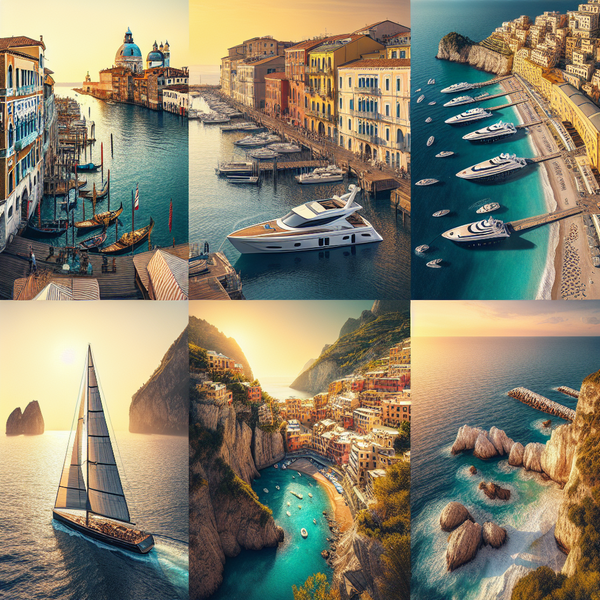
The Italian coastline stretches for nearly 7,500 kilometers, and every meter carries a legacy of shipbuilders, fishermen, and sailors whose traditions still shape local identity today. Experiencing Italy’s maritime heritage means exploring ports where sea salt still dries nets on stone walls and following festivals born centuries ago to honor Saint protectors of sailors. Whether you’re watching a historic boat race in Liguria, tasting lagoon-caught fish in Veneto, or walking shipyard piers in Sardinia, these moments reveal the soul of the Italian sea.
Go to the section
ToggleVenice and the Venetian Lagoon: Living Maritime History on Water
Venice has been a maritime city since its foundation, when the first settlers fled to the lagoon’s islands to escape northern invaders. To understand its naval tradition, start at the Arsenale di Venezia, once the largest shipyard in Europe, where galleys for the Republic’s fleet were built with assembly-line precision. Today, part of it is open to the public during the Biennale exhibitions, offering insight into maritime engineering that made Venice powerful for over 500 years.
Next, join locals at the Regata Storica, the first Sunday of September, when historic gondolas and rowing teams parade down the Grand Canal in costume. The competition, rooted in the city’s seafaring past, celebrates the art of rowing known as voga alla veneta. Even if you visit outside the festival, you can practice the technique with a lesson at Row Venice, an organization that supports female gondoliers and keeps traditional rowing alive.
For seafood reflecting lagoon traditions, try osterie around San Pietro di Castello serving sarde in saor, marinated sardines that once preserved fishermen’s catches for long voyages. Venice’s maritime culture is most authentic when you arrive or leave by water—take the public vaporetto number 12 to Burano or Torcello, smaller isles where time moves at the rhythm of tides.
Genoa and Liguria’s Coast: Shipbuilding, Sailors, and Fresh Pesto at the Port
On the northwestern coast, Genoa has been a proud maritime republic like Venice but with a grittier edge. Its Porto Antico—redeveloped by architect Renzo Piano—houses the Galata Museo del Mare, Italy’s largest maritime museum. Here you can step inside a real submarine, the Nazario Sauro, and explore exhibits on navigation routes that connected Genoa to the New World.
Wander into the narrow alleyways of the old town, and you’ll still find the scent of salt and ropes from ship chandlers who sell supplies to working boats. For a slice of daily port life, go to the Mercato del Pesce di Darsena, where fishermen auction their catch just after dawn. You can sample fried anchovies from a stand, then follow locals for coffee on Via del Campo before heading to the fishing village of Camogli. This pastel-hued coastal town celebrates its seafaring identity each May with the Sagra del Pesce, when giant pans of fish fry on the quay to honor the Madonna of the Sea.
Liguria’s maritime character extends along the Riviera di Levante: Santa Margherita Ligure, Rapallo, and Portofino each maintain small harbors where traditional fishing boats, gozzi, are still used. Locals take evident pride in their sea crafts—wooden vessels often painted bright blue to resist salt corrosion. If you visit Cinque Terre, consider booking a batella ride with a former fisherman from Riomaggiore who narrates stories of stormwatching and anchovy curing while you cruise below cliffside villages.
Amalfi Coast and Southern Maritime Faith Traditions
The Amalfi Coast once ruled Mediterranean trade routes as the Duchy of Amalfi, and you can still feel the prestige in its narrow lanes and whitewashed arches. Start at the Arsenale di Amalfi, now a small museum dedicated to the region’s medieval shipbuilding. Here, exhibits display scale models of galee amalfine—sleek merchant ships that pioneered compass navigation.
Every June, Amalfi celebrates the Regatta delle Antiche Repubbliche Marinare, a rotating rowing competition among Venice, Pisa, Genoa, and Amalfi. The event reenacts history with elaborate costumes and intense rivalry, transforming the harbor into a festive sea stage. To connect with everyday seafaring heritage, walk early morning along the molo to watch fishermen unload alici destined for local canneries.
Nearby Cetara preserves the art of anchovy sauce, colatura di alici, deriving from Roman fish sauces. The process—fermenting anchovies in chestnut barrels—remains a culinary ritual passed through generations of fishermen. Sit on the quay at Acquapazza restaurant and drizzle the amber liquid over spaghetti; locals will tell you each bottle contains both tradition and the sea itself.
Sardinia’s Shipyards and Fishing Villages: Where Maritime Craft Meets Myth
Sardinia’s coasts have nurtured distinct maritime practices, from coral diving to tuna fishing. In the northwest, Alghero is famed for its red coral, traditionally collected by free divers and still worked by artisans in shops near Via Roma. South along the coast, the town of Bosa keeps the art of riverboat maintenance alive along the Temo River, where wooden fishing boats are painted with ochre pigments from local hills.
One of Italy’s most evocative maritime traditions happens in Carloforte on San Pietro Island: the Girotonno festival in early summer. Here, traditional tuna traps called tonnare are celebrated through tastings and music. Local fishermen still use centuries-old techniques introduced by Ligurian settlers, and tours of the tuna processing plant provide rare access to the entire supply chain, from sea to table.
Smaller ports like Sant’Antioco and Orosei keep family-owned shipyards, the cantieri navali, where masters still carve keels by eye. Visitors can book workshops to see how pitch was once used to waterproof hulls—a tactile reminder that Sardinia’s life at sea remains deeply hands-on.
Traditional Fishing in Puglia and the Adriatic Riviera
Crossing to the Adriatic side, Puglia’s maritime communities balance ancient fishing customs with modern tourism. In Trani, fishermen still head out before dawn in trabaccoli, sturdy sailing boats once used in the Adriatic trade. Along the northern coast near Vieste, you can visit giant wooden fishing platforms called trabuccos. These stilt structures stretch over rocks to cast enormous nets, an ingenious design that dates back to the 18th century. Many, such as the Trabucco da Mimì near Peschici, double as restaurants where you can dine on just-caught bonito while watching the contraption work at sunset.
In Gallipoli, on the Ionian side, maritime faith continues through the Processione della Madonna del Canneto, when boats escort the statue of the Virgin along the harbor every July. It reflects the gratitude of fishermen for safe returns. Around this same harbor, small sheds sell dried octopus beaten flat and hung from rods to soften in the sea breeze—a scene unchanged for decades.
For travelers eager to join local seafaring life, several cooperatives in Monopoli and Polignano a Mare offer day trips aboard traditional lance, guided by fishermen who share stories of Adriatic tempests and teach net-mending techniques. These are immersive insights into maritime resilience rather than staged excursions.
Trieste and the North Adriatic: Sailing and Cross-Cultural Ports
At the top of the Adriatic, Trieste brings a Central European twist to Italy’s maritime identity. Once the principal port of the Austro-Hungarian Empire, its nautical traditions blend Italian creativity with Mitteleuropean discipline. The highlight comes each October with the Barcolana Regatta, the world’s largest sailing race by number of participants. Tens of thousands of sailors, from experts to amateurs, fill the Gulf of Trieste—proof of how sailing still binds this city to the sea.
Visit the nearby Museo del Mare to see model ships that span centuries of Adriatic navigation, or stroll to the Molo Audace, a pier extending 246 meters into the gulf, named after a ship that docked here after World War I. Locals gather each evening to watch the sun dip behind the Karst hills, a simple habit that speaks volumes about Trieste’s relation to the water.
Just south in Muggia, traditional shipyards produce small yachts beside timeworn fishing boats, symbolizing the evolution of Italian maritime craftsmanship from survival to sport. The local carnival, though mostly known for costumes, includes sea-themed floats acknowledging the town’s ancient port roots.
Maritime Legacy Beyond the Coast: Inland Connections to the Sea
Even far from the Mediterranean, Italian regions preserve maritime traditions through rivers and lakes that once linked the interior to ports. In Comacchio, Emilia-Romagna, reed-framed houses on canals reveal the life of valli da pesca—lagoon fisheries built centuries ago to control brackish waters. You can explore the Museo Delta Antico to understand how the Po Delta connected inland salt marshes to Adriatic trade routes.
Lake Garda, Italy’s largest lake, hosts historic regattas such as the Centomiglia, institutionally tied to maritime principles even in freshwater. Visiting Garda’s ports like Desenzano or Sirmione, you’ll find small cantiere where Venetian-style boats are repaired with the same tools used on the coast. These inland echoes remind travelers that Italy’s maritime culture is more than geography—it’s a mindset woven into how Italians travel, trade, and live with water.
Experiencing Italy’s maritime traditions ultimately means slowing your own pace to the sea’s rhythm. Spend time talking to those who still make their living from it—the fisherman cleaning nets in Camogli, the coral artisan in Alghero, or the volunteer rower training on the Venetian lagoon. Their daily gestures, preserved through generations, are the nation’s living heritage. When you travel this way, you don’t just observe Italian maritime culture—you become part of its ongoing story.