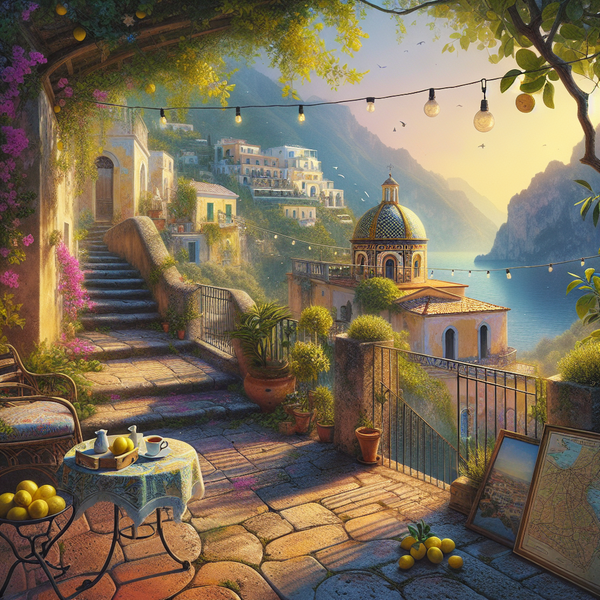
Few visitors realize that the Amalfi Coast, despite its fame, still hides tiny terraces and forgotten mule paths offering the best Mediterranean views in solitude. The sea may shimmer the same from Positano to Vietri sul Mare, but each town conceals a different angle — sometimes literally — if you know where to climb, pause, and look back.
Go to the section
ToggleHidden Viewpoints in Positano Beyond the Instagram Balcony
Positano’s cliffside streets get crowded near Piazza dei Mulini, but real tranquility begins the moment you climb via Cristoforo Colombo above Hotel Marincanto. A narrow cobbled turn between ceramic shops opens onto a low cement railing just before Bar Internazionale — that’s your secret perch. Locals grab morning espresso here while the early ferries trace silver lines below. Another little-known trail starts near-forgotten via Santa Croce, a residential lane that rises above the bustling beach. Ten minutes uphill rewards you with a rare sightline of both Spiaggia Grande and Fornillo framed together, something you never get from the main viewpoints.
The High Vantage of Montepertuso and Its Natural Arch
A short SITA bus ride from Positano, Montepertuso means “pierced mountain” for the iconic hole in its limestone cliff. Few tourists continue past the village square, yet a marked footpath signed Sentiero degli Dei per Montepertuso snakes behind a trattoria called Il Ritrovo. Follow it for fifteen minutes and you’ll stand inside the arch itself, looking down through stone onto Positano’s pastel terraces. Time your visit around 5 p.m. when sunlight filters directly through the hole — photographers wait all year for that golden shaft. The walk is steep but paved, and you can descend with the local bus if knees protest.
Praiano’s Secret Sunset Steps No One Mentions
Praiano, wedged quietly between Amalfi and Positano, shelters one of the coast’s most romantic lookouts off via San Giovanni. Descend the steps marked for Marina di Praia for five minutes until a tiny shrine to San Gennaro appears on a parapet bordered with prickly pears. Sit there around sunset: this is the only point where you can see both Positano to your west and Capo di Conca to the east without crowds blocking your view. Another hidden platform lies above the small church of San Luca Evangelista. Ask the elderly caretaker if you can step onto the bell terrace; he’ll usually oblige if Mass isn’t soon. From that modest square you’ll see the vertical ribbons of Praiano’s houses glowing pink at dusk.
Find all the best hotel deals → Book here
Ravello’s Forgotten Belvederes Beyond Villa Cimbrone
Everyone visits Villa Cimbrone for the Terrace of Infinity, but fewer wander up to the belvedere of Monte Brusara, reachable by a 20-minute walk starting from Ravello’s Piazza Fontana. The path zigzags through lemon terraces until a small terrace built on a restored shepherd’s hut appears. Here the curve of the coast from Maiori to Minori spreads below like a relief map. It’s especially evocative after light rain, when the scent of lemon blossoms sharpens. Another gem is the terrace of the little-known Auditorium Oscar Niemeyer. Locals use it for dance rehearsals, yet the open-air platform looks straight down to the Amalfi plain with no railing interference. Bring a sandwich from Caffè Calce; there’s no snack kiosk, only silence.
Discover the best local experiences → Explore tours here
Amalfi Town’s Overlook from the Cemetery Terrace
Behind Amalfi’s cathedral, follow via Lorenzo d’Amalfi until it becomes via Annunziatella; the climb continues to the town cemetery gates. Though it sounds morbid, locals treat this terrace as a peaceful promenade where the marina, the old paper mill chimneys, and the green Dragone Valley appear in one sweep. The viewpoint sits about 240 steps above sea level — manageable in 15 minutes if you rest halfway at the fountain niche. Early morning light hits the Duomo’s striped façade from behind, while late afternoon hides it in shadow; serious photographers come at 9 a.m. for the best contrast. Bring water: there are no shops once you pass the post office.
Conca dei Marini and the Walk to the Capo di Conca Watchtower
Drive or bus to the main piazza of Conca dei Marini and continue on foot toward Capo di Conca. The final section — a quiet lane past Hotel Belvedere and a few summer villas — ends at the 16th-century Saracen watchtower, now privately owned but accessible around the base. From the rocks behind the tower, you can see the mouth of the Grotta dello Smeraldo below, the path of passing ferries, and Positano shimmering far west. It’s one of the few coastal points where you can picnic without hearing traffic. In early May the surrounding caper plants bloom with white-pink flowers, perfuming the air. If you’re lucky, locals might point out a natural pool in the rocks just east of the tower — safe for a quick dip if the sea is calm.
Minori’s Lemon Terraces and the Hidden Hermitage Viewpoint
Minori hides a staircase many miss between via Pioppi and via Torre. Ascend steadily for 25 minutes toward the medieval hermitage of San Nicola, signposted with faintly painted arrows. Midway, a small wooden gate on the left opens into a lemon grove owned by the Aceto family, who sometimes sell granita from a cooler. Ask before entering, then step onto the stone terrace beyond: the entire sweep of Minori’s beach curves below you, ringed by terraces dotted with pergolas of Sfusato Amalfitano lemons. You’ll hear only bees and distant scooters. Continue to the hermitage if you wish — the view from its cross is one of the coast’s most storied yet remains off most maps.
Atrani’s Overlook from the Valle del Dragone Path
Atrani may be the smallest town on the Amalfi Coast, but it guards one of its grandest hidden perspectives. At the northern end of its main piazza, beside Bar Birecto, a stairway marked for “Pontone” climbs into olive groves. Ten minutes up, a landing with two benches faces directly above Atrani’s cluster of roofs and the switchback road tunnels leading to Amalfi. Sunset here hits the pastel buildings at an angle photographers adore, though you’ll likely share it only with a few locals walking home. Continue the trail toward Pontone for a shaded 30-minute promenade ending at the ruins of Torre dello Ziro. That final tower balcony offers the best high-angle view of both Amalfi and Atrani together, a panorama painters tried to capture long before drones existed.
Vietri sul Mare’s Ceramic Heights with Gulf Views
Vietri marks the coast’s eastern gateway and usually gets skipped by those racing for Amalfi, yet its upper district of Albori holds vistas worth the detour. From the village parking lot near Piazza Gioia, follow signs to Raito; halfway up, a ceramic-decorated bench waits near a communal water trough. Sit there and you’ll overlook Salerno’s entire gulf curving toward Cilento. Continue to the local viewpoint called “Belvedere di Raito,” beside the Museo della Ceramica; it’s empty by mid-afternoon except for a few art students sketching tiled domes. Many locals suggest bringing a cornetto from the Pasticceria Russo below before tackling the climb.
Travel Logistics for Chasing Hidden Amalfi Coast Viewpoints
Visiting these hidden terraces requires decent footwear, patience for gradients, and flexible transportation. The SITA buses that link coastal towns run roughly every 30 minutes, though schedules fluctuate after sunset. Renting a small scooter or arranging a private transfer from Amalfi’s Piazza Flavio Gioia can save time if you plan multiple viewpoints in one day. Carry cash for local cafés; many hillside bars still don’t accept cards. Download the offline map layer from Komoot or Maps.me since mobile reception fades around Ravello and Montepertuso. Finally, remember that many of the best lights on the coast appear between 7 and 9 a.m. and again from 6:30 to 8 p.m.— plan for golden hours, not lunch hours.
Final Thoughts on Seeing the Amalfi Coast from Its Quietest Angles
Finding these hidden viewpoints means more than collecting photos; it changes how you experience the Amalfi Coast. Away from souvenir-trellised railings, you’ll notice the hum of cicadas in September, the scent of wet fig leaves after rain, and the echo of church bells bouncing between cliffs. These are the same sensory mosaics the locals live with daily. When you pause on a forgotten terrace or old watchtower path, you’re not escaping the crowds — you’re finally seeing how this coast breathes behind its famous façade.