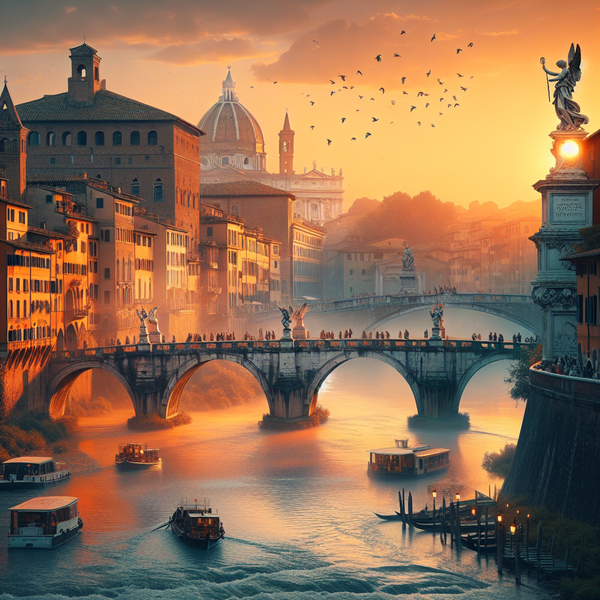
Some travelers chase the perfect espresso; others seek a hidden piazza. But for anyone who loves the scent of old paper and the feel of timeworn bindings, Italy’s libraries and historic bookshops are the country’s quietest treasures. Beyond frescoed churches and sunlit terraces, these sanctuaries of knowledge tell stories that never age. They are not tourist checklist stops, but experiences—rooms where scholars once quarreled, poets scribbled notes, and vellum manuscripts still whisper under glass.
Go to the section
ToggleThe Monumental Ambrosiana Library in Milan: Where Leonardo’s Pages Still Turn
In the heart of Milan, just behind the bustling Piazza del Duomo, stands the Biblioteca Ambrosiana. Founded in the early 17th century, it remains one of Europe’s oldest public libraries. Step past the archways of the adjoining Pinacoteca Ambrosiana, and you’ll find not only paintings by Caravaggio but also Codex Atlanticus — a breathtaking collection of Leonardo da Vinci’s sketches and scientific notes. Visitors can view rotating displays under dim, conservation-safe lighting, and many descriptions are bilingual, which makes it accessible for English speakers.
Practical tip: book combined tickets to the library and gallery in advance online, as daily entry numbers are limited for conservation reasons. The reading rooms are not open to the general public, but the exhibitions rotate regularly, giving repeat visitors new material to explore.
Venice’s Biblioteca Nazionale Marciana: Columns, Columns, and Collected Wonders
Facing the lagoon opposite the Doge’s Palace, Biblioteca Nazionale Marciana guards the intellectual soul of Venice. Jacopo Sansovino’s building is considered one of the finest Renaissance public structures, gilded and carved in marble that catches the late-afternoon light. Inside, ceiling frescoes by Titian and Veronese hover above rows of antique globes and early printed atlases that once guided Venetian merchants. The collection now holds over one million volumes, including the original manuscripts of Petrarch and Bessarion.
Unlike many monumental institutions, Marciana opens part of its reading rooms to visitors who register in advance — useful for researchers exploring Venetian maritime history. Nearby, the Libreria Sansoviniana wing also hosts rotating exhibits on rare bindings and printmaking, often free with museum passes that include the Doge’s Palace.
Florence’s Biblioteca Medicea Laurenziana: Michelangelo’s Stairway to Silence
In Florence’s San Lorenzo complex, the Biblioteca Medicea Laurenziana is a masterpiece of both architecture and intellect. Michelangelo designed its vestibule and sweeping staircase to embody the movement from worldly bustle to scholarly calm. Inside lies an unparalleled manuscript collection once owned by the Medici family—more than 11,000 volumes below frescoed ceilings by Vasari. You can stand almost alone in the long, wooden reading hall, where centuries-old desks still hold manuscript chains that once secured books against theft.
Tickets are purchased at the Basilica di San Lorenzo office, and the library operates limited opening hours—usually mornings from Tuesday through Saturday—so plan around that detail. For photography lovers, the diffused light through the tall windows makes one of the most elegantly austere interiors in Italy.
Rome’s Angelica Library and Its Hidden Book Aroma
While the Vatican Library dazzles with its secrecy, the Biblioteca Angelica near Piazza Navona offers open doors to those who love the lived-in scent of old parchment. Established by Augustinian monks, it became the first public library in Rome and still hosts reading desks that seem unchanged since the 18th century. Its 200,000 volumes include early editions of Dante’s works and a significant collection of early printed Bibles. The entrance is discreetly located on Piazza Sant’Agostino 8; buzz for access during weekday mornings and you’ll step straight into a baroque reading room that feels almost untouched by tourism.
For anyone seeking quiet work time, registration as a guest reader is simple: bring ID and proof of study interest. Wireless connection is available, but most visitors prefer to disconnect—there’s something otherworldly about reading beneath carved cherubs with the distant murmur of church bells outside.
Libreria Acqua Alta in Venice: Floating Books and Flood Marks
Venice’s most photographed bookshop, the Libreria Acqua Alta, somehow feels more authentic in person than in the countless online images. Nested in Calle Longa Santa Maria Formosa, it’s a labyrinth of stacked books resting in bathtubs, gondolas, and even watertight barrels—an improbable survival strategy against the city’s famous acqua alta floods. The owner keeps resident cats who nap on proud piles of atlases, and a staircase built entirely from old encyclopedias leads to a back terrace overlooking a small canal.
The shop is open daily, and though it attracts crowds, early morning visits allow time to browse the Italian and English vintage sections unhurried. Bring cash for purchases; the card machine is famously temperamental when tides run high.
Antica Libreria Cascianelli in Rome: A Time Capsule of Antique Knowledge
Just behind Piazza Navona, Antica Libreria Cascianelli resembles more a private study than a bookshop. Established in the 19th century, it remains largely unchanged, with wooden cabinets displaying leather-bound tomes beside antique globes and botanical prints. The shop has supplied collectors, museums, and even film sets in search of historically accurate props. The owners happily discuss provenance details—ask to see the tiny mezzanine gallery for fine engravings of Roman ruins.
Unlike modern bookshops, Cascianelli closes over midday like traditional Roman enterprises, usually from 1pm to 4pm. Plan your visit accordingly, and remember that browsing here feels like walking through a library within a time machine.
Florence’s Libreria Gonnelli: Where Scholars and Tourists Meet Over Rare Prints
The Libreria Antiquaria Gonnelli on Via Ricasoli has served Florentine artists and collectors since the late 1800s. Its high ceilings and mezzanine galleries display maps of early Tuscany, art monographs, and manuscripts whose calligraphy alone is worth admiration. Unlike many antiquarian stores, Gonnelli actively welcomes visitors unfamiliar with rare books—staff encourage browsing and even handle requests to trace specific printmakers or map engravers. The shop also runs periodic exhibitions of woodcuts and modern artist books, often free to enter.
For travelers combining museum visits, the location is ideal—two minutes from the Accademia Gallery hosting Michelangelo’s David. It’s possible to pop in between major sightseeing stops and still feel you’ve touched something deeply Florentine.
Turin’s National University Library: The Quiet Majesty of Piedmont’s Capital
In Italy’s far north, Turin hides one of the most stately archives: the Biblioteca Nazionale Universitaria di Torino. Its marble reading room, rebuilt after historic fire damage, shelters manuscripts that once belonged to the House of Savoy. You can see Galileo’s letters and early anatomical drawings from the city’s once-renowned medical academy. The library’s staff often organize free Sunday tours—an excellent way to access areas normally restricted, like the stacks vault where restorers demonstrate paper conservation.
Turin’s affinity for chocolate and books makes a perfect pairing: afterward, step to Baratti & Milano at Piazza Castello for a dense cioccolata calda thick enough to stand a spoon upright.
Parma’s Biblioteca Palatina: Pages Fragrant With Parmesan and History
Within the Pilotta Palace complex, the Biblioteca Palatina di Parma merges literary history with the sensory world of Emilia-Romagna. Founded under Duchess Maria Luigia, Napoleon’s wife, it remains one of Italy’s least crowded historic libraries. Its wooden shelves glow honey-gold under natural light, filled with early music scores, including those of composer Giuseppe Verdi who lived nearby. Visits can be combined with the National Gallery ticket, which is efficient for travelers managing tight itineraries.
For lunch, cross to the nearby Strada Farini for a plate of freshly shaved Parmigiano Reggiano and a glass of local lambrusco—proof that even in Parma’s reading rooms, nourishment comes in many forms.
Libreria Berisio in Naples: Vintage Culture Beneath Ceiling Frescoes
Naples hides its bibliophile heart within Libreria Berisio on Via Port’Alba, the street famed for secondhand books sold under the colonnades. Once a printing house, Berisio functions as both bookstore and evening bar, where live jazz plays among shelves of yellowed philosophy texts and Neapolitan poetry. Locals come after dinner for aperitivi surrounded by Roman law manuscripts and soft lamp light. Travelers can browse affordable modern Italian novels downstairs and first editions upstairs behind the bar counter.
Unlike curated museum-like shops, this one evolves nightly. Arrive near 7pm for quieter browsing; later, it becomes part of Naples’ vibrant student nightlife—proof that Italian libraries and bookshops remain living, breathing culture, not relics of it.
Planning an Italian Book Trail
Visiting Italy’s finest libraries and historic bookshops demands balance between history and logistics. Many maintain old-fashioned visiting hours, often closing Sundays and afternoons. Use local tourist offices or municipal websites to confirm opening schedules, as smaller institutions occasionally close for restoration or private study.
- Book entry tickets online when available, especially for Ambrosiana (Milan) and Laurenziana (Florence).
- Carry government-issued ID for libraries requiring reader registration, such as Angelica (Rome).
- Combine library visits with nearby cafés or galleries—this preserves your energy and allows time for reflection.
Italy’s literary spaces remind travelers that knowledge and beauty share the same address. Each library and bookshop rewards curiosity with more than history: a sense that reading, like travel itself, is a journey best experienced slowly, page by page.