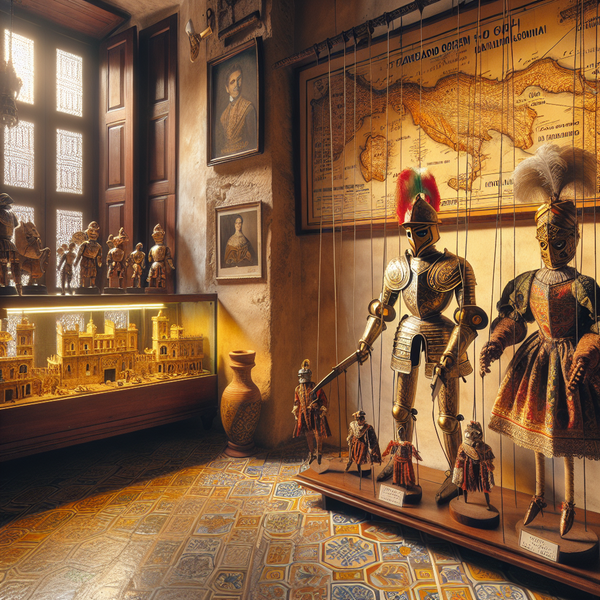
If you’ve wandered through a Sicilian market and paused at the sight of gleaming knights with plumed helmets and golden armor, you’ve already met the island’s most enduring storytellers: the pupi, or traditional Sicilian marionettes. Far more than decorative souvenirs, these hand-carved figures form the backbone of Sicily’s opera dei pupi—a living folk theater recognized by UNESCO as part of the Intangible Cultural Heritage of Humanity. But finding authentic performances, especially in an age of mass tourism, requires a little insider knowledge. Having spent years navigating backstreets from Palermo to Siracusa in search of genuine stages rather than tourist imitations, I’ve learned where the puppet strings still move to the rhythm of Sicilian life.
Go to the section
ToggleUnderstanding Sicily’s Opera dei Pupi Tradition Before You Go
The opera dei pupi originated in the early 1800s as street entertainment recounting the grand tales of Orlando and Rinaldo, medieval knights drawn from La Chanson de Roland and Renaissance epics. Each character—Orlando in silver armor, Angelica in shimmering silk, and the Saracen warrior Rodomonte—embodies epic virtues and vices that Sicilian audiences have known for generations. The performances use intricate mechanisms: rods and strings attached to puppets carved from lime or beech wood, often with metal armor weighing several kilograms. Understanding this mechanical artistry is crucial; the weight gives each movement the stately gravity of chivalric combat, something mass-produced replicas can’t emulate.
Before attending a show, it helps to learn a few basic terms. A parraturi is the narrator who gives voice to dozens of characters, often improvising in Sicilian dialect. The opranti—the puppeteers—must coordinate gestures, fight scenes, and shifting backdrops painted with bright tempera colors. Realizing this helps you appreciate that a single performance can represent hundreds of hours of craft.
Where to Find Authentic Puppet Theaters in Palermo
Palermo, the capital of Sicily, remains the beating heart of the opera dei pupi tradition. In the Kalsa neighborhood, near the waterfront, lies the celebrated Teatro Argento. Founded by the Argento family, who have been puppet-makers for generations, it stages productions inside a modest building on Via Pietro Torremuzza. The aroma of wood polish mixes with the rhythmic clang of wooden swords. It’s one of the few places where you can arrive early, peek into the backstage workshop, and see a craftsman repair an aged puppet’s armor with a soldering iron while discussing family history over espresso.
Just a ten-minute walk away, the Museo Internazionale delle Marionette Antonio Pasqualino on Piazzetta Antonio Pasqualino houses an incredible collection of over 4,000 puppets, playbills, and stage apparatus. While it’s a museum, it regularly hosts live productions in collaboration with Palermo’s puppet families. Attend one of its evening shows: the audience often includes local children on school outings alongside theater scholars from abroad, making it a uniquely Sicilian mix of learning and laughter. If you’re curious about the craft itself, the museum sometimes runs short workshops where you can observe puppet-making techniques handed down through generations.
Catania’s Distinctive Puppet Traditions and Theaters
Travel east to Catania, and you’ll notice subtle but meaningful differences. Here, the puppets are larger—nearly a meter tall—and their movements more robust, reflecting the city’s fiery character beneath Mount Etna. The Fratelli Napoli Theater on Via Reitano is one of the oldest surviving companies. The Napoli family has been performing since the early twentieth century, and their productions emphasize vivid sword fights choreographed by hand rather than pre-recorded cues. If you stay after the curtain call, the director will often invite guests backstage to see how the heavy rods are manipulated through a narrow slot above the stage. Reservations are recommended, as weekend shows often sell out despite being held in a small theater.
Another Catanese company worth visiting is Teatro Macrì, located near Piazza Stesicoro. While newer, it embraces the island’s storytelling roots with modern touches—sometimes blending Sicilian ballads with accordion accompaniment. Watching the knights clash while live music plays transforms the performance into something closer to folk opera than traditional puppetry. For travelers seeking a local crowd rather than tours, Monday shows usually see fewer tourists and more families from Catania’s neighborhoods.
Hidden Puppet Theaters in Enna, Syracuse, and Ragusa
Beyond Palermo and Catania lie smaller but fiercely devoted stages. In the center of Sicily, the hill town of Enna hosts the Compagnia Brigliadoro, performing inside the cloistered courtyard of the ex-convent of San Francesco. Their shows are staged outdoors in summer under stone arches echoing with the metallic ring of marionette swords. Brigliadoro’s director, Gaetano Grasso, is known for reviving lesser-known epic tales—audiences might see Ruggiero rescuing Bradamante rather than the usual Orlando saga. The group also crafts miniature puppets for children’s education programs, keeping the tradition interactive for younger generations.
Farther south, Syracuse’s Teatro dei Pupi Vaccaro-Mauceri, near Piazza Duomo on Ortigia island, combines baroque architecture with puppet artistry. Performances take place in a candlelit hall beneath frescoed ceilings. Arrive early to chat with the Mauceri siblings, who still carve each puppet’s face by hand from linden wood and oil-paint the armor instead of using metal—a nod to preindustrial Sicilian styles. They’re generous with explanations, and it’s possible to purchase a hand-sized puppet that has actually been used on stage, not merely produced for sale.
In Ragusa, the Teatro degli Intrepidi operates within an old warehouse near Via Orfanotrofio. It’s small—barely fifty seats—but performances are raw and passionate. Instead of translated surtitles, you’ll hear Sicilian dialect throughout. Don’t worry if you miss a few words; the narration’s emotion carries through gestures, and many audience members provide running commentary under their breath—a charmingly communal experience. During Ragusa’s Christmas festival, the company stages special biblical pieces using the same engineering principles as their epic tales, allowing visitors to witness how the craft adapts beyond chivalric stories.
How to Identify Authentic Puppet Theaters in Sicily and Avoid Tourist Traps
Because opera dei pupi has become a cultural brand, imitation shows sometimes appear near major tourist routes. Genuine theaters can be recognized through a few markers. A true Sicilian puppeteer rarely uses plastic figures or supernatural lighting effects. Look for hand-carved wooden marionettes with visible wear—scratches from swords are a sign of frequent use. Ticket prices typically range from €8 to €15, and performances last about an hour, rarely more. If someone offers a show that runs all day, or if the dialogue is pre-recorded in multiple languages, it’s probably aimed purely at visitors rather than locals.
Small details confirm authenticity: families who have kept playbills going back decades, puppeteers ready to explain the symbolism behind a scene, and local children shouting advice to their favorite hero mid-duel. Authentic opera dei pupi retains its improvisational spirit, not a static script. When a puppet’s sword accidentally sticks in the stage curtain, you’ll know it’s the real thing—life unfolding with Sicilian humor intact.
Supporting Sicily’s Puppet Masters Beyond the Show
Attending performances is only one part of preserving this heritage. In Palermo and Catania, many companies sustain themselves by selling custom-made puppets. The workshop attached to Teatro Argento produces small-scale figures depicting knights or saints priced according to craftsmanship hours. Purchasing directly ensures your euros support the artisans rather than intermediaries. Some families also open their workshops to short-term apprenticeships; these few-day programs allow travelers to assist in painting backdrop scenery or assembling tiny shields, offering authentic participation that mass tours can’t provide.
If you can’t attend a full performance, step inside the Museo Pasqualino gift shop or the Vaccaro-Mauceri atelier in Syracuse to buy illustrated booklets detailing their company’s genealogies and staging methods. These serve as practical souvenirs and reference guides linking you with the living heritage networks recognized by Italy’s Ministry of Culture. Even small purchases—say, a miniature helmet or illustrated postcard—help fund conservatory programs that train the next generation of puppet makers.
When and How to Plan Your Puppet-Theater Visits
The best seasons to attend puppet shows in Sicily are spring and autumn, when towns host festivals celebrating folk culture. In Palermo, May’s annual Festival di Morgana transforms the Museo Pasqualino and neighborhood squares into open-air puppet stages. Catania often coordinates its performances with Festa di Sant’Agata, where historical parades pair saints’ effigies with puppet marches. Booking lodgings within walking distance of these venues is practical, as narrow streets can be difficult for taxis after performances conclude around 10 p.m.
Travelers driving across Sicily should check local schedules; many smaller theaters operate intermittently, publishing programs on noticeboards rather than online calendars. Carrying a basic-level Italian phrasebook or translation app helps when calling for reservations. In small communities like Enna or Ragusa, the owner himself often answers the phone and appreciates a friendly greeting—say, “Buonasera, vorrei prenotare due posti per lo spettacolo,” accompanied by patience as he checks handwritten notes.
Experiencing the Broader Cultural Context of the Opera dei Pupi
Witnessing the opera dei pupi deepens one’s understanding of Sicilian identity beyond the obvious landscapes and cuisine. These plays once echoed moral lessons for fishermen, farmers, and merchants who saw their own endurance mirrored in the knights’ trials. The shared shouting and laughter during a show create a communal space where myths coexist with daily working life. Many modern Sicilians cherish this art not only as entertainment but as a language of solidarity, a way of sharing values through sturdy puppets that never truly retire.
To travel for puppetry in Sicily is to seek continuity—an enduring connection between artisans and audiences that has survived wars, migration, and modernization. Each puppeteer’s fingerprint, each nick on a puppet’s armor, tells the real story of Sicily: resilient, handcrafted, and full of spirited voice. Find a seat, wait for the parraturi to clear his throat, and let the clang of wooden swords transport you into a legend kept alive not by nostalgia, but by living hands still pulling the strings.