Most visitors to Venice never wander beyond Murano’s glass furnaces or Burano’s technicolor houses. Yet the Venetian lagoon hides dozens of smaller islands — quiet, eccentric, and steeped in the city’s layered history. From the mystical monastery of San Francesco del Deserto to the forgotten shipyards of Vignole, exploring these lesser-known corners of the lagoon reveals an entirely different rhythm of life, accessible within an hour by vaporetto or private boat from Fondamente Nove.
Go to the section
ToggleSan Francesco del Deserto: The Monks’ Island of Silence and Cypress
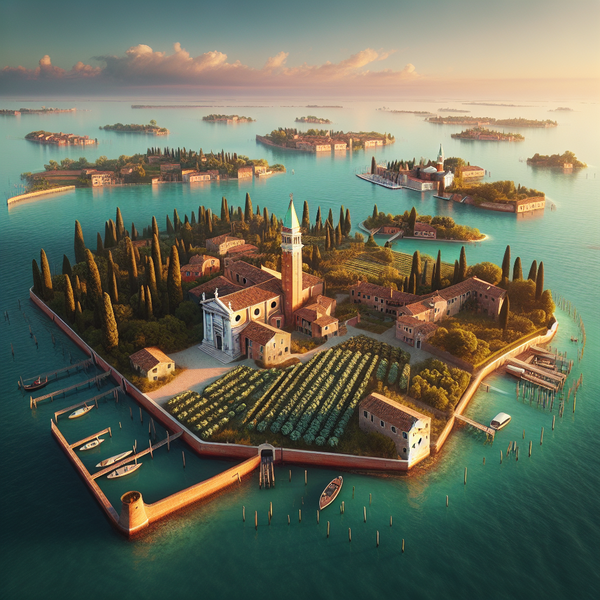
About 45 minutes by boat from Venice’s Fondamente Nove stop, San Francesco del Deserto remains one of the most spiritual islands in the lagoon. Inhabited by Franciscan monks since the 13th century, it is only accessible by private water taxi or arranged boat excursion; there’s no vaporetto route. Visitors are welcomed by a friar for a short guided visit — usually between 9:00 and 11:00 a.m., or from 3:00 to 5:00 p.m. The island’s air smells of cypress trees and salt, and its cloister garden overlooks Burano’s bell tower shimmering across the canal. The monks cultivate lavender, rosemary, and small vineyards, living almost self-sufficiently. If peace has an address in Venice, this is it.
Torcello: The Ancient Heart of the Lagoon’s Civilization
Before Rialto’s bridges rose from the marsh, Torcello was already a thriving settlement. Hop off Vaporetto Line 12 at the Torcello stop, five minutes beyond Burano, and follow the stone path lined with reed-filled canals. The basilica of Santa Maria Assunta, built in 639, still shelters Byzantine mosaics whose gold tesserae catch the changing lagoon light. Climb the bell tower — 49 steps and a narrow iron stair — for one of the oldest aerial views in Venice. Nearby, the Osteria al Ponte del Diavolo serves lagoon eel and artichokes from nearby islands. Torcello’s 12 resident inhabitants (give or take) keep the island incredibly quiet, even in high season.
Mazzorbo: Burano’s Tranquil Counterpart
Connected to Burano by a single wooden footbridge, Mazzorbo often goes unnoticed by travelers rushing toward brightly painted façades. Yet this island defines lagoon simplicity. Here, the Orto di Venezia produces a rare native wine, Venissa, from the dorona grape cultivated since the days of the Doges. You can taste it at the Venissa estate — a blend of vineyard, Michelin-starred restaurant, and guesthouse surrounded by medieval walls and canals. If you stroll along the island’s northern edge near Via di Santa Caterina, you’ll spot locals fishing or tending vegetable gardens. The atmosphere is distinctly rural, despite Burano’s postcard bustle just across the bridge.
San Lazzaro degli Armeni: A Monastic Island of Manuscripts and Marmalade
Only 10 minutes by vaporetto from San Zaccaria on Line 20, San Lazzaro degli Armeni feels worlds apart from Venice’s tourist hum. The island has belonged to the Armenian Mekhitarist order since the early 18th century. Today, a few monks manage a museum-like monastery brimming with over 150,000 volumes, including illuminated manuscripts written in Armenian, Greek, and Latin. Guided tours run daily (except Thursdays) at 3:25 p.m. and end at the small garden where monks still make marmellata di rosa — rose petal jam — sold only on site. It’s difficult to leave without a jar or two tucked into your daypack, a sweetness that captures the island’s serene mood.
Vignole and Sant’Erasmo: Venice’s Vegetable Gardens and Summer Retreats
Take Vaporetto Line 13 from Fondamente Nove to reach Vignole and Sant’Erasmo, the lagoon’s living pantry. These islands supply most of the vegetables that end up in Venice’s Rialto Market. Sant’Erasmo, nicknamed Venezia’s “orto,” is particularly known for its castraure — tender first buds of violet artichokes harvested each May. Rent a bike at the small shop near the Sant’Erasmo stop and circle the island’s perimeter in under an hour, passing farmhouses and apiaries. On Vignole, a tiny trattoria called Da Romano alle Vignole (open seasonally, usually weekends from April to October) grills lagoon fish on outdoor barbecues beneath tamarisk trees. Locals moor their boats nearby, often staying until sunset turns the vaporetto wake into molten gold.
Certosa Island: Venice’s Reclaimed Naval Green Space
Just 10 minutes from the Arsenale stop by Vaporetto Line 4.1 or private moto, Certosa Island has been reinvented as a hybrid of nature park and sailing hub. Once an abandoned naval site, it’s now home to the Vento di Venezia marina, a sailing school, and a boutique hotel within restored military structures. Visitors can rent kayaks or paddleboards to explore nearby coves and channels that commercial transport vessels never enter. Birdwatchers frequently spot herons, cormorants, and migrating ducks. For picnics, the Il Certosino bar offers sandwiches with artichokes and local cheese, ideal to pack before exploring on foot the island’s 22 hectares of greenery. It’s one of the few places in Venice where you can actually hear the wind rustling through pines.
Poveglia and the Contested Layers of Mystery
No exploration of the lagoon’s hidden islands would be complete without mentioning Poveglia, half-shrouded in myth and half in bureaucracy. Located between Lido and Fusina, Poveglia is currently off-limits to unlicensed visitors due to safety concerns and its fragile structures — remains of a 19th-century hospital and quarantine station. However, specialized photographic excursions and lagoon history tours occasionally secure access permits. Sailors passing nearby often notice the leaning bell tower visible from Lido’s Alberoni beach. The island is a haunting reminder that the Venetian lagoon was once a complex network of defense posts and quarantine zones, vital to the Republic’s survival during the Black Death. Even viewed from a distance, Poveglia radiates the layered melancholy that gives Venice its peculiar gravity.
Lazzaretto Nuovo and Lazzaretto Vecchio: The Lagoon’s Forgotten Plague Fortresses
Between Certosa and Sant’Erasmo, Lazzaretto Nuovo has been restored by a local volunteer association. Open from spring through late autumn, it tells the story of how Venice pioneered quarantine. Inside the Tezon Grande — a vast 100-meter warehouse once used for disinfecting goods — you can still see inscriptions by 16th-century sailors marking ship names and cargo. Guided tours, usually offered on weekends, trace how the Republic managed plague control with astonishing bureaucracy and precision. Across the canal, Lazzaretto Vecchio, on the other hand, served as the first true quarantine hospital in the world. Though currently under restoration, periodic open days allow visitors to walk through excavated plague pits and archaeological laboratories. These islands expose the pragmatic, sometimes chilling side of Venetian ingenuity.
Practical Tips for Exploring Venice’s Hidden Lagoon Islands
Navigating the lagoon requires planning, since vaporetto lines operate on specific schedules. Plan departures from Fondamente Nove or San Zaccaria, the main hubs for outer-island routes. The ACTV Line 12 connects Murano, Mazzorbo, Burano, and Torcello, while Line 13 reaches Vignole and Sant’Erasmo. Private water taxis from Venice city center cost around 70–100 euros one-way, depending on distance. Pack mosquito repellent from May through September, and wear non-slip shoes — many islands retain uneven stone walkways slick with algae. Always check the marea (tide) forecast before venturing out; high tides may briefly halt minor pier access.
When to Visit the Lagoon Islands for the Best Experience
Spring and early autumn bring mild temperatures and fewer crowds. In April, cherry and almond trees bloom across Sant’Erasmo’s fields, while in October the lagoon turns reflective silver under calm skies. Visiting these months also ensures more frequent vaporetto service, as winter routes are occasionally reduced. Bring a light windbreaker — lagoon breezes can shift quickly. Unlike central Venice, many islands have limited dining options, so packing snacks is sensible. The reward is solitude: you may share a stone path with herons rather than tourists.
Why Venice’s Lesser-Known Islands Matter
Exploring beyond Murano and Burano transforms one’s understanding of Venice. These ‘minor’ islands expose how the city truly coexists with its environment — cultivating food, preserving manuscripts, and remembering epidemics. Each island acts as a fragment of identity, revealing that Venice is not just built on water but built with it. Whether you’re sipping a glass of Dorona wine in Mazzorbo, cycling through Sant’Erasmo’s fields, or standing on Torcello’s ancient stones, you’re tracing the continuity of a civilization that still depends on every tide and breeze. To know Venice deeply is to follow these scattered islets until the lagoon itself tells its story.