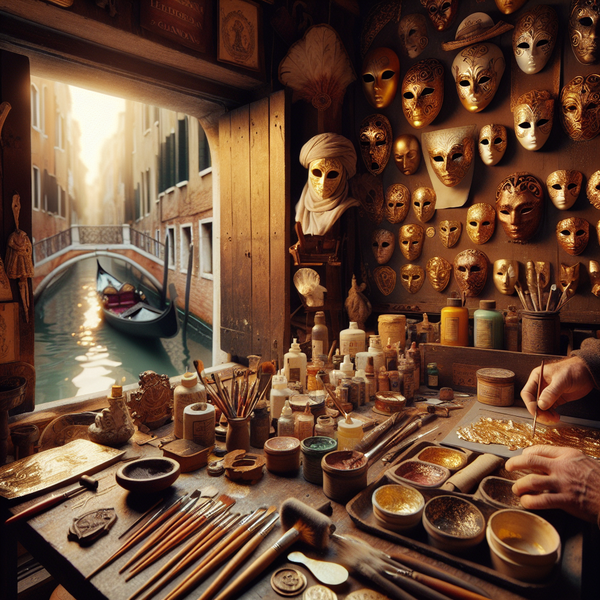
The first time you cross Venice’s Campo Santo Stefano during carnival season, the glittering masks in every shop window can feel overwhelming. Many are imported, machine-made, and far removed from the centuries-old craft that gave Venetian masks their mystique. Yet, behind unassuming wooden doors and shaded courtyards, a handful of artisans still sculpt, paint, and gild these masks by hand — keeping alive a tradition once central to Venetian identity. Finding them takes both curiosity and direction, but the reward is touching history with your own hands.
Go to the section
ToggleUnderstanding What Makes an Authentic Venetian Carnival Mask
Before you start your search, it helps to know what separates a genuine Venetian carnival mask from a tourist copy. Authentic masks are made from paper-mâché — called cartapesta locally — layered over hand-sculpted molds. The masks are light, breathable, and typically signed by the artisan on the inside. In contrast, most cheap masks sold near the Rialto Bridge or in souvenir shops on Strada Nova are plastic, imported, or airbrushed in bulk. A real workshop will smell faintly of glue and dried paint, not of synthetic finishes. Ask if the mask is made in Venice (fatto a Venezia) — the proud craftspeople will show you their workspace, often filled with tools and half-finished designs.
Traditional Mask Workshops in Venice to Visit
In the Castello district, Ca’Macana in Dorsoduro has become a local landmark for its dedication to old-fashioned mask-making. Founded by artisans who helped design pieces for Stanley Kubrick’s Eyes Wide Shut, this atelier still produces every mask manually. Visitors can join a one-hour class where they decorate a preformed paper-mâché mask using Venetian pigments and gold leaf. The shop, located at Calle delle Botteghe 3172, doubles as a working studio — you’ll see workbenches crowded with brushes and bits of foil.
Nearby, Tragicomica in Calle dei Nomboli, San Polo 2800, is another workshop offering short mask-painting lessons and longer professional courses lasting a few days. Here you can observe the molding process, where artisans layer strips of paper soaked in natural glue before the drying and cutting stage. Even if you skip the course, the shop’s collection of historical character masks — the Medico della Peste with its elongated beak or the Bauta with a square jaw design — is worth a close look.
In Cannaregio, tucked behind the Misericordia canal, La Bauta (Fondamenta dei Mori 2629) remains family-run, specializing in the traditional white plaster masks still used in Venetian theatre. Owner Sergio Boldrin, a recognized mascarer, often invites locals for private viewings of his hand-carved wooden molds. He was one of the original artisans to petition the city for protection of the mask-making craft as part of Venice’s intangible heritage.
Hidden Artisan Shops Beyond the Tourist Trails
While San Marco teems with commercial stalls, a five-minute detour into less-trafficked lanes often leads to hidden gems. In Santa Croce, Atelier Marega (Campo San Toma 2853) combines antique costume rental with mask artistry. Their upstairs workshop displays full carnival outfits stitched in brocade and velvet, while downstairs you can browse elegantly painted masks depicting commedia dell’arte figures. Ask to see their Colombina Barocco line — each one is finished with hand-applied 24-karat gold leaf.
For those exploring the outer islands, Barozzi Venetian Masks in Murano offers a rare combination of glasswork and mask design. Its owner, Gianni Barozzi, experimented with fusing Murano glass fragments into the makeup of traditional masks, creating lightweight hybrid pieces sold only on-site at Fondamenta dei Vetrai 72. You won’t find these online; the fragile materials don’t travel well, making a visit in person the only way to own such a piece.
Another noteworthy stop is Peter Pan Masks near Campo San Barnaba. Despite the whimsical name, this small shop remains serious about authenticity. Run by a couple who apprenticed under Venetian masters, they use historic stencils and handmade molds to recreate designs that once masked the nobles of the Republic. Prices range from €60 for simple papier-mâché styles to several hundred for gilded, feathered pieces. Every purchase is accompanied by a signed certificate of origin.
Joining a Mask-Making Workshop in Venice
Attending a Venetian carnival mask workshop is not only a creative souvenir but also a practical way to understand how the city’s artisans survive in a post-tourism economy. Most studios welcome small groups and require advance booking, especially during February. For example, Ca’Macana’s introductory class costs around €45 per person and includes all materials. La Bauta’s private workshop option runs about €90 and allows you to work directly with Boldrin or one of his family members. You can take your mask home once the paint has dried, often the next day.
Workshops usually take place in studios dating from the 17th or 18th century, where the air is heavy with varnish and history. Don’t wear delicate clothing — plaster dust and pigment stains are part of the experience. These classes typically last one to two hours and can be held in either English or Italian. Ask in advance if the studio provides protective aprons and shipping for finished masks; some do, others expect travelers to pack their creations carefully between layers of paper.
One particularly rewarding experience is to join an evening session in winter when the canals grow quiet. Under warm studio lights, you might find yourself tracing patterns of gold leaf while church bells echo through the narrow streets — a reminder that this art once defined how Venetians celebrated anonymity and freedom during carnival.
How to Identify and Buy Genuine Venetian Masks
Authenticity isn’t only about who made the mask, but how it was made. Venetian artisans traditionally use a cotton or gauze base, which they stiffen with a secret blend of glues. When dry, the mold is removed, sanded, and coated with gesso before decoration. A true paper-mâché mask feels flexible yet sturdy, while a fake one bends unnaturally or feels overly glossy. Always ask for the artisan’s signature or stamp inside; it’s customary among real Venetian mascareri.
Also, beware of pricing that feels too uniform. Handmade masks take several hours to several days to complete, depending on the number of layers and embellishments. If every mask on the shelf costs the same, you’re likely in a reseller’s shop. Authentic studios rarely display large stock quantities; many craft pieces to order for carnival events, theatre companies, or collectors. When possible, pay directly to the artisan’s workshop rather than to intermediaries in tourist markets.
For shipping, the post office branch at Piazzale Roma provides special cardboard boxes labeled “fragile” — a good choice for safely mailing your piece home. Alternatively, most artisans pack masks in air-padded cartons for a small extra fee. Keep receipts and certificates for customs, especially if your purchase exceeds €150.
Pairing Mask Shopping with Venetian Culture
Combining your mask hunt with related experiences deepens appreciation for the city’s layered artistry. A morning at the Museo di Palazzo Mocenigo in Santa Croce reveals the fashion history of Venice, including original 18th-century carnival garments. The museum’s textile section shows how masks complemented ornate costumes, often concealing both identity and class.
In the afternoon, wander to Teatro Goldoni near Rialto to attend a performance inspired by Commedia dell’Arte, the mask-based theatre that inspired many carnival designs. The traditional characters—Pantalone, Arlecchino, Brighella—were more than roles; they were templates for the city’s imagination. Buying a mask representing one of them feels like bringing home a piece of living theatre.
If you plan your visit around early February, book ahead for the annual Carnevale di Venezia when artisans showcase limited-edition masks at secret pop-up studios, often announced through local posters rather than online listings. The best time to browse is mid-morning, before crowds gather, when artisans still have time to chat about their craft over an espresso at nearby bacari.
Supporting Venetian Artisans Sustainably
Choosing an authentic Venetian carnival mask is also a conscious act of cultural preservation. Each purchase directly supports craftsmanship threatened by mass production. Ask artisans where their paper, pigments, and fabrics come from; many now collaborate with eco-friendly suppliers from Padua and Bologna to source nontoxic paints and recycled papers. When you respect their working time — by not bargaining aggressively and by paying in cash where possible — you contribute to sustaining a delicate local economy shaped by centuries of artistry.
Several cooperatives, such as the Associazione Mascareri Veneziani, organize open-door weekends that let visitors move between workshops connected by footbridges and narrow courtyards. These walks reveal a Venice most tourists overlook: one where life moves slowly, punctuated by the steady tap of brushes and faint laughter from behind half-dry masks. If you leave with colored fingertips and a paper bag full of curls and gold dust, you’ve likely found the real Venice — the one that still breathes behind the mask.