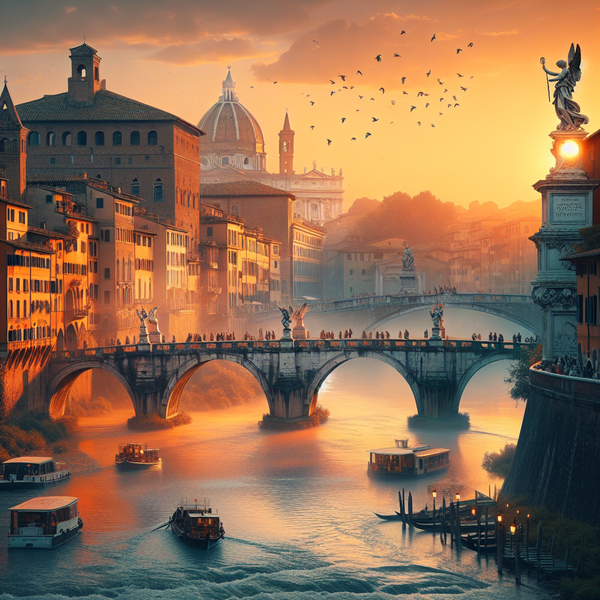
Rome never fails to astonish, yet beyond the roaring crowds around the Vatican and the Sistine Chapel lies another, quieter Rome—a Rome where master painters once worked for private congregations, and where masterpieces glow in near silence. This Rome rewards curiosity: you step through unassuming doors, often left ajar, and find entire fresco cycles, Caravaggio canvases, and mosaics that remain astonishingly intact. What makes these sites so magic is their ordinariness—daily parish life continues around art that rivals the world’s most famous museums.
Go to the section
ToggleHidden Art in Rome at San Luigi dei Francesi: Caravaggio’s Play of Light
Few travelers realize that three of Caravaggio’s most extraordinary works—The Calling of Saint Matthew, The Inspiration of Saint Matthew, and The Martyrdom of Saint Matthew—hang quietly inside San Luigi dei Francesi. The church sits a five-minute walk from Piazza Navona, between Via del Salvatore and Corso del Rinascimento. If you visit in the late afternoon around 4:00 p.m., you’ll often find sunlight filtering through the high windows, bringing the canvases alive in their intended chiaroscuro glow. Bring a €1 coin to activate the timed lighting box beside the chapel—an insider ritual every Roman art lover knows.
Rediscovering Baroque Drama at Sant’Andrea della Valle
This grand yet largely overlooked basilica stands a few blocks away on Corso Vittorio Emanuele II. Its interior boasts frescoes by Giovanni Lanfranco and Domenichino that once signaled a turning point in Baroque ceiling painting. Few realize the church inspired the opening act of Puccini’s opera Tosca. Step inside between morning Masses (generally around 10:30 a.m.) and you’ll experience a perfect balance between sacred quiet and radiant art. The pendentives around the dome, executed with breathtaking illusionism, prefigure the grand decorations of the following century.
Cloistered Gems in San Giovanni Battista dei Fiorentini
Facing the Tiber where Via Giulia meets Ponte Principe Amedeo, this church was built for Florence’s expatriate community. Michelangelo himself contributed preliminary design ideas, though the completed façade belongs to Carlo Maderno. Wander toward the right transept and you’ll spot an expressive bronze sculpture by Pietro Bernini, father of Gian Lorenzo. The marble floors glisten in the afternoon light from narrow windows, and weekday mornings (especially Tuesdays) are the best times to enjoy the space without interruption. Few churches in Rome have this level of Renaissance-to-Baroque transition so readable in a single glance.
Santa Maria della Vittoria and Bernini’s Sensual Genius
Although close to Termini Station, this small Carmelite church still surprises most visitors who push past its modest façade. The Cornaro Chapel hosts Gian Lorenzo Bernini’s Ecstasy of Saint Teresa, a marble group that practically breathes. The trick is to visit mid-morning: light entering from a hidden window above the Cornaro family theater box hits the gilt rays behind the angel’s spear precisely then. Stand toward the back instead of crowding the front pews; that’s where Bernini calibrated the viewer’s angle. The sacristy volunteers sell small reproductions and can unlock nearby side chapels if you ask respectfully.
Caravaggio Revisited at Santa Maria del Popolo
Before Piazza del Popolo’s twin churches came to symbolize Baroque symmetry, Santa Maria del Popolo stood here guarding the northern gate. Inside the Cerasi Chapel you’ll find Caravaggio’s late works Conversion of Saint Paul and Crucifixion of Saint Peter. These paintings face Annibale Carracci’s altarpiece, creating a delightful dialogue between two artistic rivals. Visit early—doors open at 7:30 a.m.—before tour groups cycle through. The church also holds Bramante’s architectural touch in the Chigi Chapel, restyled later by Raphael. For lovers of layered Renaissance stories, no spot in Rome condenses so much artistic rivalry into one small space.
Hidden Mosaic Masterpieces at Santa Prassede
Just off Via Merulana near Santa Maria Maggiore, Santa Prassede hides gold-ground mosaics unequaled since Byzantine times. Walk straight ahead to the Zeno Chapel: you’ll see Christ with concentric rings of angels, an astonishing survival of early medieval art. The mosaic tesserae still sparkle under the simple halogen lamps, best appreciated close to lunchtime when the sun outside is high and interior contrast low. The small upper gallery accessed from the right nave gives a closer view—mention your interest to the custodian, who usually opens it quietly for serious visitors.
Illusionary Frescoes at Sant’Ignazio di Loyola
Sant’Ignazio sits between the Pantheon and Via del Corso, and while tours sometimes pour into the space, few stay long enough to test Andrea Pozzo’s brilliant trompe-l’œil dome. There is, in fact, no actual dome: step to the golden disk set into the marble floor just before the main aisle, look up, and the flat ceiling suddenly inflates into a three-dimensional vision of heaven. Tour groups often rush past, but locals linger, tracking the fresco’s geometry and reflecting on the Jesuit skill of persuasion through art. Even on dull winter days, overhead spotlights recreate the illusion’s brightness, keeping the spectacle alive year-round.
Trastevere’s Secret Sanctuary: Santa Cecilia in Trastevere
Across the Tiber, Trastevere’s alleys hide the serene basilica of Santa Cecilia. In the apse, Pietro Cavallini’s Last Judgment fresco stands as one of Rome’s few Gothic survivors. Ask politely at the convent entrance (doorbell on the left of the façade) and the nuns may allow you into the choir loft for the best viewing angle. The church also contains Stefano Maderno’s sensitive sculpture of the saint, lying beneath the altar—the marble folds replicate what witnesses said to have seen when her tomb was opened centuries ago. Arrive before 9:00 a.m. to feel the full hush before the neighborhood cafés open.
San Pietro in Montorio: Raphael’s Circle and Bramante’s Tempietto
Set on the Janiculum Hill, San Pietro in Montorio is often bypassed by those heading straight to panoramic viewpoints. Yet inside the church, frescoes by Sebastiano del Piombo and fragments attributed to Raphael’s school survive. The adjacent courtyard shelters Bramante’s Tempietto, a tiny temple marking the alleged site of Saint Peter’s crucifixion. It’s accessible most mornings via polite request at the Academy of Spain next door. The combination of Renaissance harmony and hillside quiet allows you to absorb Rome’s artistic depth away from the noise below.
Practical Tips for Exploring Rome’s Hidden Art Churches
Because many of these churches remain functioning parishes, planning around Mass times matters. Check posted schedules or the Diocese of Rome’s online listings the night before. Modest dress is expected: covered shoulders and knees. Carry €1 coins for lights; some chapels rely entirely on visitor contributions to illuminate masterpieces. Many churches close midday—typically from 12:30 p.m. to 3:30 p.m.—so use that time for a nearby espresso rather than rushing to a locked door. Finally, keep your voice low and your phone away; these spaces are living communities of faith as well as museums.
Why Rome’s Hidden Churches Matter
The glory of these lesser-known sanctuaries lies not just in their art but in their accessibility. You can reach all of them within a single day using Rome’s compact center: start near Piazza del Popolo and finish in Trastevere, tracing centuries of artistry along roughly five kilometers. The reward is profound—art encountered where it was meant to be, not behind a velvet rope but amid candle smoke and whispered prayers. For travelers willing to slow down and look closely, Rome still offers undiscovered masterpieces behind doors that most people simply walk past.