When the Italian summer turns blisteringly hot, locals escape the coasts and head inland, climbing toward sparkling mountain lakes where the water stays cool even in August. Far from the crowds of the Amalfi or Cinque Terre, these alpine basins offer something rare: clean, swimmable water surrounded by pine forests and dramatic peaks. Many are easily reached by local buses from regional towns — others require a 30-minute hike that rewards you with quiet coves and glacial clarity.
Go to the section
ToggleLake Molveno: Trentino’s Emerald Jewel in the Brenta Dolomites
Lake Molveno, perched at 864 meters above sea level in Trentino, consistently wins awards from the Italian environmental group Legambiente for water purity. The temperature in midsummer hovers around 20–22°C, refreshingly cool but comfortable for swimming. The lakefront promenade, just steps from the village center, has free beaches, piers, and kayak rentals. You’ll spot hang gliders drifting down from Paganella early in the morning — locals say that’s the best time for a peaceful dip before the breeze picks up. Parking on Viale Lungolago is free before 9 a.m., and lifeguards patrol the main beach between June and early September.
Lake Orta: Piedmont’s Secret for Tranquil Summer Dips
Tiny and sheltered, Lake Orta sits to the west of the better-known Lake Maggiore but avoids its traffic entirely. The village of Orta San Giulio has cobblestone alleys leading down to Bagnera Beach, where swimmers can dive in from old stone steps. The water warms up faster here than at higher alpine lakes — around 24°C in July — making it excellent for long swims. Cross to the island of San Giulio by small ferry (tickets sold near Piazza Motta) and you can find quiet edges to swim, with the sound of distant church bells echoing across the surface. The local trattoria Il Bocciolo serves a post-swim risotto al pesce persico, made from perch caught right in the lake.
Lake Braies: South Tyrol’s Alpine Showstopper
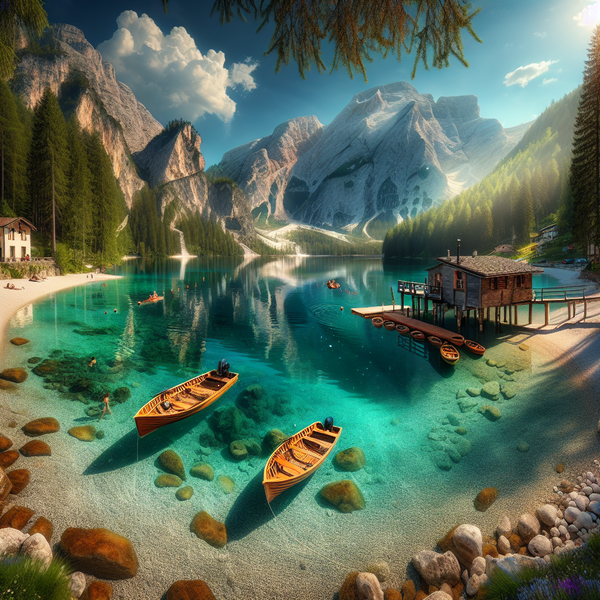
South Tyrol’s Lago di Braies is famous for its photogenic wooden boats and otherworldly turquoise water framed by the Dolomites di Sennes. To truly experience it, visit before 9 a.m., when car access is still open along the road from San Vito. After that, shuttles run regularly and the crowds thicken. Swimming is technically allowed but best done early when the surface temperature reaches its daily high of about 18°C. The sensation of diving into that crisp water under peaks over 2,800 meters high is unforgettable. A short 30-minute trail around the lake gives access to small gravel coves ideal for short dips between birch trees.
Find all the best hotel deals here
Lake Idro: A Quiet Alternative to Garda for Serious Swimmers
In Lombardy, the long, narrow Lake Idro sits at 368 meters and is perfect for open-water swimming thanks to its consistently high water quality and modest boat traffic. Summer mornings see groups from local swimming clubs tracing the shoreline from Crone to Vesta — roughly 3 kilometers one way. The southern beach near Ponte Caffaro has facilities with showers, picnic zones, and easy parking. If you prefer something more spontaneous, rent a paddleboard from IdrosUP and jump in mid-lake to float under the rocky cliffs that mark the border with Trentino. Windsurfers often appear by early afternoon, so the calmest swim is between 8 a.m. and 11 a.m.
Discover the best local experiences here
Lake Misurina: Swimming Beneath the Tre Cime di Lavaredo
At nearly 1,754 meters, Lake Misurina in Veneto is the highest natural lake in the Dolomites accessible by road. The panorama includes the Tre Cime di Lavaredo, one of Italy’s most recognizable mountain groups. The water rarely exceeds 17°C, but on sunny afternoons, the surface warms enough for short swims near the small pier opposite the Grand Hotel Misurina. Parking along Via Guide Alpine di Cortina costs two euros per hour, but locals often use the cycling path surrounding the lake to reach hidden dips. Bring a quick-dry towel: the air chills fast once shadows move in around 4 p.m.
Lake Antrona: A Hidden Gem in Ossola Valley
Lago di Antrona, tucked near Domodossola, was formed by a natural landslide centuries ago. A scenic loop trail circles the lake (roughly one hour on foot) and reveals multiple flat boulders where you can sunbathe and slip quietly into water that hovers near 22°C mid-summer. The lake’s mineral-rich hue glows deep green due to copper-bearing stone beneath the surface. Small parking areas fill quickly on weekends, so aim for early arrival or pair your swim with a morning hike to the nearby Antrona waterfall — a spot known among locals for cliff-jumping when snowmelt runs high.
Lake Ledro: Family-Friendly Shores and Crystal Clarity
Only 15 kilometers west of Riva del Garda, Lake Ledro shares the same vivid blue tones but none of the traffic. The four main beaches — Pieve, Molina, Mezzolago, and Pur — each offer grassy lawns and gentle entries into the lake, ideal for kids or less confident swimmers. Water temperature typically peaks around 24–25°C in July, warm enough for prolonged swims. Lifeguards operate during the day, and pedal boat rentals line the waterfront in Pieve. For cultural context, visit the nearby Museo delle Palafitte, displaying archaeological finds from Bronze Age pile dwellings discovered in the shallow southern end.
Lake Tovel: Swimming in a Natural Park Setting
Lake Tovel inside Trentino’s Adamello-Brenta Nature Park is known for its mysterious reddish hue that once appeared in summer due to an ancient algae species (now gone). Today, the lake remains a pristine place to swim in crystal-clear water at roughly 1,178 meters altitude. Arrive by shuttle bus from Cles; car access is limited to keep pollution low. The small wooden dock near Chalet Tovel offers the best entry point. Water is cold — around 19°C in warmest months — but swimmers are rewarded with absolute silence, broken only by the calls of alpine choughs circling above the fir-covered slopes.
Lake Fusine Superiore: Border Beauty Near Slovenia
In extreme northeastern Friuli Venezia Giulia, the twin Fusine lakes sit beneath Mount Mangart, just 5 kilometers from the Slovenian border. Of the two, Upper Fusine (Superiore) offers more privacy and richer color thanks to underground springs. Bathing is allowed though unmarked — locals recommend the small gravel area near the wooden bridge where the path to Rifugio Zacchi begins. The lake’s altitude of 924 meters keeps it nippy, roughly 18°C at best, but the reward is solitude even in high season. Bring swimming shoes: the lakebed is stony and cold underfoot.
Planning Tips for Swimming Italy’s Mountain Lakes
Most mountain lakes have no tides but may fluctuate slightly due to snowmelt. For optimal swimming, mid-July through early September offers the warmest conditions. Early mornings are calmest before mountain winds rise. Pack a neoprene vest if you plan long-distance swims in Braies or Fusine. Always check local signage; some alpine lakes prohibit bathing to protect fragile ecosystems.
- Renting kayaks is often cheaper directly at the lake than through online portals — for instance, €10/hour at Molveno’s main beach.
- Public transport connects many lakes to regional hubs: buses from Trento to Molveno take about 1 hour 15 minutes, while trains from Milan to Orta-Miasino reach Lake Orta in under two hours.
- Consider packing biodegradable sunscreen, as some natural parks test for chemical contaminants to preserve water quality.
Why Mountain Lakes Beat the Coast in Summer
Italian mountain lakes offer something the Mediterranean cannot: predictably fresh water, dramatic alpine scenery, and space to breathe even in August. Accommodations in towns like Molveno or Ledro are typically 30–40% cheaper than coastal resorts at the same time. Locals often combine swimming with hiking, cycling, or picnicking under pines — a rhythm shaped by cooler evenings and fewer mosquitoes. For travelers seeking authentic Italian summer calm, these high-altitude waters deliver the perfect balance of adventure and serenity.