From the incense-filled cathedrals of Sicily to the fireworks bursting over Florence’s cathedral square, Easter in Italy unfolds as a tapestry of rituals, processions, and family feasts that fuse religion, community, and centuries-old craftsmanship. Traveling through Italy in spring means encountering living tradition — not a re-creation for tourists, but real devotion that locals nurture year after year. Whether you join pilgrims on a dawn procession or crack open a chocolate egg filled with a surprise, Easter offers a vivid window into how Italians weave faith into everyday life.
Go to the section
ToggleEaster Traditions in Rome: Solemn Processions and Papal Blessings
Rome remains the spiritual heart of Italy’s Easter observances. Good Friday centers on the Via Crucis at the Colosseum, where the Pope leads a candlelit procession tracing the 14 Stations of the Cross. Thousands gather along the ancient amphitheater’s base, holding small wax torches that illuminate the travertine arches — a sight both intimate and monumental. If you plan to attend, arrive at least two hours before the 9 p.m. start to find standing room near the Arch of Constantine.
Easter Sunday morning typically draws pilgrims to St. Peter’s Square for the Urbi et Orbi blessing. While the service begins at 10 a.m., metal detectors often open around 7:30, so early arrival rewards you with a closer view of the balcony. Many Romans still dress formally for the day and follow the Mass with lunch featuring abbacchio al forno (roast lamb with herbs) and corallina salami folded into fresh bread.
Florence’s Explosion of the Cart: Fireworks, Doves, and Renaissance Splendor
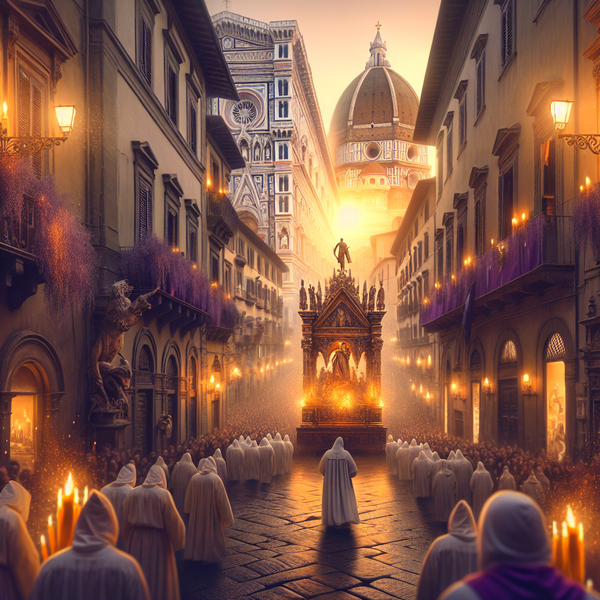
Florence’s Scoppio del Carro — literally, the “Explosion of the Cart” — happens every Easter Sunday in Piazza del Duomo. Around 10 a.m., white oxen adorned with garlands pull a centuries-old wooden cart from Porta al Prato to the cathedral. The climax comes when a mechanical dove called the colombina ignites a cascade of fireworks inside the square. Locals hold their breath hoping for a flawless ignition: tradition says a perfect explosion promises a good harvest and prosperity for Florence. If you want a camera shot with both the fireworks and Brunelleschi’s dome, position yourself along Via dei Calzaiuoli by 9 a.m.
Florence’s Easter weekend often coincides with spring concerts at the Church of Orsanmichele and religious exhibitions in Palazzo Vecchio. After the festivities, locals head toward the Oltrarno district for quiet family lunches of artichokes alla Romana and sweet schiacciata di Pasqua bread scented with anise.
Find all the best hotel deals Book your Easter stay in Italy
Sicily’s Passion Plays: Trapani and Enna Bring Faith to the Streets
In Sicily, Holy Week carries an intensity that reflects the island’s Spanish heritage. Trapani’s Misteri di Trapani, a 24-hour procession held from Good Friday through Saturday morning, features twenty distinct wooden floats depicting the Passion. Each group of statues — known as a mistero — belongs to a local trade guild, from fishermen to carpenters. You can spot their pride in the meticulous restoration of the figures and in the marching bands that fill the narrow alleys around Via Garibaldi with brass hymns and slow drumbeats.
Farther inland, Enna’s Holy Thursday procession gathers more than 2,000 hooded confraternity members, each carrying torches through silent streets. The event’s origins date to the 15th century, and its eerie discipline contrasts with the exuberant celebrations elsewhere. For travelers, booking accommodation near Piazza Vittorio Emanuele allows a quick walk to both the cathedral and the Good Friday route, since roads often close from midday onward.
The Resurrection Run in Tuscany: The Risen Christ in Prato and Beyond
Not far from Florence, the town of Prato celebrates Easter with the Ostensione del Sacro Cingolo, the public display of the Virgin Mary’s belt inside the cathedral. Local families have observed this devotion since medieval times, and every Easter Monday a costumed parade crosses the old center toward Piazza del Duomo accompanied by drummers and flag throwers. It’s best to arrive by train from Firenze Santa Maria Novella; the journey takes just 25 minutes, and Prato Centrale station is a short walk from the historic quarter.
Elsewhere in Tuscany, a smaller but charming celebration takes place in Asciano, in the Siena hills. Here, locals perform the Scoppio del Carro in miniature, with boys carrying a small cart through the square before lighting its fireworks. The event remains unpublicized, but asking in local bakeries for the schedule yields authentic encounters. Finish your day tasting ciambellini biscuits dipped in Vin Santo, a custom that marks the sweet side of Easter across the region.
Discover the best local experiences Join Easter tours and workshops in Italy
Umbrian Easter: Living Pageantry in Assisi and Spello
Umbria’s hilly towns lend a serene backdrop to Easter rituals focused on community and reflection. In Assisi, Good Friday witnesses the Processione del Cristo Morto starting from the Cathedral of San Rufino. Locals carry wooden statues by flickering candlelight along Via San Francesco, accompanied only by a slow drum rhythm from the Confraternity of the Dead Christ. The path ends at the Basilica of St. Francis, where visitors can view frescoes illuminated in soft evening colors — a reminder of both artistic beauty and penitence.
Nearby Spello celebrates La Resurrezione with a morning pageant of music bands and flower-bedecked floats. Travelers who come early may glimpse artisans preparing petals for June’s famous Infiorate. Staying in rural agriturismi such as those along the Via degli Ulivi offers easy access to both events and vistas of blooming olive groves.
Sardinia’s Easter Duality: S’Incontru and Spanish Echoes
On Sardinia, Easter retains both joy and gravity in the distinct S’Incontru ceremony, meaning “The Meeting.” In villages like Oliena or Orgosolo, separate processions for Christ and the Virgin set out from different churches. When the two statues meet in the main square, the congregation cheers, and rifle shots or fireworks mark the resurrection moment. The men shout “Viva Santu Santu!” while women wave white handkerchiefs — a cultural blend of Catholic devotion and local festivity.
Alghero’s Holy Week, meanwhile, mirrors the Spanish Semana Santa, with penitents in crimson robes carrying crosses through cobbled alleys lit by oil lamps. The North Sardinian weather often turns mild by Easter, inviting afternoon walks along the Bastioni, Alghero’s seafront ramparts, to watch families stroll after processions while sampling marzipan lambs called agnellini.
Neapolitan Easter: Music, Folklore, and Sweet Indulgence
Naples transforms Easter into a feast of sound and flavor. Local parishes host multiple processions, but the one from the Church of Santa Chiara along Spaccanapoli stands out for its choir of children singing traditional hymns passed down orally. Crowds stop for a taste of pastiera napoletana — a ricotta and wheat tart perfumed with orange blossom — often baked two days earlier so flavors can mature.
Around Easter Monday, or PASQUETTA, Neapolitans head to the Bay of Naples for picnics. Park Virgiliano offers panoramic views of Capri and Posillipo, while families grill sausage sandwiches. If you wish to join, purchase supplies the day before — most bakeries close Monday afternoon, and public transport runs on reduced schedules.
Regional Easter Foods and Gift Customs Across Italy
No Italian Easter passes without its culinary symbols. In northern regions like Lombardy and Veneto, the centerpiece dessert is Colomba di Pasqua, a dove-shaped brioche topped with almonds. Excellent artisanal versions can be found at Milan’s historic Cova patisserie near Via Montenapoleone. In central Italy, sweet cheese bread flavored with pepper accompanies savory cold cuts, while southern households bake cassata or cuddura — shortbread rings decorated with whole eggs.
The modern custom of giant chocolate eggs hides small gifts inside, a tradition particularly appealing to children. Local chocolatiers such as Perugina and Venchi produce limited Easter editions; visiting their boutiques in Perugia or Turin offers insight into Italian craftsmanship beyond the mainstream. To experience the holiday table as locals do, book lunch at a family-run trattoria offering fixed Easter menus — often posted weeks in advance on hand-written signs.
Planning Your Italian Easter Journey
Because Easter dates follow the lunar calendar, accommodations in popular towns — especially Florence, Rome, and Sicily’s festival sites — fill quickly. Public transport schedules may shift for church processions, so confirm bus and train timetables a few days before. Many museums in smaller towns close on Good Friday afternoon but reopen Easter Monday for special exhibits. The rewards, however, are immense: seeing locals live their faith amid blooming wisteria and fresh spring produce creates an authentic sense of place that no brochure can convey.
Whether you stand under the fireworks in Florence, follow torches through Enna’s alleys, or share pastiera with Neapolitan friends, traveling in Italy at Easter connects you with one of Europe’s richest living traditions — heartfelt, communal, and beautifully Italian.