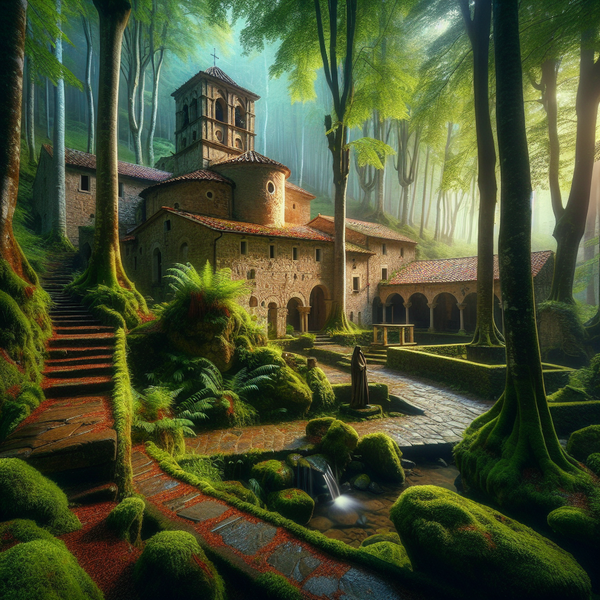
When the cypress-lined roads and terracotta villages give way to silence and oak-canopied paths, that’s where Italy’s forest monasteries come alive. These are places where chant meets birdsong, where stone walls breathe centuries of devotion, and where travelers can still find the soft rhythm of life that first drew monks into isolation. Visiting one is less about sightseeing than *listening*—to the landscape, to your breath, and to history murmured through moss-covered courtyards.
Go to the section
ToggleThe Casentino Forest Monasteries of Tuscany: Camaldoli and La Verna
Hidden inside the Casentino National Forest Park east of Florence, two of Italy’s most treasured monasteries still greet visitors with incense, alpine air, and the steady patience of centuries. The Eremo di Camaldoli, founded by Saint Romuald, sits among ancient fir trees at about 1,100 meters altitude. Its white-robed monks still live in small hermitages reached by a short footpath from the main guesthouse. Travelers can visit the medieval pharmacy on site, where herbal liquors and ointments are made using recipes that date back several hundred years. The drive from Arezzo takes about an hour, winding through the forest that Saint Francis himself once visited.
Further south within the same park lies La Verna Sanctuary, pressed dramatically against a limestone cliff above the Arno Valley. Pilgrims come for the cave where Saint Francis received the stigmata. Yet even skeptics find quiet awe along the trail that leads through beech woods between the chapels. Start early from the town of Chiusi della Verna; the round-trip walk takes roughly two hours, not counting time to linger at the small refectory where monks still serve simple meals.
Subiaco Monasteries near Rome: Sacred Caves and Forest Valleys
Less than ninety minutes east of Rome, in the valley carved by the Aniene River, the Monastero di San Benedetto at Subiaco appears to grow organically from the cliffside. Known as the “Sacro Speco,” or Holy Cave, it was built around the grotto where Saint Benedict lived as a hermit. Every wall seems painted with frescoes—from the 13th century portraits of medieval saints to intricate patterns on stairwell arches. What makes the visit memorable is the soundscape: cascading water, climbing steps, then sudden silence once you reach the upper chapel. Nearby lies the simpler Santa Scolastica Monastery, the oldest Benedictine site in Lazio still functioning with an active community. Admission to both includes a guided visit (typically in Italian with occasional English tours), and the adjacent forest trails are open all year for anyone wishing to walk in the footsteps of Italy’s first monks.
Monastic Peace in the Umbrian Woods: Eremo delle Carceri and Monteluco
Umbria’s forests cradle monasteries that radiate devotion through simplicity rather than grand architecture. Above Assisi, the Eremo delle Carceri is reached by a narrow winding road followed by a short forest walk lined with oak and holm trees. The word “carceri” means “cells,” referring to the tiny stone huts where Francis and his companions retreated to pray. The trail connecting these hermitages offers views over the Umbrian plain, especially peaceful at dawn before tour groups arrive. Parking is limited, so arriving by taxi or on foot from Porta Cappuccini is wise.
South of Spoleto lies Monteluco, a hill cloaked in sacred woodland where hermitages cluster among ancient holly oaks once believed to host spirits. The Franciscan monastery of Monteluco keeps guest rooms for short silent retreats—shoes left at the door, no phone signal, only bells marking time. A short signed path from the monastery leads to an overlook toward Spoleto’s famous bridge, Ponte delle Torri, making it one of central Italy’s most rewarding quick hikes.
The Alpine Solitude of the Certosa di Pesio and Certosa di Pavia
In Piedmont’s Maritime Alps, not far from Cuneo, stands the quiet Certosa di Pesio, founded by Carthusian monks who sought silence in glacial valleys. The monastery sits at the edge of the Alta Valle Pesio e Tanaro Natural Park, surrounded by larch and chestnut forest. You can reach it via a scenic drive from Limone Piemonte—especially lovely in September when the trees start turning. The Carthusian layout remains visible: large cloisters where monks once met only on Sundays, individual garden plots, and water channels flowing directly from mountain springs. Today, the site hosts exhibitions and a modest cafe featuring alpine herbal infusions.
To experience a contrast, visit the more famous Certosa di Pavia, located about 10 km south of the city of Pavia in Lombardy’s flat plain. Encircled by cultivated fields rather than dense forest, it still carries a spiritual hush within its massive marble façade. The best time to come is toward evening, when birds return to the surrounding park and the sunlight warms the cloister’s terracotta hues. Combine the visit with a bike ride along the Naviglio Pavese canal from Milan—about 35 km one way, mostly on paved towpaths.
Hidden Forest Monasteries of Northern Italy: Sant’Anna di Vinadio and Madonna della Corona
In Italy’s northwest corner near the French border, the Sanctuary of Sant’Anna di Vinadio sits at 2,000 meters, accessible by a winding alpine road open only in summer. It claims to be the highest sanctuary in Europe, and reaching it feels like ascending above the world. Pilgrims come on foot from the nearby village campsites, following stone markers painted with religious symbols. The small church and adjacent hospice date back centuries, yet today you’ll find a modern mountain refuge with hearty polenta and local Toma cheese served to hikers.
Further east, hanging in vertiginous isolation over the Adige Valley in Veneto, the Santuario Madonna della Corona is one of the most visually stunning forest sanctuaries in Italy. Built into a sheer limestone wall, it’s reached via a pilgrim trail from the village of Brentonico or the easier path from Spiazzi. Along the way, beech forest shades the switchbacks, and small Stations of the Cross add rhythm to the climb. Visiting early morning guarantees cooler air and fewer crowds, allowing you to hear the bells echo across the cliffs.
Southern Serenity: The Forest Monasteries of Calabria and Basilicata
Southern Italy hides some of its most atmospheric monastic retreats under canopies of pine and beech. Near Serra San Bruno in Calabria stands the Certosa di Santo Stefano del Bosco, often simply called the Charterhouse of Serra San Bruno. Founded by followers of Saint Bruno, it remains an active Carthusian monastery; visitors can tour the adjoining museum but not enter the living quarters. The surrounding woods, known locally as the Foresta di Santa Maria, are threaded with paths leading to natural springs—ideal for quiet reflection. The nearby civic museum displays relics and handwritten pages that outline centuries of monastic routine.
In neighboring Basilicata, within the Gallipoli Cognato and Dolomiti Lucane Regional Park, hikers still stumble upon the outlines of ancient hermitages such as the Eremo di San Michele alle Grottelle. The cave chapel, reached via a steep footpath from Accettura, once served as refuge for hermits escaping Ottoman incursions. Bring sturdy shoes: even after centuries, the only access is by forest trail. Locals maintain small shrines along the route, decorating them with ribbons during the May festival of the Holy Cross.
Practical Tips for Visiting Italy’s Forest Monasteries
Most forest monasteries in Italy lie at elevations above 700 meters, so pack layers even in summer. Public transport often stops at the nearest town; from there, you’ll need a taxi or hike. Many sites still welcome overnight guests in simple guesthouses or *foresterie*: reservations are usually made by phone or email rather than online booking systems. Always dress modestly—shoulders covered, quiet voices inside chapels—and check visiting hours, which often close during midday for monastic rest.
For travelers combining spiritual calm with outdoor immersion, these forest monasteries offer a rare window into the living pulse of ancient Italy. The journey to reach them—on foot through shaded woodland, or up curving roads bordered by chestnut trees—is part of the experience. Step softly, and time stretches: the bells of centuries past still ring through the trees, waiting for anyone willing to listen.