If Sicily were an Instagram filter, it would blend burnt ochre with turquoise and a hint of saltwater. Travelers come to this Mediterranean island for its Greek temples, street markets, and shoreline dramas, but increasingly, they stay for the photos. Sicily rewards the patient photographer with textures: chipped frescoes in Palermo, the pale pink of salt flats in Trapani, and the smooth lava stone stairways of Catania. Whether you shoot with a smartphone or a DSLR, these are the Sicilian places that turn “just another trip” into a scroll-stopping gallery.
Go to the section
ToggleStreet Scenes and Secret Alleys in Palermo for Unfiltered Instagram Shots
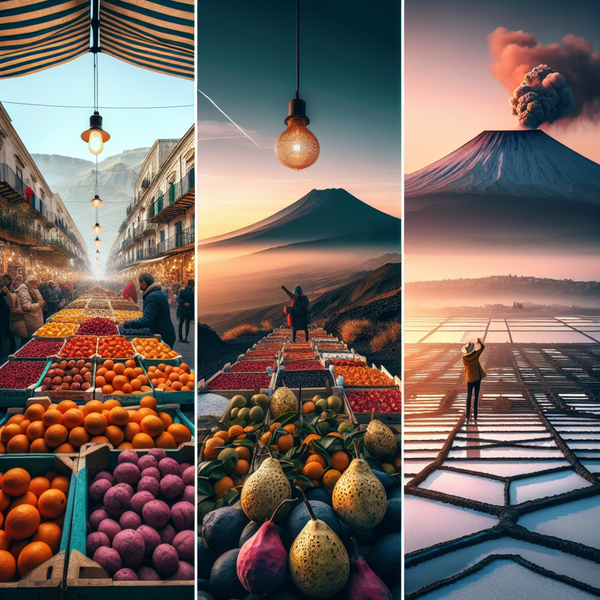
Palermo’s streets are an open-air film set. The city’s Ballarò market, open from early morning until late afternoon, is one of the most interactive backdrops you’ll find in Italy. Snap the hanging citrus nets, chalk signs listing homemade arancine, and vendors balancing crates on vintage Piaggio Apes. The morning light between 8–10 a.m. filters through the thin canopies, giving a golden hue ideal for portrait shots. Just a few minutes away, the Piazza Pretoria, known for its audacious marble sculptures, offers perfect symmetry for architectural compositions — stand on the northeast corner of the square to capture the full circular fountain framed by the façades.
For evening photos, head up to Belvedere di Monte Pellegrino. It’s a popular hike, but the view rewards every step: Palermo sprawls below with the Tyrrhenian Sea glowing in pink and blue layers. Sunsets here, especially in late spring, turn the city into a copper mosaic that needs no filter.
Ancient Drama and Sea Views in Taormina that Dominate Your Feed
No Instagram guide to Sicily skips Taormina. The Greek Theatre, still standing after two millennia, overlooks both Mount Etna and the Ionian Sea. Arrive when the ticket office opens at 9 a.m. to avoid crowds, set your lens toward Etna’s plume, and compose the shot with the ancient arches in the foreground. This juxtaposition of smoke and stone defines Taormina’s atmosphere. Below the cliff, take the cable car to Isola Bella, a tiny island connected to the mainland by a sandbar that changes shape with the tide. Bring water shoes; the pebbles are slick, but you’ll want to step right to the center for a frame that makes it look like you’re walking across the sea.
Taormina also excels after dark. Via Teatro Greco offers polished-window reflections and discreet string lights from boutique hotels, perfect for slow-shutter experiments. Plan a quick espresso stop at Bam Bar — their granite fruit toppings look as vibrant on camera as in person, and they’ll keep your energy up during a long shoot.
Volcanic Landscapes near Mount Etna for Epic Instagram Reels
For jaw-dropping contrast, Etna’s lunar terrain outshines every coastal panorama. The most accessible starting point is the Rifugio Sapienza parking area above Nicolosi. From here, take a guided tour by 4×4 toward the craters at 2,900 meters; the short hike to the Silvestri Craters gives surreal footage — red-black soil under an endless sky. Your camera settings should favor high contrast; the dark basalt absorbs light and makes colors pop. Between eruptions, the landscape remains eerily silent, interrupted only by crunching gravel underfoot.
In winter, when snow covers the volcano, the ski lift becomes a rare opportunity to photograph both lava fields and snow in one frame. Drive or arrange a transfer early; roads close frequently by midday due to weather changes. Pro tip: bring a scarf, even in summer — the wind up there can make your fingers tremble and ruin delicate long exposures.
Dreamy Reflections and Salt Mounds at the Trapani Salt Flats
On the island’s western edge, the Saline di Trapani e Paceco reserve delivers a surreal tone palette. The salt pans turn pastel pink or orange depending on the season, and wooden windmills dot the horizon like props from a fantasy film. Visit between 6 and 8 p.m., when the sun drops low enough to mirror perfectly on the still water. Bring a polarizing filter to deepen the tones of the sky and cut glare. The Museo del Sale nearby exhibits old grinding stones — great for close-up texture shots that add narrative depth to your feed.
Photographers often overlook how the wind shapes reflections here: on calm evenings, reflections double the symmetry, but on breezy days, focus on detail — the salt crystals catching light along the shore. Dining at the nearby rustic trattoria Nubia offers a natural way to wait out the changing golden hour and sample couscous with local seafood.
Pastel Fishing Harbors in Cefalù for Lifestyle Photography
Cefalù, an hour east of Palermo by train, might be Sicily’s most balanced blend of sea, sand, and tumbled stone. Walk down the narrow Via Vittorio Emanuele until it spills onto the beach — here, fishermen’s houses seem to lean into the waves. The early morning tide creates mirror-like wet sand ideal for silhouette shots. For the iconic wide-angle view, climb to La Rocca fortress before 9 a.m. The ascent takes about 45 minutes, and the path is uneven, but the panoramic capture of rooftops, harbor, and cathedral domes together is unmatched.
At blue hour, just after sunset, line up below Piazza Marina. The sodium streetlights cast warm reflections over the water, balancing perfectly with the dusky sky. It’s one of those few seaside towns where you can frame locals strolling, waves lapping, and medieval architecture in a single shot.
Cultural Contrasts and Baroque Facades in Noto and Ragusa
For architectural Instagram posts that scream #BaroqueGoals, the Val di Noto towns — especially Noto and Ragusa Ibla — deliver consistency and scale. In Noto, start at Corso Vittorio Emanuele around 7 a.m. when the limestone glows peach under first light. Stand across from the steps of Cattedrale di San Nicolò for symmetry and minimal foot traffic. Every balcony here drips wrought iron; details matter more than wide shots.
In Ragusa Ibla, descend from the newer upper town and stop at the viewpoint by Santa Maria delle Scale. The descending street twists like a ribbon, perfect for time-lapse transitions. Golden lighting around 5 p.m. paints the cluster of domes and alleyways, and even a smartphone captures the layered effect. Locals often appear on balconies watering plants — a candid human element that distinguishes this from empty architectural shots elsewhere in Europe.
Island Light and Azure Horizons at Favignana and the Egadi Archipelago
For pure water shots, escape to Favignana, the most photogenic island in the Egadi group, reachable by hydrofoil from Trapani in about 30 minutes. Rent a bicycle right after disembarking; the best coves like Cala Rossa and Cala Azzurra aren’t accessible by car. The water clarity reaches 20 meters on calm days — so bring a waterproof housing if you’re chasing underwater content. The former tuna processing plant, now the Ex Stabilimento Florio Museum, juxtaposes industrial lines against Caribbean-level turquoise scenes.
Between June and September, the island’s midday light is harsh; use midday for lunch breaks and reserve shooting for 8–10 a.m. and 6–8 p.m. when the limestone turns honey-colored. Drones, though regulated, can capture the coves’ graphic geometry — but always check the local restrictions at the marina office before takeoff to avoid fines.
Hidden Corners of Ortigia and Catania for Urban Aesthetics
In Ortigia, the historic island heart of Syracuse, the sea almost kisses the limestone lanes. The Fountain of Arethusa, guarded by papyrus plants and captured best from the wall above Lungomare Alfeo, combines mythological depth with Mediterranean composition. Turn east for sunrise photography that bathes the old port in diffuse gold. Don’t miss the Duomo di Siracusa, a transformation of an ancient Greek temple into a Baroque church; columns half-submerged in the facade reveal centuries in one frame.
Catania, by contrast, feels volcanic and gritty. Start at Piazza del Duomo with its elephant fountain, carved from black lava stone, and continue along Via Crociferi for moody shadow play between baroque arches. Street art fans should head to the San Berillo District, where murals spread along crumbling plaster — excellent backgrounds for portrait photographers chasing texture. The juxtaposition between the dark Etna stone and neon shop signs gives Catania a rhythm distinct from any other Sicilian city.
Final Tips for Planning Your Sicilian Instagram Journey
To get the best results, pair your visual itinerary with Sicily’s shifting light seasons. Late May through early October brings strong sunlight, while November to March yields moody, cinematic overcast. Renting a car helps reach remote perspectives, but train routes such as Palermo–Cefalù–Messina are ideal for sustainable travelers. Always carry a microfiber cloth — dust from volcanic areas can cloud lenses quickly.
Your reward will be more than likes; it’s the personal album of an island steeped in contrast — architectural rigor facing raw nature, glossy sea alongside peeling plaster. Sicily’s photogenic heart lies not just in its “famous” views but in the quiet details: a fisherman’s hands, a shadow under an archway, or the burnt-orange hue of an afternoon that only lasts ten minutes. Capture those, and your Instagram feed will echo long after your plane takes off from Catania’s wind-swept runway.