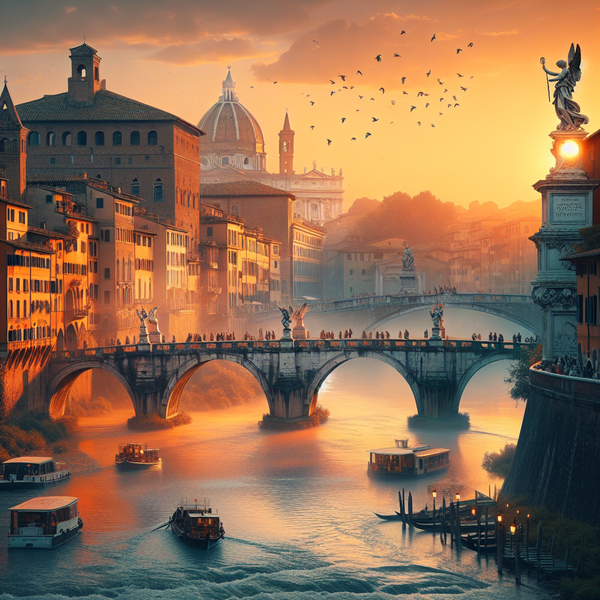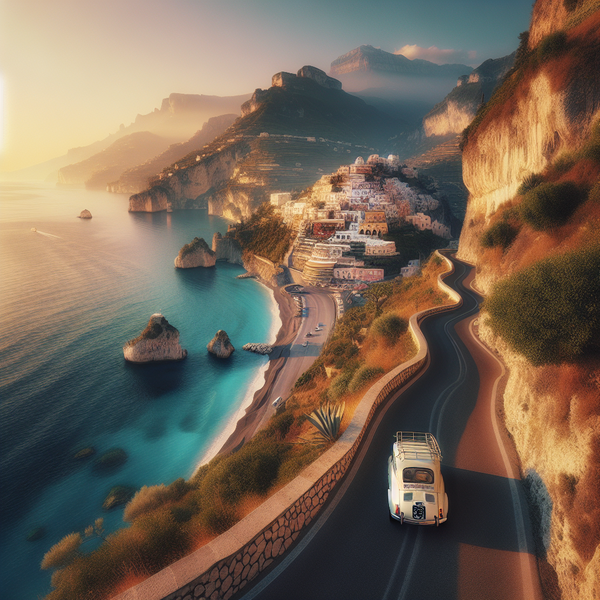
There’s a particular magic to driving the southern coasts of Italy — the moment when the road curves and the sea opens before you, cliffs draped in olive trees, pastel fishing towns clinging to the rock. These are not just drives; they’re miniature odysseys stitched through villages where time runs at the rhythm of tides and espresso machines. Unlike the manicured routes of the north, Southern Italy’s coastal roads are raw, panoramic, sometimes maddening, and always unforgettable. Here’s a detailed guide through the most scenic coastal routes — from the Amalfi’s impossible curves to Puglia’s sun-drunk cliffs and on to Calabria’s wild tip of the boot.
Go to the section
ToggleDriving the Amalfi Coast: SR163 from Vietri sul Mare to Positano
The Amalfi Drive, officially the SS163, is barely 50 kilometers long but feels like a cinematic epic. Starting in Vietri sul Mare, famed for its ceramic tiles splashed on walls and stairways, the route dances westward through fishing towns like Cetara and Maiori. Every few hundred meters, a micro-drama unfolds between sea, sky, and road — a hairpin bend framing the dome of Amalfi’s Cathedral of St. Andrew or the abrupt reveal of Positano’s lemon-yellow villas.
Early morning is the best time to start. Between 7 and 9 a.m., buses are fewer, locals are still setting up shops, and sunlight slides sideways across the Tyrrhenian. Pull over at the Capo d’Orso viewpoint near Maiori, where a small parking area allows you to capture the entire Sorrento Peninsula. In Amalfi town itself, the municipal garage by the port is the most reliable spot to leave your car — parking costs about €3 per hour in high season but doubles as a chance to walk the pedestrian alleys before crowds arrive.
Lunch in Praiano offers a calmer counterpoint to Amalfi’s bustle. The cliffside restaurant Il Pirata carves tables right into the rock, serving local tuna crudo and linguine with lemon zest almost kissed by sea spray. Continue westward into Positano, whose vertical streets can test knees, but the payoff is that iconic descent toward Spiaggia Grande, one of the most photographed beach backdrops in Italy.
The Cilento Coast: From Agropoli to Marina di Camerota
Just south of Amalfi lies the Cilento Coast — quieter, broader, and less polished. The SS18 and SP430 roads weave down from Agropoli, the medieval gateway to the Parco Nazionale del Cilento. The cliffs here fall gently to fine-sand crescents like Acciaroli, a village Ernest Hemingway is said to have adored. Unlike Amalfi, drivers here can actually breathe: the road is wider, traffic sparse, and viewpoints practically beg you to pull over.
At Pioppi, midway down the coast, stop at the small Museum of the Mediterranean Diet housed in Villa Vinciprova — a tribute to Ancel Keys, who lived here while researching longevity. It’s a perfect detour if you like your road trips spiced with context. Continue another hour toward Marina di Camerota, where ancient sea caves (Grotta Azzurra, Grotta del Buon Dormire) can be reached by kayak from the beach. If you prefer roads with more turns inland, take the SP66 via San Giovanni a Piro where the Gulf of Policastro looks almost Ionian in tone.
The Cilento rewards patience. Fuel stations can be sparse; fill up before leaving Agropoli. Summer sees more Italian than foreign visitors, and accommodation is pleasantly local — many family-run agriturismi nestled between fig trees and the sea.
Gargano’s Coastal Loop: Vieste to Mattinata
The Gargano Promontory, a limestone spur pushing into the Adriatic in northern Puglia, hides one of the most scenic drives in the south. The SP53 from Vieste to Mattinata is a 40-kilometer ribbon clinging to cliffs scented with myrtle and Aleppo pines. As you leave Vieste, the Pizzomunno sea stack — a 25-meter limestone column — stands sentinel at the beach entrance, signaling that drama will be your constant companion here.
A few kilometers later, small signposts indicate trails down to hidden beaches like Baia di Vignanotica, reachable by a dusty 10-minute footpath. Bring water and shoes suitable for sharp pebbles; the payoff is turquoise seclusion framed by chalk-white cliffs. Local drivers know better than to rush — the curves demand steady attention, and goats sometimes wander onto the asphalt near the Umbra Forest access point.
Stop at the Belvedere di Monte Sant’Angelo for a panoramic espresso at a kiosk beside the road. The view stretches across the bay to Foggia’s plains, reminding you how varied Puglia really is. The roads are well maintained thanks to Gargano’s national park status, but GPS signals can falter in valleys — download offline maps before departure or rely on physical signage marked “Gargano Coast.”
The Salento Coast Road: Otranto to Santa Maria di Leuca
The heel of Italy’s boot — Salento — offers a dramatically different atmosphere. The SP358, known as the Litoranea, runs roughly 50 kilometers from Otranto to Santa Maria di Leuca, the very tip of the peninsula where the Adriatic meets the Ionian. Start early in Otranto’s old port, where fishermen sort their catch below Byzantine walls. The route begins gently, passing the Baia dei Turchi, then grows wilder past Porto Badisco, famous for sea urchins eaten raw on the rocks with lemon.
Halfway down, the Grotta Zinzulusa near Castro Marina deserves a stop. Guided tours cost around €6 and reveal a strange subterranean world where stalactites mirror underwater columns visible from the boat pier. Continuing south, the road narrows, curling along canyons of pale limestone down to Leuca, crowned by its 48-meter lighthouse. At sunset, locals and travelers alike gather on the seawall just below the Basilica di Santa Maria De Finibus Terrae — “the end of the earth.” The view alone explains the nickname.
Unlike many coastal drives, SP358 has frequent pull-offs with stone picnic tables. Cell service is strong, and signage clear; you can combine this route with a swim at Ponte Ciolo, a natural arch with a 20-meter drop into electric-blue water. Pack a towel; impromptu swims are practically a ritual here.
Calabria’s Costa Viola: Scilla to Reggio Calabria
Few travelers make it to Calabria’s Tyrrhenian coast, which is their loss. The Costa Viola (“Violet Coast”) earns its name at dusk when the sun melts into lavender reflections across the Strait of Messina. Begin in Scilla, a myth-drenched town where fishermen still dry swordfish heads along Chianalea’s narrow lanes. The SS18 snakes along the shore toward Bagnara Calabra before reaching Reggio Calabria, offering constant views of Sicily’s silhouette.
Unlike Amalfi’s cliff-edge terror, this route delivers calm composure — long sweeping bends, wild fig scents, and the rhythmic flash of train tracks hugging the same coastline. In Bagnara, stop for granita at Caffè Rocco, served with brioche in true southern style. The approach to Reggio Calabria is particularly scenic as the landscape opens to palm-lined boulevards and the Lungomare Falcomatà, often cited as Italy’s most beautiful seafront promenade.
From Scilla to Reggio is just 35 kilometers, easily covered in an hour, but the slower you go, the richer the experience. The National Archaeological Museum of Reggio Calabria, home to the famous Bronzi di Riace statues, makes a worthy finale if you love pairing landscapes with heritage.
Southern Sicily’s Ionic Drive: Noto to Marzamemi and Portopalo
Southern Sicily sits slightly apart — both geographically and spiritually — from mainland drives. The coastal SP19 runs from Noto through Avola and on to the fishing village of Marzamemi, finally reaching Portopalo di Capo Passero, Italy’s southernmost mainland point. Unlike the cliff-hugging Amalfi or Gargano roads, this route is flatter and broader, ideal for leisurely cycling or convertible cruising.
Start from Noto’s honey-colored baroque center, famous for its climbable Cathedral steps and almond pastries from Caffè Sicilia. Drop toward Avola, where you can sample Nero d’Avola wine directly from seaside cellars. The portion between Avola and Marzamemi passes through salt pans and wind-twisted carob trees before reaching fishing huts turned into seafood trattorias. Order grilled calamari at Cortile Arabo in Marzamemi, steps from the water.
Just beyond lies Portopalo, marked by the white lighthouse at Capo Passero. From the top of the promontory, you can literally see Africa’s direction to the south, the sea changing color depending on where the two currents collide. Roads here are quiet even in high season; a beach towel and patience will serve you better than a strict itinerary.
Planning Your Coastal Road Trip in Southern Italy
Driving the coastal roads of southern Italy isn’t complicated, but it rewards those who plan lightly and adapt swiftly. Narrow alleys, limited parking, and local driving styles demand calm confidence rather than speed. For rentals, pick compact cars no wider than 1.8 meters if you plan to drive Amalfi or Gargano; automatics are rare and pricier. Many gas stations — especially in rural Calabria or Cilento — close midday from about 1 to 3:30 p.m., so refuel early.
Navigation apps help, but occasionally fail in tunnels or rural zones. Keep coins handy for paid parking and tolls: some coastal sections, like parts of the Naples–Salerno motorway, are cash-only. Avoid driving after dark in remote stretches; illumination is scarce, and goats or dogs may appear unexpectedly. Always allow flexibility for unplanned swims, photo breaks, or coastal detours. These routes are less about reaching the end than savoring the intervals between.
Each region offers something no other can — Amalfi’s vertiginous beauty, Gargano’s forested bays, or Salento’s sun-bleached serenity. Thread them together over ten days, or explore one deeply; either way, you’ll discover the personality of southern Italy written in asphalt, salt, and light.