There’s a particular hush that falls over Tuscany in the hour before sunset—the hills flatten into silhouettes, the air smells faintly of cypress, and even the locals pause their evening aperitivo to watch the light stretch across centuries-old vineyards. Having lived in Siena province for several years, I’ve watched countless sunsets here, but a handful of places consistently stop me in my tracks. These are not just high viewpoints—they’re vantage points where the Tuscan landscape tells a story, shifting color by color as the sun sinks westward.
Go to the section
TogglePanoramic Sunset Views from Piazzale Michelangelo in Florence
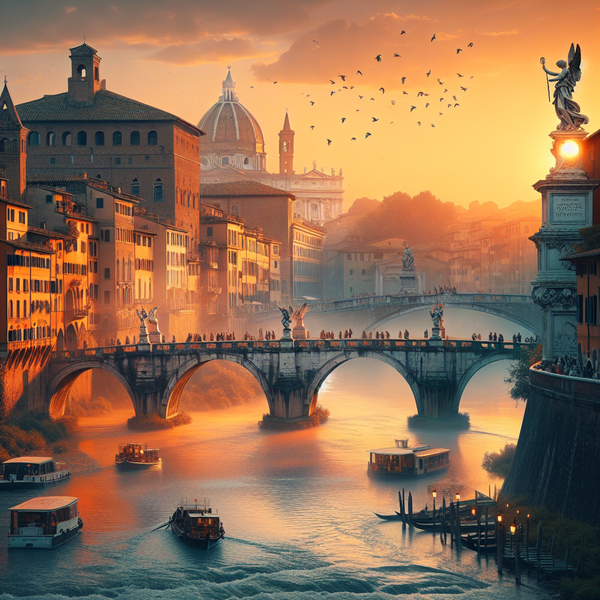
If you want a panoramic sunset over Florence, head up to Piazzale Michelangelo. Built in the 19th century and reachable by car, taxi, or the number 12 or 13 bus from Piazza San Marco, this terrace offers a sweeping view of the Arno River, Brunelleschi’s Duomo, and distant Fiesole hills. The best time to arrive is about 45 minutes before sunset; this gives you front-row space among locals sipping rosé from plastic cups.
Few travelers realize that a short walk down to the Rose Garden below the terrace gives a more peaceful experience—with fewer crowds and the same view framed by olive trees. Bring a small bottle of Chianti Classico from Enoteca Alessi near the Duomo and toast the changing light as it warms the city’s sandstone tones from gold to crimson.
Sunset Over the Val d’Orcia from Pienza’s Stone Walls
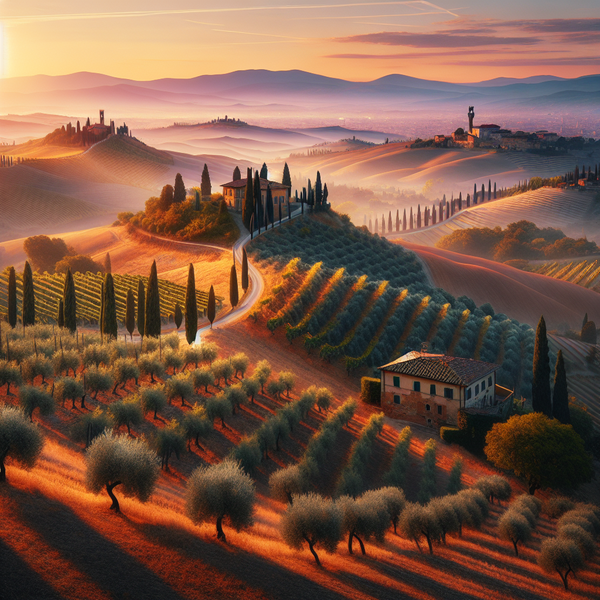
The Val d’Orcia south of Siena is arguably the most photographed valley in Italy, and for good reason. From Pienza’s old city walls, facing west toward the hills of Monticchiello, sunsets turn the wheat fields and cypress-lined lanes into a Renaissance painting. Around April and May, the rolling hills are green as velvet; by late summer, they glow like bronze coins scattered across the valley.
Walk to Via del Casello inside Pienza’s walls about 20 minutes before sunset. Locals often lean on the stone parapets, chatting over gelato from Buon Gusto Gelateria. As the bells of the Duomo strike evening, the sun slips behind the hills, leaving behind a pink afterglow that lingers for nearly half an hour. If you have a tripod, this is one of the easiest places in Tuscany to capture long-exposure sunset photos without a crowd jostling for position.
Montefioralle and the Chianti Hills at Dusk
Above Greve in Chianti sits Montefioralle, a tiny circular village often bypassed by visitors rushing between Florence and Siena. Yet from the cobbled road just outside the village gate—next to the small parking lot by Ristorante Fuoripiazza—you can watch the sun dip behind vineyards that produce some of the region’s most famous wines. The air fills with the smell of rosemary and fermenting grapes during harvest season in September.
Arrive an hour before sunset and wander through the medieval lanes, stopping to sample local olive oil at Az. Agr. Montefioralle. The light is softest here when it hits the terracotta rooftops at a 45-degree angle, around 15 minutes before the sun drops below the ridge. As night sets in, you’ll hear the distant hum of vespas heading home down Via Chiantigiana—Tuscany at its most quietly cinematic.
Find all the best hotel deals here.
Sunset from the Fortress Walls of Monteriggioni
Monteriggioni, a perfectly preserved medieval fortress town between Siena and Colle di Val d’Elsa, is especially magical at sunset. The circular walls—14 towers still standing—catch the last rays from the west, while the sun sinks beyond the Elsa Valley. Arrive just before twilight and climb the short section of ramparts open to visitors (ticket available at the main gate for a few euros). From here, the sky flickers between copper and violet as shadows stretch across the countryside.
Locals recommend enjoying a plate of pici cacio e pepe at Il Feudo after sunset—by the time you finish dinner, the walls will be softly lit, giving a second chance for nighttime photography. The fortress’ elevated position provides arguably one of the most balanced compositions for a Tuscany sunset: medieval architecture and rolling farmland in a single frame.
Discover the best local experiences here.
Seaside Sunsets at Castiglioncello and the Etruscan Coast
Tuscany’s coastline is less famous than its hills, but Castiglioncello offers some of the region’s most dramatic seaside sunsets. Located just south of Livorno, this small resort town sits atop reddish cliffs that drop into translucent water. The best viewing spot is the Punta Righini belvedere, reachable on foot from Piazza della Vittoria in about ten minutes. Pack a picnic from the Conad grocery near the station—prosciutto, pecorino, and a small bottle of Vermentino—and claim a patch of rock before locals drift down with their fishing rods.
In late summer, the sky often burns deep orange, reflected across the Ligurian Sea toward the profile of Capraia Island. If you’re driving, make time to continue south toward Quercianella; the elevated coastal road there gives fleeting, breathtaking glimpses of the sun setting straight into the sea.
Timeless Light in San Gimignano’s Torre Grossa
Known as the “medieval Manhattan,” San Gimignano is filled with towers—but for sunset, climb the Torre Grossa, open until early evening most of the year. From its 54-meter height, you look west toward Val d’Elsa, where time seems arrested in golden light. Ticket entry is moderate, and lines drop about an hour before closing. Take those last 15 minutes of daylight to watch how the stone of the towers warms into honey color, while bells echo from the Collegiate Church below.
As the sun lowers, the undulating fields around Ulignano turn pastel—perfect for photographers who want layered compositions of tower silhouettes. Afterward, return to La Cisterna square, where cafes begin setting out tables under soft lanterns, marking the end of another Tuscan day.
Maremma’s Underrated Sunset from Massa Marittima
Far fewer visitors make it to Massa Marittima, perched in Tuscany’s Maremma region. Yet stand by the Belvedere di Poggio on the edge of town and you’ll see why locals are fiercely protective of their sunsets. The view spans olive groves, the distant sea near Follonica, and the metalliferous hills where Etruscans once mined copper. Around sunset, light cuts diagonally through the valley, making this one of the clearest places in Tuscany for seeing the sun drop in its entirety.
Bring binoculars if you’re visiting on a clear day: you can sometimes glimpse Elba Island’s faint outline. Evenings here are quiet—after dark, stroll back to Piazza Garibaldi, where the Romanesque cathedral glows like polished marble against the dark sky.
Sunset from the Cypress Road near Agriturismo Poggio Covili
Every serious photographer chasing Tuscany sunset scenes eventually finds their way to the cypress-lined drive of Agriturismo Poggio Covili near San Quirico d’Orcia. Though parking is limited to the roadside, visitors respectfully walk up the drive about 100 meters to catch the classic Tuscan composition: a straight road of cypress trees pointing toward a farmhouse, backlit by the evening sun.
Golden hour here lasts longer than you expect—because of the valley’s open shape, the light bounces for nearly forty minutes after the sun passes the ridge. To avoid crowds, aim for late autumn or winter sunsets, when the low angle enhances contrast on the gravel road. Always step carefully among the vines and respect the private property signs; the owners are welcoming to polite photographers who tread lightly.
Lucca’s Renaissance Walls and Serchio Valley Glow
Few cities offer such a relaxed end-of-day return as Lucca. Its broad Renaissance walls double as a walking trail, and around sunset the western bastions near Baluardo Santa Maria face directly into the dropping sun. Rent a city bike from Polly Bike on Via Elisa and pedal one lap—about 25 minutes—to settle on this side with a local beer from Birrificio Brùton.
The view is subtle yet rewarding: the Serchio Valley beyond glows amber while Lucca’s skyline blushes rose. As street lamps flicker on, the town fills with music drifting from open windows—proof that in Tuscany, even daily life knows how to wind down gracefully with the setting sun.
Final Thoughts: How to Capture and Enjoy Tuscany’s Finest Sunsets
Wherever you choose to watch sunset in Tuscany, a few practical habits enhance the experience. Always check local sunset times—they vary by up to 30 minutes between coastal and inland spots. Bring a light jacket even in summer: Tuscan evenings cool quickly, especially in elevated towns like Montepulciano or Volterra. If you plan to photograph, a small tripod and circular polarizing filter help extend exposure and manage reflection, especially near the coast.
But the real secret is patience. Unlike quick tropical sunsets, Tuscany’s light unravels slowly. Wait through the second act—those 20 minutes after the sun disappears—when the landscape seems to hold its breath, and the last streaks of color blend with the scent of vineyards below. That’s when Tuscany reveals its truest palette: calm, deliberate, and layered with centuries of life watching the same fading light.