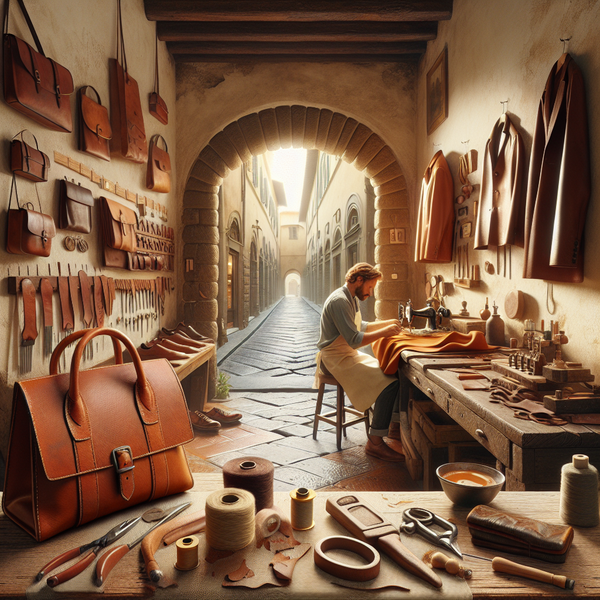
Florence has been synonymous with fine leather since the Middle Ages, when the city’s guilds regulated tanning along the Arno River. Today, you’ll still smell the unmistakable aroma of worked hides near Santa Croce and San Lorenzo. Whether you’re after a handmade journal, a buttery-soft jacket, or a wallet cut from vegetable-tanned calfskin, knowing where to shop — and what to look for — makes all the difference. Having lived here for several years and wandered through workshops small and grand, I’ve gathered a guide to the best places to shop for Italian leather in Florence that stay true to craft and quality.
Go to the section
ToggleShop for Italian leather around Piazza Santa Croce and the Scuola del Cuoio
Start your search where Florence’s leather tradition began: near the Basilica di Santa Croce. Just behind this church, you’ll find the Scuola del Cuoio, founded by Franciscan friars and the Gori family after World War II. Enter through a small courtyard behind the basilica and you’ll come across craftsmen still tooling patterns by hand. Visitors are welcome to watch their process, and the staff will emboss initials in gold leaf on any piece you buy — an excellent personal touch.
Prices here are higher than what you’ll see in the street markets, but you’re paying for traceable Florentine craftsmanship and top-grade hides sourced from Tuscan tanneries. Expect structured handbags that can last decades and leather-bound journals that make meaningful gifts. A tip: if you want a custom belt, they’ll punch the holes for your exact measurement on the spot, so bring the trousers you intend to wear.
Florentine leather markets: San Lorenzo and Mercato Nuovo (the Porcellino Market)
If you prefer atmosphere and bargaining, the San Lorenzo Market remains a lively option. Running along Via dell’Ariento to Piazza San Lorenzo, stallholders display piles of bags, belts, and jackets. Not every seller deals in Italian leather — some imports sneak in — but you can identify authentic pieces by their even stitching, subtle scent, and a label noting “Made in Italy”. Don’t hesitate to ask the vendor which tannery produced it; real merchants are happy to tell you.
Nearby, under the loggia of the Mercato Nuovo, the so-called Porcellino Market, you’ll find a smaller but more picturesque collection of stands. Rubbing the snout of the bronze wild boar is said to ensure a return trip to Florence, but the real treasure lies in the stalls specializing in small goods: leather bracelets, coin purses, and passport holders. Prices are negotiable, yet remember that heavy haggling is less common than in southern Italy. Offering about 10–15% below the asking price is a polite approach.
Boutique leather ateliers near Via Tornabuoni and Piazza della Repubblica
For travelers seeking refined, fashion-forward leather, head toward Via Tornabuoni, Florence’s luxury artery. Here you’ll encounter boutiques like Roberta Firenze and Peruzzi, which balance traditional craftsmanship with contemporary design. These shops specialize in structured handbags and supple gloves — items you’ll wear, not just admire. Staff are often bilingual and happy to explain how glove leather differs from bag leather in flexibility and treatment.
A few blocks away, around Piazza della Repubblica, workshops such as Bottega Fiorentina feature collections made by local artisans employed directly by the shop, ensuring transparent production. If you’re interested in learning to care for your purchase, some of these boutiques sell small tins of neutral cream wax meant specifically for Tuscan hides; applying it every few months will keep the grain supple even in humid climates.
Hidden Tuscan workshops and family-run leather studios south of the Arno
Cross Ponte Vecchio and lose yourself in the quieter Oltrarno district, home to many of the city’s still-active artisan studios. On Via de’ Serragli and Borgo San Frediano, small workshops like Mannina specialize in hand-stitched shoes made to order. Visitors can sometimes catch the owner measuring lasts or cutting soles from oak-bark-tanned leather imported from Tuscany’s Santa Croce sull’Arno district. The subtle fragrance of beeswax polish lingers in the air, making it worth a visit even if you aren’t commissioning a pair.
A short stroll away, Il Bisonte maintains its original workshop atmosphere despite its international success. Their vegetable-tanned leather darkens beautifully with age, developing a unique patina. Buying at the factory store rather than a large retailer ensures better prices and the occasional exclusive model that hasn’t yet reached the boutiques. Ask whether a specific piece was lined; unlined leather bags are lighter but show the natural suede side, while lined ones maintain shape better during travel.
Identifying authentic Italian leather and avoiding tourist traps
Because Florence attracts millions of shoppers annually, some stores import cheaper goods made elsewhere. To ensure you’re buying genuine Italian leather, check three points: the tag should say “Vera Pelle Made in Italy”, the stitching should be uniform with no stray threads, and the smell should be earthy rather than chemical. Real vegetable tanning uses natural tannins that give a slightly sweet aroma; synthetic tanning often smells like plastic.
If you are uncertain, visit retailers endorsed by Associazione degli Artigiani — a local craftspeople’s guild whose sign is visible in select shop windows. Keep in mind that customs officials in some countries restrict exotic leathers such as python or crocodile, so stick with cowhide, calfskin, or suede if you plan to take your purchase home. Many leather boutiques will pack your bag in a protective cloth pouch and include care instructions in English.
What to buy in Florence: timeless Italian leather gifts and collectibles
Florence’s variety of leather goods goes beyond handbags. For practical souvenirs, consider one of these:
- Leather-bound journals: found near Santa Croce and at paper shops like Il Papiro, often with Florentine marbled paper edges.
- Gloves from Madova: just off Ponte Vecchio, where the same family has been producing fitted gloves since the 20th century. Sizes are labeled in European measurements, so have your hand width measured before buying.
- Shoes and belts: many ateliers offer on-site fitting and trimming services. Keep an extra 30 minutes for adjustments if you want perfect sizing.
- Leather jackets: quality ones start around €250 in proper shops — a worthwhile investment if cut from full-grain lambskin.
Even small accessories such as keychains or cardholders are durable reminders of your time in Tuscany. If you plan to gift them, ask for the complimentary embossing service offered at several boutiques; initials in gold or silver foil add charm without extra cost.
When and how to shop for leather in Florence
Most leather shops in Florence open around 10:00 a.m. and close for a short pausa between 1:00 and 3:00 p.m. Peak shopping hours fall in late afternoon when stores reopen and the sunlight casts a warm glow on the displays. If you visit during the quieter winter months, artisans have more time to discuss customization — even altering strap lengths or swapping hardware finishes.
Bring cash for smaller kiosks, as not all accept cards under €20. VAT refunds apply for non-EU residents on purchases over €154.94 from participating merchants; ask for the “Tax Free Form” before leaving the shop. Keep receipts and present them at the Global Blue or Planet booths in Florence Airport for reimbursement.
Shipping, care, and preserving your Florentine leather goods
Large items such as leather jackets or multiple handbags can be shipped internationally, but factor in 2–3 weeks for standard delivery. Shops like Scuola del Cuoio and Il Bisonte partner with insured couriers that provide tracking numbers. Use this service if you’re traveling onward through humid areas, as condensation in luggage can damage untreated leather.
At home, store leather products in a cool, dry place inside breathable dust bags. Avoid plastic wrapping, which traps moisture. Apply a small amount of neutral cream or conditioner every few months and keep items away from direct heat sources. Should your bag get wet, blot — don’t rub — and let it dry naturally. Following these practices will ensure your Florentine leather ages gracefully, developing the rich patina collectors prize.
Bringing Florence home through its leather tradition
Exploring Florence through its leather workshops isn’t just about shopping; it’s an encounter with one of Italy’s oldest living crafts. Whether you commission shoes in San Frediano or select a wallet from a stall under the Porcellino loggia, you connect with artisans continuing skills dating back centuries. Walk away from the experience with the soft creak of new leather in your hands and the knowledge that your purchase supports a craft that has shaped the very character of Tuscany’s capital.