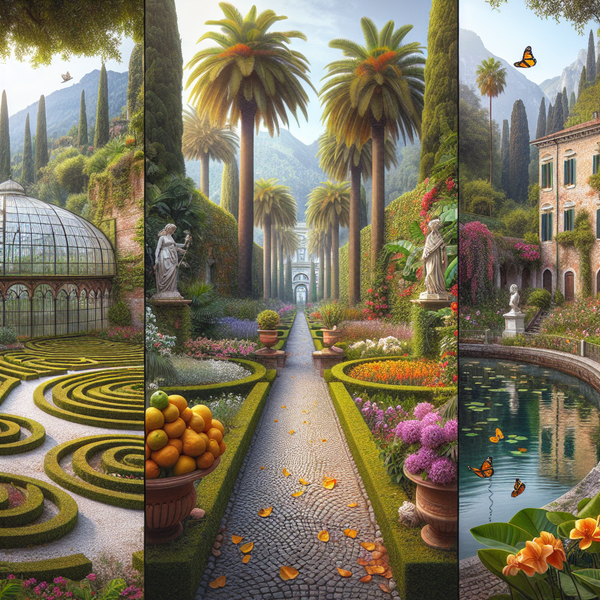
There are few better ways to understand Italy’s relationship with nature than by wandering through its botanical gardens. Each one is a living record of art, science, and landscape architecture, shaped by centuries of collectors, botanists, and dreamers. From monastic plots overlooking the Ligurian Sea to grand villa gardens framing Lake Como, Italy’s botanical gardens are destinations where history and botany quietly intertwine. Here’s how to explore the country’s most remarkable green spaces, region by region.
Go to the section
ToggleThe Lush Heritage of the Orto Botanico di Padova in Veneto
The Orto Botanico di Padova is the oldest university botanical garden in the world still in its original location. Established in 1545, it sits beside the Basilica di Sant’Antonio and spans about 22,000 square meters. Walking the concentric circular paths, you’ll find plants arranged by taxonomic family alongside digital displays highlighting research at the University of Padua. Seek out the Caribbean dwarf palm planted in 1585 — still alive, it’s one of the oldest living specimens in Europe. The garden is open daily (usually 9:00–18:00 in summer), and tickets can be purchased online, which helps skip the university’s frequent tour groups.
For serious plant enthusiasts, the modern Biodiversity Garden extension showcases ecosystems from tropical rainforests to Mediterranean scrublands under climate-controlled glass domes. In summer, guided evening tours reveal night-blooming flowers like the Queen of the Night cactus in bloom — a fleeting but unforgettable sight.
The Romantic Terraces of Giardini di Villa Monastero on Lake Como
Stretching over a kilometer along Varenna’s lakeside, the Giardini di Villa Monastero feel more like an outdoor museum than a public garden. Originally a 12th-century convent, the site evolved into an aristocratic villa, its terraces now lined with orange trees, wisteria tunnels, and rare cycads. The view alone — cypresses mirrored in Como’s blue water — makes it a photographer’s favorite. Trains from Milan reach Varenna in about an hour, and the garden lies a five-minute walk from the station.
Late April to early June is the ideal visiting window, when camellias and azaleas peak. There’s a small café under loggias facing the lake, perfect for a light espresso while watching ferries glide toward Bellagio. The villa’s museum inside, though secondary, offers framed botanical illustrations dating from Italy’s early botanical societies, offering an academic touch to the stroll.
Tropical Grandeur at Orto Botanico di Palermo in Sicily
Few visitors expect tropical flora so far south in Europe, but the Orto Botanico di Palermo overflows with species from every continent thanks to its mild coastal microclimate. Established in 1789 and managed by the University of Palermo, this 10-hectare garden combines neoclassical architecture with steaming hothouses and 200-year-old Ficus macrophylla trees so vast they create their own shade canopies. Enter from Via Lincoln near the Kalsa district, and plan for at least 90 minutes if you want to see the collection of succulents — among the broadest in the Mediterranean basin.
The garden hosts summer jazz evenings and occasional dawn yoga sessions that blend perfectly with the rustle of palm fronds. The small on-site herbarium, rarely crowded, exhibits original journals from Sicilian botanists who discovered Mediterranean orchids still cultivated today. If you visit between March and May, the citrus lawns are perfumed by the surrounding lemon groves, a reminder that Italy’s southern flora thrives year-round.
Alpine Serenity in the Giardino Botanico Alpino in Trentino
The Dolomites, usually known for hiking and skiing, hide one of Italy’s most pristine high-altitude gardens: the Giardino Botanico Alpino delle Viote, near Trento. Located at 1,500 meters above sea level on Monte Bondone, it’s managed by the MUSE Science Museum and contains more than 2,000 alpine species, labeling each with elevation and habitat data. The easiest access is by car from Trento in about 40 minutes via the winding SS45bis road. Pack a light jacket even in July — temperatures rarely exceed 20°C up here.
This garden’s focus on conservation makes it unique: you’ll find microhabitats mimicking limestone pastures, wetlands, and dolomitic scree slopes. Local guides lead educational walks emphasizing climate change’s impact on alpine flora. It opens seasonally from June to September, with the best blooms in July when gentians and edelweiss are at their brightest.
Historic Splendor at Orto Botanico di Firenze in Tuscany
The Orto Botanico di Firenze, also called the Giardino dei Semplici, belongs to the University of Florence and was founded in 1545 — the same year as Padua’s, showing Tuscany’s early scientific fervor. Its three hectares behind San Lorenzo contain medicinal plants historically used by apothecaries. A glasshouse holds cycads collected by the Medici, and benches throughout are shaded by giant camphor trees dating from the 18th century. The entrance on Via Micheli 3 is near the Accademia Gallery, making it an ideal midday stop between art visits.
Florentine locals often come here for quiet study breaks; the student ticket is discounted, and the staff sometimes share propagation cuttings with visitors — a small but pleasant surprise for plant lovers. Each spring, a temporary orchid pavilion transforms an unassuming courtyard into a cascade of scents, drawing collectors from across Europe.
Subtropical Beauty of La Mortella Gardens on Ischia Island
Created in the 1950s by British composer William Walton’s wife, Susana, the Giardini La Mortella on the island of Ischia are an example of design merging music with botany. The cliffs above Forio host terraces planted with cycads, tree ferns, and papyrus that flourish thanks to the volcanic soil and constant sea humidity. Visitors arriving by ferry from Naples can take a local bus Linea 1 or taxi directly to the entrance on Via Francesco Calise.
Don’t rush: the garden’s upper level rewards slow pacing with a panoramic view of Mount Epomeo and the Tyrrhenian Sea. Weekly chamber music concerts are performed in the open-air theater, surrounded by blooming bougainvillea. The tea room serves fresh pastries baked with local lemons, making it easy to spend an entire afternoon among the sound of harps and fountains.
Minimalist Charm of Cactuses and Succulents in Tuscany’s Giardino dei Tarocchi
While not a traditional botanic collection, the Giardino dei Tarocchi near Capalbio in southern Tuscany integrates succulent gardens into an avant-garde art space. Created by sculptor Niki de Saint Phalle, its mosaic-covered sculptures coexist with agaves, euphorbias, and prickly pears that thrive naturally on the arid coastal plain. Arrive early in the morning to photograph dew glistening on the mirrored mosaics before tourist groups arrive from nearby Argentario.
The combination of art and drought-tolerant planting demonstrates how Italian landscape design adapts to local ecology. The site is open from April through October, and although small, it encourages contemplation of how creativity and botany merge under the Mediterranean sun.
Practical Tips for Visiting Italy’s Botanical Gardens
When planning a garden-themed itinerary across Italy, consider clustering regions rather than zigzagging the entire peninsula. Northern gardens generally reopen by March, while southern ones bloom even in January. Public transit works well: regional trains connect Padua, Florence, and Palermo, and local buses usually stop within walking distance of the entrances. Always carry cash for smaller ticket kiosks — not every garden accepts cards.
Here are a few practical suggestions to maximize your visit:
- Timing: Early morning hours (9:00–11:00) offer cooler temperatures and better light for photography.
- Footwear: Many gardens, especially Palermo and Trentino, have gravel or uneven terrain — closed shoes are best.
- Souvenirs: University gardens often sell seeds or small propagated plants legal to export within the EU — a living memento of your journey.
Exploring Italy through its botanical gardens is not simply about admiring flowers; it’s a tactile lesson in the country’s geography and history. Each leaf tells a story, each garden a philosophy — from Padua’s scientific rigor to Ischia’s musical exuberance. Whether you’re a professional horticulturist or simply crave a quiet escape from city noise, these cultivated sanctuaries reveal Italy at its most serene and authentic.