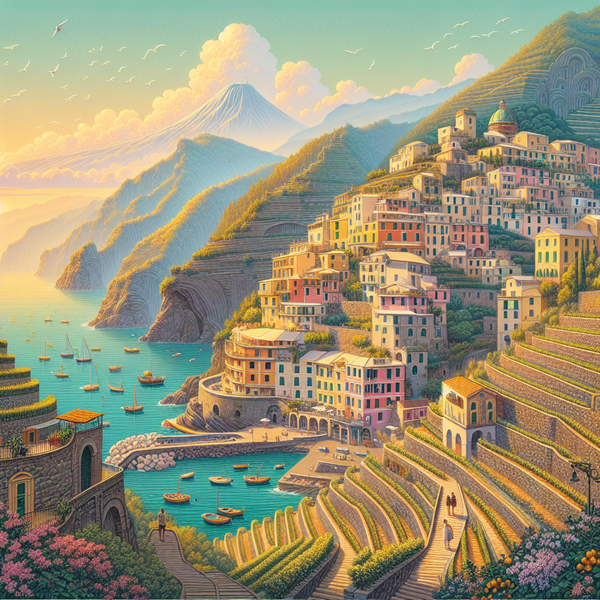
Few travel experiences in Italy deliver the same slow-blooming magic as a ferry gliding past sunlit cliffs and hidden coves. Beyond the roads and rails lies a network of coastal routes that reveal Italy’s rugged beauty from the glittering sea. For travelers seeking a more contemplative pace, ferry journeys offer not only transit but transformation—the liberty to see the country from its ancient aquatic highway, the Mediterranean.
Go to the section
ToggleAmalfi Coast Ferry Routes Between Sorrento, Positano, and Amalfi
The ferry ride linking Sorrento, Positano, and Amalfi compresses southern Italy’s drama into a few unforgettable nautical miles. Departing from Marina Piccola in Sorrento, boats operated by Alilauro and NLG skim along cliffs where pastel villages seem to grip the rock by sheer will. The crossing to Positano typically takes 40 minutes and costs around €18 one way in high season. Sitting on the open deck rewards you with views of the Li Galli islands, once said to lure sailors like the Sirens of myth.
Arriving in Positano by sea is a small revelation: terraces of ochre and peach houses rising vertically from the pebbled beach. Continuing another 25 minutes to Amalfi introduces even more grandeur—the Duomo di Sant’Andrea’s striped façade appears above the port like a stage backdrop. Ferries run roughly every hour between April and October, with morning departures offering the clearest visibility before the afternoon haze descends.
Naples to Capri: The Classic Bay of Naples Crossing
No ferry route in Italy combines accessibility and glamour quite like the Naples–Capri line. Hydrofoils from Molo Beverello reach Marina Grande on Capri in about 40 minutes, while regular ferries take closer to 80 minutes but allow passengers to roam outside and soak in the bay views. On a clear day, you’ll see Mount Vesuvius behind and the Faraglioni rocks ahead—a living postcard from every direction.
Ticket prices vary slightly by company, usually €23–€26 each way. If you plan a same-day return, choose an early morning departure and late afternoon comeback to avoid the midday crush when day-trippers flood the docks. Once in Capri, many travelers take the funicular up to the Piazzetta, but those staying overnight can catch the last ferry at 20:00 and enjoy the island’s quieter hours after sunset—a moment few day visitors ever witness.
Sicily’s Aeolian Islands: From Milazzo to Lipari, Salina, and Stromboli
For pure volcanic drama, nothing tops the ferry routes from Milazzo on Sicily’s north coast to the Aeolian Islands. Siremar and Liberty Lines operate frequent services to Lipari (about one hour by hydrofoil) and onward connections to Salina, Panarea, and Stromboli. The approach to Lipari passes steaming outcrops and turquoise shallows, a clear hint of the fiery geology below.
Each leg between islands offers a distinctive spectacle. The afternoon run from Salina to Stromboli, roughly 90 minutes, often coincides with the volcano’s small nightly eruptions—visible from the deck as sparks against the dusk. Travelers can buy a seven-island ferry pass valid for multiple hops, ideal for flexible itineraries. Bring a picnic from the market near Milazzo’s port; most ferries have simple snack bars but little else, and timing meals ashore saves both money and flavor.
Find all the best hotel deals here
La Maddalena Archipelago Ferries from Palau in Northern Sardinia
In Sardinia’s far north, the short crossing from Palau to La Maddalena may last just 20 minutes, but it opens a universe of crystalline reefs and bleached granite islands. Ferries run every 30 minutes year-round, operated mainly by Delcomar, and carry both passengers and cars. Most visitors leave their vehicles behind, though, and rent e-bikes on arrival to explore the narrow causeways linking La Maddalena to Caprera Island, home to Garibaldi’s historic house museum.
The local coastal roads are among Italy’s most photogenic—especially the scenic loop around the northeast tip where the sea shifts from cobalt to electric turquoise. Early morning ferries offer the calmest waters, and catching the return just before sunset treats you to a pastel panorama of Palau’s harbor framed by jagged rocks that resemble sleeping animals, a local natural sculpture garden shaped by the wind.
Discover the best local experiences here
Ligurian Line: Genoa to Portofino and Cinque Terre by Sea
The Ligurian coast, often viewed from cliff trails, gains a completely new perspective when glimpsed from the deck of a ferry leaving Genoa’s Porto Antico. The Consorzio Marittimo Turistico “Golfo Paradiso” runs routes to Camogli, San Fruttuoso, and Portofino, with extensions to Monterosso in the Cinque Terre during summer. The leg from Camogli to San Fruttuoso is extraordinary: the tiny abbey appears suddenly at the end of a forested inlet reachable only by footpath or boat. This trip, about 30 minutes and €14, is often less crowded in the late afternoon.
From Portofino to Monterosso, expect two hours of the Mediterranean at its painterly best—emerald water lapping against terraced villages that seem arranged by an artist. Sit on the starboard side outbound from Genoa for the best light on the coastline. Tickets can usually be reserved online, but in high season, buy them in person an hour early to avoid weather or schedule changes.
From Bari to Dubrovnik: The Adriatic Gateway Voyage
Although technically international, the overnight ferry from Bari to Dubrovnik belongs on any list of scenic Italian sea journeys. It departs from Bari’s Molo San Vito and sails eastward across the Adriatic, a mirror-flat sea at dusk, arriving in Croatia early morning. Jadrolinija operates this route with cabins, lounges, and open decks for stargazing. On departures timed with a full moon, the limestone coastline glows pale gold even after midnight.
Some travelers use this route as a symbolic “bridge” between two historic Adriatic cultures—Puglia’s whitewashed towns and Dalmatia’s fortified ports. Booking a reclining seat instead of a cabin saves around €30, though for comfort, a private cabin is worth the upgrade. Bring your own breakfast snacks; on-board cafés open only after 7:00, just before docking.
Trieste to Muggia: Short But Spectacular on the Northern Adriatic
In Italy’s extreme northeast corner, the city of Trieste clings to limestone cliffs above the Adriatic. The 25-minute ferry to Muggia, run by Trieste Trasporti, feels more like a moving terrace view than a commute. Locals use it year-round, yet visitors often miss it. For €5, you glide past Miramare Castle—a 19th-century white fortress jutting into the sea—that seems custom-built for viewing from the water.
Muggia retains the relaxed charm of a Venetian fishing town, its narrow alleys lined with ochre facades and seafood trattorias where lunch menus change daily based on the morning catch. Time the return trip in late afternoon, when the sun sinks behind Trieste’s Karst plateau and turns the harbor pink.
Practical Tips for Ferry Travel Along Italy’s Coast
Italian ferries are reliable but weather-dependent. High winds or rough seas can delay or cancel services, especially in spring and autumn. Always confirm schedules on the operator’s website the evening before departure. Carry cash for smaller ports like Salina or Camogli, where card terminals occasionally go offline.
During summer, ferry decks get crowded, so bring sunscreen, a light scarf for shade, and a refillable water bottle. On longer trips—such as Milazzo to Stromboli or Bari to Dubrovnik—layer clothing; the wind can shift from warm to chilly within minutes offshore. Finally, make sure you validate paper tickets before boarding when required, particularly in Liguria and Campania where inspectors still perform on-board checks.
Italy’s ferries invite the traveler to rediscover a slower rhythm—the same seaborne paths once used by traders, pilgrims, and poets. From the volcanic silhouettes of the Aeolians to the limestone arcs of Trieste, each route reveals that the most scenic road in Italy may actually be a liquid one, gleaming under Mediterranean light.