Though Milan is famous for fashion and finance, its green spaces are what reveal the city’s gentler rhythm. Behind its elegant façades and buzzing trams, you’ll find parks where locals jog before work, rose gardens where weddings are often photographed, and even hidden botanical retreats born from centuries-old estates. Exploring Milan through its parks and gardens offers a more authentic view of daily life — one filled with fresh air, history, and surprising beauty.
Go to the section
ToggleParco Sempione: Milan’s Green Living Room beside the Castello Sforzesco
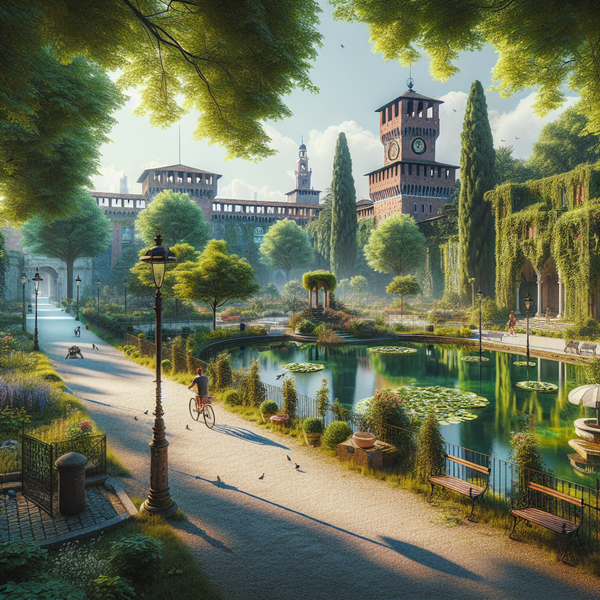
Parco Sempione is Milan’s most iconic park — 47 hectares stretching from the mighty Castello Sforzesco to the neoclassical Arco della Pace. Locals treat it as an outdoor living room: runners weave between tree-lined avenues at sunrise, while families gather for picnics on weekends. You can enter the park directly from the castle’s rear gate, only a 10-minute walk from Cairoli M1 metro stop.
If you walk toward the northwest corner, climb the Torre Branca, a 108-meter steel tower designed by Gio Ponti. The panoramic view reaches the Duomo’s spires and the Alps on a clear day. Near the pond, the Biblioteca del Parco hosts small exhibitions and public events, often featuring contemporary Milanese artists. Bring a novel or order an espresso from nearby Bar Bianco—every local has their favorite bench under those monumental plane trees.
Giardini Pubblici Indro Montanelli: Milan’s Historic Heart of Calm
Just a short tram ride away, the Giardini Pubblici Indro Montanelli sits between Porta Venezia and the Corso Buenos Aires shopping district. Created in the late 18th century by landscape designer Giuseppe Piermarini, the park remains one of the city’s most elegant public spaces. You can reach it via the Porta Venezia M1 metro stop and immediately step into leafy tranquility away from urban noise.
These gardens are particularly loved by families thanks to the Civico Planetario Ulrico Hoepli and the Museo di Storia Naturale situated within the park. Both are excellent options on drizzly afternoons. The park itself is rich with historical details: notice the Napoleonic-era ponds and bridges, and the marble busts of Italian scientists hidden along gravel paths. In spring, tulips and camellias bloom around the circular fountain near the Planetarium — perfect for a quick photography stop. Always bring some coins for gelato from the kiosk at the main entrance — locals swear by its pistachio flavor.
Orto Botanico di Brera: A Quiet Sanctuary in Milan’s Artistic Quarter
Tucked behind the Pinacoteca di Brera, the Orto Botanico di Brera is a truly secluded gem. Few tourists realize this 18th-century botanical garden exists. Established by Empress Maria Theresa of Austria for scientific study, it now belongs to the University of Milan. Access it via a small gate at Via Fratelli Gabba 10; you’ll pass through courtyards still belonging to the Accademia di Belle Arti before arriving at a cluster of ancient gingko trees and fragrant herbs.
This garden is small — about 5,000 square meters — but layered with atmosphere. Look for the two rectangular Baroque ponds where medicinal plants once grew for pharmacy students. You’ll often find Brera Academy students sketching among the magnolias, and volunteers tending to endangered species. It’s free to enter and open most afternoons except holidays. For a moment of absolute stillness in Milan’s artistic heart, this is unmatched.
Giardino della Guastalla: The Oldest Garden in Milan with Baroque Charm
If you prefer your parks intimate and historical, the Giardino della Guastalla near the University of Milan is irresistible. Created in the 16th century for Countess Paola Ludovica della Guastalla, it’s the city’s oldest surviving garden. Only five minutes’ walk from the Statale University, the entrance at Via Francesco Sforza opens onto manicured box hedges and a delightful baroque fish pond framed by balustrades. Students often sit on the stone steps for lunch between lectures — a true slice of local life.
At less than two hectares, this garden packs a great deal into its compact space: an octagonal temple, marble statues hidden among cypresses, and a children’s play area that makes it ideal for families. Early mornings are best, when the sunlight hits the pond’s surface and illuminates the sculptures. Visit the tiny kiosk at the edge of the park for a cappuccino and a view toward the Duomo’s Gothic pinnacles rising in the distance.
CityLife Park: Milan’s Contemporary Urban Oasis
Where the old Fiera grounds once stood, CityLife Park now stretches across 170,000 square meters of new greenery mixed with cutting-edge architecture. Designed by architects Zaha Hadid, Arata Isozaki, and Daniel Libeskind, the surrounding towers form a dramatic skyline. But at ground level, this park is remarkably serene. The M5 Tre Torri metro stop drops you directly into the center of the park, where wide lawns slope gently between playgrounds and outdoor cafés.
CityLife Park is perfect for cycling — bike rental stands sit near the main entrances on Viale Cassiodoro and Largo Domodossola. The landscaping is modern, with native grass species and sculptures by international artists displayed seasonally. On weekends, you might stumble upon an open-air yoga class or a temporary artisan market. If you enjoy photography, the contrast between the green landscape and mirrored towers produces outstanding reflections at sunset, especially near the Hadid Tower fountain.
Parco Nord Milano: A Forest on the City’s Edge
For a wilder experience, head north to Parco Nord Milano, a sprawling expanse crossing several municipalities. Accessible from line M5 Bignami or M1 Sesto Marelli stations, it offers over 600 hectares of reforested land filled with oak and poplar groves. Locals come here for long runs, birdwatching, or weekend picnics away from the urban grid. The park even connects to the Viale Fulvio Testi cycle route, allowing a scenic ride straight to the outskirts of Monza.
One of its most compelling features is the Orto Comune Niguarda, a community vegetable garden where residents collaborate on organic farming projects. In late spring, you might see children planting beans alongside retirees who’ve tended plots for decades. It’s a rare window into suburban Milanese community life. Parco Nord’s visitor center also organizes environmental workshops, all listed in Italian on their official site but open to international visitors.
Bosco Verticale and the Biblioteca degli Alberi: Architecture Meets Nature
No description of Milan’s green scene would be complete without Biblioteca degli Alberi and Bosco Verticale in Porta Nuova. This modern district redefines city greenery. The Biblioteca degli Alberi (“Library of Trees”) is a geometric park of 90,000 square meters, organized like a living library where each circular garden represents a different plant community. Within a two-minute walk from Garibaldi FS station, it’s the perfect place for urban explorers looking for design intertwined with nature.
Don’t miss the two Bosco Verticale towers, residential skyscrapers covered with more than 900 trees and 20,000 shrubs. Designed by architect Stefano Boeri, they’re best photographed from the southern path near Piazza Gae Aulenti in the late afternoon. Families lounge on the grass, and office workers often spend their lunch break barefoot in the meadows. During summer evenings, open-air concerts and food trucks animate the park, making it an easy social hub close to Milan’s nightlife spots.
Less-Known Green Escapes: Hidden Gardens of Milan You Can Still Visit
Beyond the well-known parks, Milan hides smaller treasures accessible to any curious traveler. The Giardino Perego in Via dei Giardini is a leafy pocket few guidebooks mention. It features 19th-century trees and shaded benches perfect for reading. Near Porta Romana, the Giardini della Guastalla meet a series of tiny courtyards where ivy wraps around historic palazzi. Another tucked-away favorite is Parco delle Basiliche linking San Lorenzo Maggiore and Sant’Eustorgio churches — an atmospheric stroll at sunset when the brick façades glow deep red.
For an authentic Milanese morning, join locals at Parco Ravizza near Bocconi University. Here university students practice yoga on the lawns while elderly residents walk dogs under horse chestnuts. The park’s inner paths lead to a kiosk beloved for its freshly-squeezed orange juice and still-warm pastries. Although these gardens might lack grandeur, they retain a community intimacy you won’t find in larger European capitals.
Practical Tips for Exploring Milan’s Parks and Gardens
Navigating Milan’s parks is easy once you know when and how to go. Many public gardens open from dawn until dusk, though times vary slightly by season. Most are free to enter, except for certain sections of botanical gardens that belong to universities. Wear comfortable shoes—gravel paths are common—and bring a water bottle since fountains marked acqua potabile provide safe drinking water across the city.
The best times to visit are early morning and late afternoon, when temperatures soften and the light is ideal for photography. During Milan Design Week or summer weekends, expect more foot traffic in central parks like Sempione and Biblioteca degli Alberi. To experience absolute peace, venture farther afield to Parco Nord or the Guastalla gardens on weekday mornings. And always remember: cafés and kiosks inside parks usually accept cards, but cash is handy for buying gelato or espresso from mobile vendors who still prefer coins.
Experiencing Milan’s Green Soul
Whether you choose the historic serenity of Giardino della Guastalla or the futuristic silhouettes framing CityLife Park, Milan’s parks show a city deeply rooted in renewal. Each green space invites reflection beyond the clichés of fashion and finance — here, neighbors greet one another, dog walkers form informal communities, and the rhythm slows to something sincerely Italian. The next time you plan a trip to Milan, reserve a few hours for its gardens: they will tell you more about the city’s character than any runway or boutique ever could.