For travelers who appreciate artistry and tradition, few experiences in Italy rival walking through the ceramic workshops of Deruta, Faenza, or Caltagirone. These towns do not merely sell souvenirs — they live and breathe ceramics, producing pieces whose designs have been handed down through centuries. Visiting them is like stepping into a living museum where clay meets color, and every glaze tells a story of local soil, skill, and pride.
Go to the section
ToggleFinding Authentic Pottery in Deruta: The Beating Heart of Umbrian Ceramics
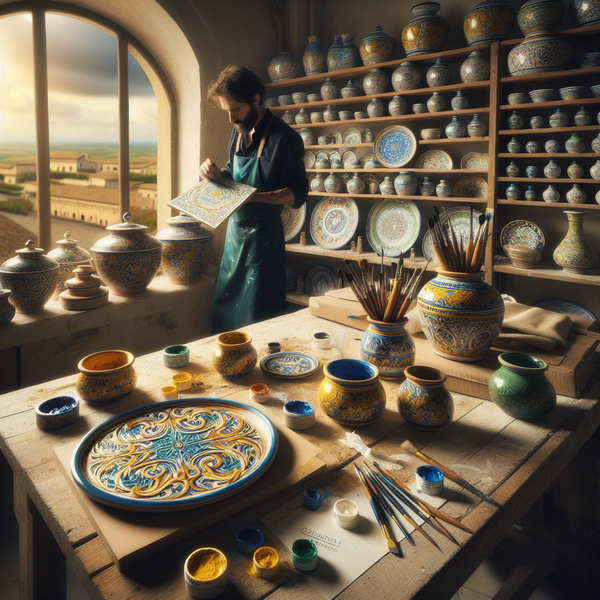
Deruta sits quietly on a hill overlooking the Tiber Valley, about 20 kilometers south of Perugia. What makes this small town internationally renowned is its maiolica — tin-glazed earthenware decorated in deep blues, mustard yellows, and burnt oranges. Authentic Deruta pottery often bears the artist’s mark or workshop signature on the base, a detail worth checking before purchasing. Workshops such as Ubaldo Grazia and Fabrica Raffaello welcome visitors year-round, offering short demonstrations of hand-throwing and brush painting. Most artisans here use locally sourced clay from the Umbrian hills, a material prized for its fine grain and warm tone once fired.
For those wanting to buy directly from the makers, Via Tiberina — the main road connecting old Deruta to the new town — is lined with showrooms where you can compare styles side-by-side. Deruta’s historic center itself feels surprisingly tranquil; stepping into the small Museo Regionale della Ceramica is an excellent primer before shopping, as it showcases 500 years of the town’s production, from Renaissance tableware to contemporary sculpture. Plan at least half a day to wander between the museum, local labs, and family-run stores like Majolika Domiziani whose molten lava-glazed tables are true conversation pieces.
Understanding What Makes Ceramics Authentic in Italy
An authentic Italian ceramic piece is not simply ‘handmade.’ It carries a set of hallmarks: natural clay, multiple firings, distinctive glaze formulas, and designs reflecting the region’s history. For Deruta, expect Renaissance-inspired motifs such as the Raffaellesco dragon or Ricco Deruta floral pattern, both originally developed around the 16th century. In Faenza, further north in Emilia-Romagna, look for stylized peacocks and arabesques, while in Sicily’s Caltagirone, the hues shift towards cobalt and citrus tones reflecting the Mediterranean light.
To verify authenticity, turn the piece upside down and examine the foot rim. A genuine handmade item will show small irregularities and brush marks; mass-produced imports often have perfectly smooth bases or stickers that read only ‘Italy’ without a workshop name. Never hesitate to ask for a certificate of origin — reputable artisans in Deruta and beyond provide them willingly. Prices vary widely, but a hand-painted dinner plate from a known Deruta workshop typically starts around 30–40 euros, depending on complexity.
Beyond Deruta: Faenza, Vietri sul Mare, and Other Ceramic Towns Worth Visiting
Faenza, whose very name gave English the word “faience,” remains another cornerstone of Italian ceramic heritage. Located midway between Bologna and Ravenna, the town’s International Museum of Ceramics hosts one of the world’s most complete collections of pottery, from Persian tiles to Picasso pieces. Nearby workshops such as Le Maioliche d’Arte Rosaria and Ceramiche Ferniani allow guests to test their hand at painting, often for a modest participation fee of around 10–15 euros per person. Faenza’s pieces tend toward sleek lines and muted colors — think cream backgrounds with cobalt-blue detailing — distinctly different from Umbrian exuberance.
Further south, the coastal town of Vietri sul Mare, the gateway to the Amalfi Coast, greets visitors with bright geometric tiles adorning even street signs and staircases. Here, studios like Solimene have become architectural landmarks themselves, housing giant conical kilns built in the mid-20th century. Strolling along Via Madonna degli Angeli offers a tactile lesson in southern style: bold lemon yellows, turquoise blues, and sea-green motifs evoke the nearby Tyrrhenian waves. Vietri pottery makes wonderful house gifts — glazed ceramic boxes and small espresso cups are easy to pack and surprisingly affordable.
Then there’s Sicily’s proud ceramic capital, Caltagirone. Located inland near Catania, the town’s monumental Staircase of Santa Maria del Monte features 142 steps entirely faced in locally made tiles, each step a different pattern. A walk up at dusk, when the sun softens on the terracotta, reveals the depth of Sicilian craftsmanship. Here, traditional teste di moro — sculpted heads of legendary lovers — are ubiquitous, often used as planters. Authentic ones feature slightly asymmetrical faces and rich glaze depth, signs of hand shaping and high-temperature firing.
How to Visit Workshops and Buy Pottery Directly from Artisans
Many Italian ceramic studios still follow rhythm-of-the-day work schedules, opening between 9:00–13:00 and again from 15:00–19:00. It’s wise to call or email ahead if you wish to see a particular artisan at work, as many spend mornings preparing clay or managing custom orders. In Deruta, Grazia Maioliche and Fima both welcome visitors without appointment, while in Caltagirone, Ceramiche Sofia offers short firing demonstrations in its on-site kiln twice a week. Photography is usually permitted, but always ask before shooting glazes or proprietary designs.
To ship pieces home, most studios handle packaging and courier arrangements. Expect to pay roughly 40–60 euros to ship a medium-sized platter to North America, fully insured. If your itinerary allows, consider ordering at the start of your trip so artisans have time for custom lettering — monograms or wedding dates are common requests. For EU visitors traveling by car, stock up on packing materials from a local hardware store; Deruta’s Bricofer on Via del Commercio has rolls of bubble wrap and boxes sold by weight.
Combining Pottery Hunting with Regional Travel Experiences
The beauty of exploring Italy’s ceramic towns lies in their proximity to other cultural and culinary highlights. Deruta pairs perfectly with nearby Todi or Perugia, both reachable within 30 minutes by car. The countryside between them is dotted with agriturismi offering cooking classes that teach how to plate Umbrian dishes on your newly bought ceramics. In Faenza, wine lovers can weave in a visit to the Strada dei Vini e dei Sapori dei Colli di Faenza, a scenic route through vineyards producing Albana and Sangiovese. Some wineries, like Poderi Morini, even serve tastings in locally made ceramic cups — a clever nod to the town’s artistry.
On the Amalfi Coast, plan your Vietri stop either at the start or end of the coastal drive. Parking is notoriously tight, so it’s best to visit early in the morning, before buses from Sorrento arrive. Coffee at Bar Russo offers a perfect perch to watch artists setting up their displays on sunlit terraces. Meanwhile, in Caltagirone, the Festival of Ceramics held each summer transforms the entire old town into an open-air workshop, with potters firing small pieces in mobile kilns in front of the cathedral.
Practical Tips for Buying, Shipping, and Caring for Italian Pottery
Before buying, inspect glazes closely. Fine cracks known as craquelure are common in hand-glazed maiolica and do not indicate damage. However, if you notice raw clay patches or uneven color bleeding, ask the vendor; sometimes these result from quick firings aimed at mass production. Pay attention to pieces labeled “for decorative use only” — they might contain lead-based glazes, unsuitable for food. Reputable studios now use safe, lead-free formulas that stand up to daily use and dishwashers (though handwashing extends life).
If you’re traveling by air, carry smaller or precious items in your hand luggage. Airlines typically allow well-padded fragile items if packed inside a soft-sided case. Be cautious with customs paperwork when shipping outside the EU — declare items as “handcrafted ceramics for personal use” to avoid delays. Once home, avoid drastic temperature changes: hot pottery placed in cold water can crack. Instead, let it cool gradually, honoring the same patience its maker used while it was still clay.
Where to Learn Ceramic Painting in Italy
Many visitors fall in love with pottery enough to want to learn it themselves. Fortunately, Deruta and its sister towns offer short workshops ideal for travelers. La Gioconda Ceramiche in Deruta organizes two-hour painting classes with English-speaking instructors; participants can glaze and fire their own tiles, ready for pickup the following day. In Faenza, the Mic Art School offers week-long summer courses on wheel-throwing. Down in Sicily, Ceramiche Carmine features weekend lessons in mold shaping and glaze chemistry. These are hands-on ways to understand just how deceptively difficult perfect brushwork can be — and how much local identity resides in every swirl of cobalt blue.
Final Thoughts: Bringing Home More Than a Souvenir
Italy’s ceramic towns remind us that craftsmanship is a living dialogue between geography, material, and memory. A plate from Deruta isn’t just pretty; it’s the result of Umbrian soil, Renaissance tradition, and one artisan’s morning under the same light that inspired Perugino’s frescoes nearby. When you buy directly from the maker, you’re not only taking home an object but also helping sustain a centuries-old network of workshops that keep towns vibrant. Choose thoughtfully, ask questions, and let each purchase reflect the time you spent wandering through these terracotta streets — a connection glazed into permanence.