Walk down a narrow street in Palermo after sunset, and you might notice a sliver of light from behind a curtain, the faint clash of swords, and a booming voice shouting, “Orlando! Avanti!” Step inside, and you’ll find yourself in the heart of Sicily’s proudest theatrical tradition: l’Opera dei Pupi. This isn’t just a puppet show — it’s living history, performed by families who have passed down their craft for generations. For those searching for the most authentic puppetry traditions in Sicily, understanding where and how these shows continue is a journey into the island’s deepest cultural roots.
Go to the section
ToggleThe Origins of Sicilian Pupi and How to Recognize the Real Thing
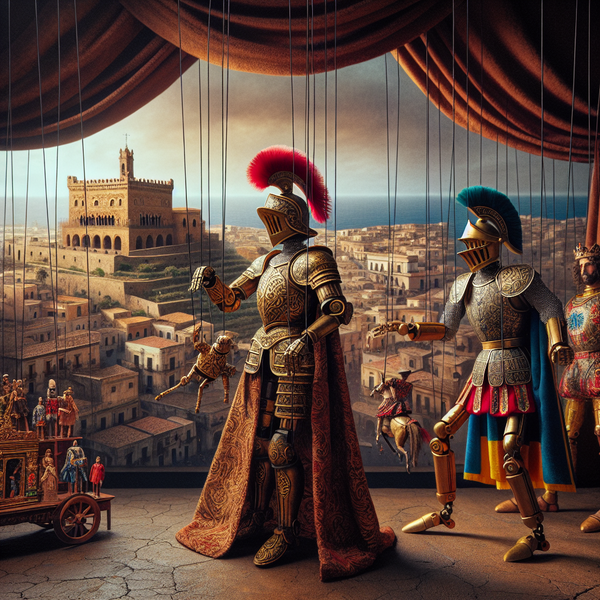
The Opera dei Pupi emerged in the nineteenth century, flourished in urban centers like Palermo and Catania, and depicted epic tales of Charlemagne’s knights. Each wooden puppet — usually weighing five to ten kilograms — is crafted by hand, with articulated joints, metallic armor, and vividly painted faces. Authentic pupi are never factory-made; you can tell by the detailed craftsmanship on the helmets and hand-punched brass armor plates, often produced in small family workshops along Via Bara all’Olivella in Palermo or Via Reitano in Catania.
Recognizing the real thing means looking for hand-carved puppets with visible wooden grain and weighted limbs. The puppeteer, called a puparo, doesn’t hide behind the stage but can often be seen manipulating the strings while delivering the dialogue himself — a tradition rooted in live improvisation rather than recorded soundtracks. If you hear the same performer voicing multiple characters with remarkable dexterity, you’re witnessing a true Sicilian master at work.
Best Places to Experience Authentic Puppet Theatres in Palermo
Palermo remains the living capital of Sicilian puppetry. The Teatro dell’Opera dei Pupi Antonio Pasqualino, near the Teatro Massimo, offers weekly shows in multiple dialects, staying faithful to the classic stories of Orlando and Rinaldo. What makes this venue exceptional is the adjoining Museo Internazionale delle Marionette, where you can trace how these marionettes evolved, view antique scripts, and see puppets from around the world. Ask for the behind-the-scenes tour — it includes a demonstration of how a puppet’s armor clinks when handled correctly.
For a more intimate setting, head to Teatro Argento in Palermo’s Kalsa district, where the Argento family stages performances for local children and tourists alike. The wooden benches and compact stage create the atmosphere of an early twentieth-century Sicilian village playhouse. Watching Nonno Argento’s grandchildren operate the family’s century-old puppets feels like being adopted into the story itself. Shows usually start at 6:00 p.m. — early enough to catch dinner afterwards at Antica Focacceria San Francesco, just a few minutes away.
Discovering the Catania Style: Pupi on the Eastern Coast of Sicily
While Palermo’s pupi are tall and graceful, Catania’s are shorter, stockier, and heavily armored — designed for high-impact duels. The Fratelli Napoli Theatre in Via Reitano, run by the Napoli family since the mid-20th century, is where you’ll find the most faithful practitioners of this eastern Sicilian style. The family still builds their own puppets, using locally sourced lime and chestnut woods, and their shows typically include music performed live on accordion. Here, even the sound of clashing swords is handmade: two metal rods struck just off-stage with perfect timing.
Another Eastern highlight is the Museum of the Sicilian Pupi (Museo delle Marionette dei Fratelli Napoli), which documents not only traditional performances but also experiments in modern storytelling. Their Thursday evening shows often reinterpret old epics with contemporary dialect humor. If you’re staying in Catania’s historic center, it’s a short 15-minute walk from Piazza Duomo; consider booking early — the small theater fills quickly with locals.
Hidden Workshops and Puppet-Making Studios Worth Visiting
Authentic puppetry in Sicily isn’t just performed; it’s built, stitched, and painted from wood, cloth, and metal in small artisan studios. Near Palermo’s Piazza Marina, look for Bottega Pupi di Mimmo Cuticchio, where you can sometimes see apprentices carving limbs out of untreated beechwood. Mimmo — one of Sicily’s most respected pupari — offers short workshops that walk you through assembling a functional puppet armature. Even if you don’t join a class, you can browse finished pieces for sale, each tagged with the family’s signature tiny brass plaque.
In Catania, the Laboratorio dei Fratelli Napoli occasionally opens its doors during festivals. Here, artists still use natural pigments for painting puppet faces — a rare practice in modern prop making. Ask politely and you may be allowed to handle a sword or shield; each piece is perfectly weighted for balance, ensuring the puppet’s movements are fluid on stage.
Puppet Festivals and Seasonal Performances Across Sicily
True aficionados plan their trips around Sicily’s puppet festivals. Palermo hosts the Festival di Morgana every autumn, coordinated by the Antonio Pasqualino Foundation. The event features multiple pupari troupes from across Italy — and occasionally from France and Spain — performing in historical venues like the Church of Santa Maria dello Spasimo. Unlike regular shows, festival performances often include workshops and bilingual interpretations, designed for visitors curious about technique and heritage.
Another highlight is the spring Rassegna dell’Opera dei Pupi in Sortino, near Syracuse, where the Vaccaro-Mauceri family revives medieval tales and myths. These open-air performances typically begin after sunset, and locals recommend bringing a light jacket and a seat cushion. Staying overnight in nearby Noto allows you to explore other UNESCO heritage towns rich in Baroque architecture the following day.
Learning the Art: Short Courses and Apprenticeships for Visitors
For travellers who want more than to watch, several workshops offer short-term learning opportunities. At Mimmo Cuticchio’s Figli d’Arte Cuticchio foundation in Palermo, visitors can sign up for a two-hour introductory lab that teaches storytelling rhythms, basic manipulation techniques, and voice modulation. Class sizes are limited to ten participants, and no prior experience in theater is required. This workshop is ideal for adults intrigued by performance and cultural preservation alike.
Meanwhile, the Associazione Famiglia Napoli in Catania occasionally collaborates with local universities to provide extended three-day courses. These sessions cover the mechanical principles behind puppet articulation, using real materials such as cord, brass nails, and dyed linen. Though the instruction is delivered mainly in Italian, participants have found that demonstration-based learning transcends language barriers.
How to Support Sicily’s Puppetry Heritage Respectfully
Authentic puppetry in Sicily survives only thanks to both locals and conscientious visitors. When attending a performance, always buy your ticket directly from the theater box office rather than through unverified resellers; a typical entrance fee ranges from 10 to 15 euros and directly supports the pupari families. If you purchase a souvenir puppet, ensure it’s made from wood and metal — avoid mass-produced plastic versions sold in generic gift shops. For meaningful support, consider donating to the Associazione per la Conservazione delle Tradizioni Popolari in Palermo, which funds restoration of antique puppets.
Finally, share your experience: most puppet theaters maintain modest social media pages that rely on visitor posts to attract audiences. Recording is usually discouraged during performances, but photos before or after the show are often welcomed. In a tradition built on oral storytelling, word-of-mouth remains the best way to keep it alive.
Where Puppetry Meets Modern Sicily
Sicily’s puppet tradition isn’t stuck in the past. Younger pupari like Giuseppe Cuticchio and Alessia Napoli are blending historical formats with new media, creating performances about migration, ecology, and local identity — still staged with handmade pupi but framed through contemporary stories. Watching an ancient craft evolve without losing its essence encapsulates what real cultural travel is about: seeing the old world adapt gracefully to the new.
So, whether you end your journey in Palermo’s lively Vucciria district or Catania’s Via Crociferi, when you hear the resonant clang of miniature swords and the unmistakable rhythm of Sicilian speech, you’ll know you’ve found it — the beating, handcrafted heart of the island itself.