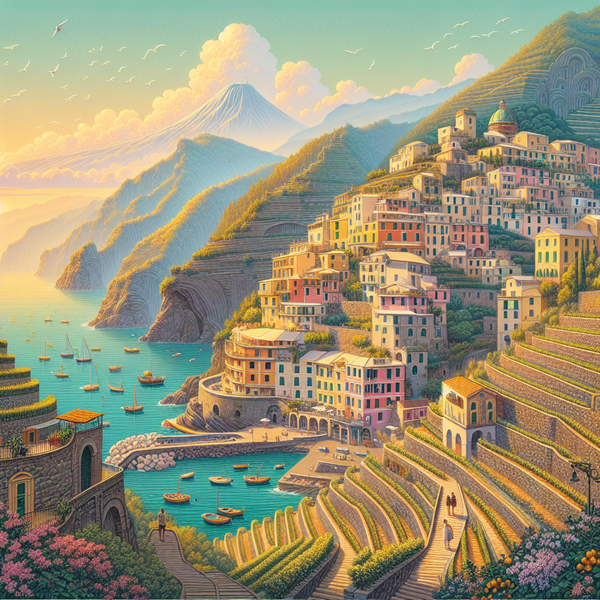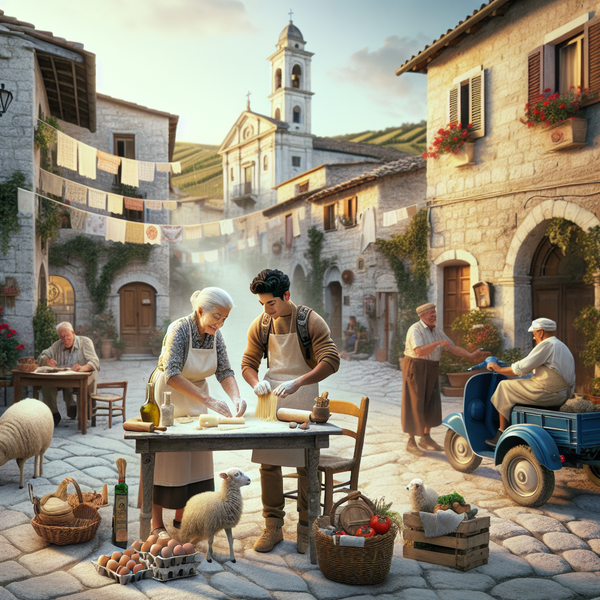
Most travelers land in Rome or Milan and rarely venture beyond the cities’ glow, but Italy’s true pulse often beats in the rural villages — places where church bells still mark time and nonnas trade gossip over morning espresso. Exploring these areas offers a kind of travel that’s both slower and more meaningful, built on genuine encounters rather than sightseeing checklists. From Abruzzo’s mountain hamlets to Liguria’s terraced coast, the journey to find authentic experiences in Italy’s rural villages rewards curiosity with connection.
Go to the section
ToggleAuthentic Rural Villages in Northern Italy Worth the Detour
Head north to regions where tradition remains intertwined with everyday rhythms. In Piedmont’s Langhe hills, the village of Barolo isn’t just synonymous with wine — it’s a community anchored by family-run cantinas that welcome visitors year-round. Ask for a tasting at Cavalier Bartolomeo, where you can sample nebbiolo poured directly from aging barrels in a stone cellar dating to the 1700s. About two hours east, Vogogna hides in the Ossola Valley, where the medieval Palazzo Pretorio still houses local council meetings. Walking its cobbled streets at dusk, you’ll likely hear the evening church bell echo across the valley — a rhythm unchanged for generations.
If you prefer alpine silence, visit Val Maira in western Piedmont, near the French border. The villages of Chiappera and Elva have opened rural guesthouses where hosts cook with local toma cheese and herbs from their gardens. There’s hardly a shop in sight, but you’ll find trailheads leading to frescoed chapels perched against limestone cliffs — a reminder that culture here is part of the landscape, not a separate attraction.
Central Italy’s Rural Heart: From Tuscany’s Hill Towns to Le Marche’s Farms
Tuscany’s small towns can feel crowded in summer, yet authentic life still thrives away from main roads. Head south of Siena to Monticchiello, a walled medieval village overlooking the Val d’Orcia. Locals there stage an annual community theater called Teatro Povero, written and performed by residents. It’s performed in late July and early August in front of the old walls, and tickets are available from the tiny tourist office by the main gate. Staying overnight in one of the old stone apartments means mornings filled with the smell of cornetti from the single café.
In neighboring Le Marche, authenticity takes a more agricultural shape. Agriturismi such as Casa Oliva near Bargni di Serrungarina
work as both working farms and guesthouses — guests help pick olives or accompany hosts to the weekly market in Fossombrone. The payoff is simple yet profound: homemade pasta tossed with olive oil pressed just meters away. In this region, even short drives reveal villages set on ridgelines, like Corinaldo, famous for intact walls and a late-summer polenta festival where recipes are guarded like family heirlooms.
Uncovering Rural Life in Southern Italy’s Hidden Corners
Travelers seeking authentic experiences in Italy’s rural villages should not skip the south. In Basilicata, the mountain town of Castelmezzano clings to the Lucanian Dolomites, its pastel houses wedged between spires of rock. Days start early here: locals gather at the Bar U’Ciruzz for coffee before heading to nearby olive groves. Hiking the trail connecting it to the sister village Pietrapertosa reveals daily life from another angle — farmers tending small plots and schoolchildren navigating narrow lanes carved centuries ago.
Farther south in Calabria, authenticity lives in villages that have resisted modern homogenization. In Bova, perched nearly 900 meters above the Ionian coast, you can still hear the old Greek-Calabrian dialect spoken in the piazza. Local shepherds make ricotta the same way their parents did — milk warmed on open fires and strained through woven baskets. Travelers can visit during the Festa della Musica Grecanica, where folk songs echo across stone courtyards as locals dance barefoot.
Authentic Food Experiences in Small Italian Villages
Dining in major cities can be delightful, but in rural Italy it often becomes a communal act. In Abruzzo’s mountain towns such as Santo Stefano di Sessanio, dinner is served in trattorie where menus are rarely printed. You might get chickpea soup with wild fennel followed by lamb roasted over vine cuttings — all locally sourced. The village’s small enoteca, La Cantina Sotto le Mura, sells wine bottled by neighbors rather than large producers. Ask which house red pairs best with lentil stew, and you’ll likely end up in a long conversation about family recipes.
Travel to Molise, Italy’s second-smallest region, and you’ll find authenticity in simplicity. In Agnone, the Caseificio Di Nucci still hand-pulls mozzarella according to family tradition. Visitors can book short workshops to roll curd under warm water, shaping the cheese before it cools. These workshops connect travelers to the tactile joy of daily rural life — far from the passive tasting rooms of major wine routes.
Responsible Travel: How to Join Village Life Without Disrupting It
Rural Italy’s appeal depends on preserving its pace and customs. Travelers seeking authentic experiences in Italy’s rural villages should travel slowly and engage respectfully. Stay for several days instead of rushing through. Buy honey, ceramics, or linen directly from producers — for instance, Fattoria La Vialla in Tuscany ships parcels abroad using eco-friendly packaging, ensuring that your souvenirs support sustainable farms rather than souvenir factories.
Consider participating in community events rather than observing them passively. In Umbria’s Montefalco, tourists can join the grape harvest in small numbers every September. The local consortium matches visitors with vineyard owners who need extra pairs of hands. Afterward, workers share lunch around long tables, eating lentils from nearby Castelluccio with glasses of the estate’s Sagrantino. These aren’t staged experiences — they’re livelihoods shared.
Getting Around: Practical Tips for Reaching Rural Italian Villages
Many authentic Italian villages aren’t accessible by direct train, requiring some logistical planning. Renting a car remains the easiest option for flexibility, but avoid the large highways when possible. For example, the route from Perugia to Norcia via the SS685 winds through chestnut forests and small villages like Sellano. Each detour can turn into a spontaneous espresso stop or chat with a local beekeeper.
Public transport does exist but often runs on reduced schedules. In Liguria’s hinterland, buses from Chiavari to Rezzoaglio operate just a few times daily. Knowing this lets you align travel with market days or festivals when buses run extra routes. Always check timetables on the regional transport websites — each has an English version — and plan to arrive in daylight as village signage can be minimal.
Staying Overnight: From Stone Houses to Family-Run Locande
Part of authenticity lies in where you sleep. Choose accommodations that reflect the area’s culture rather than a generic aesthetic. In Friuli-Venezia Giulia, Borgo San Daniele offers guest rooms inside an active small winery, letting travelers wake to vineyard fog. Down south in Cilento, family-run locande like Antichi Feudi combine humble hospitality with regional cooking classes taught by the owner’s aunt, using vegetables grown behind the building.
Booking ahead for popular seasonal events (like truffle festivals or harvests) is wise, but outside high season you can often knock directly on doors labeled ‘camere.’ The owners usually greet you personally, sometimes with homemade limoncello. Expect fewer amenities than in hotels but infinitely more character and conversation — the kind of memories that define authentic travel.
Seasonal Highlights for Authentic Village Experiences
Italy’s rural life follows an agricultural rhythm rather than a tourist calendar. Visiting at different times of year reveals changing customs. In spring, Sicilian villages like Sambuca di Sicilia host flower festivals known as infiorate, filling cobblestones with intricate petals. Summer brings open-air concerts in hill towns; autumn marks harvests across every region. Winter offers truffle and chestnut fairs, such as Borgotaro’s December market in Emilia-Romagna, where cold air carries the scent of roasting nuts.
Timing your trip to coincide with these local rhythms means fewer crowds and meaningful encounters — like sipping new wine under hanging lanterns at a November cantina in the Abruzzo foothills. By embracing the slower seasons, you experience Italy not as a postcard but as a living countryside.
Final Reflections: What “Authentic” Really Means in Rural Italy
Authenticity isn’t a checklist; it’s a mutual exchange. When you greet an elderly shopkeeper in dialect, linger over coffee, or accept an invitation to join a Sunday lunch, you become part of the human landscape shaping Italy’s rural villages. These moments — unadvertised and unscripted — are what linger long after itineraries fade.
Finding authentic experiences in Italy’s rural villages begins with listening more than photographing, staying longer than planned, and traveling not as an observer but as a respectful guest. The reward is immersion in daily beauty: olive oil poured fresh from a neighbor’s jug, the smell of woodsmoke after rain, and the sense that traveling here can still mean belonging — if only for a while.