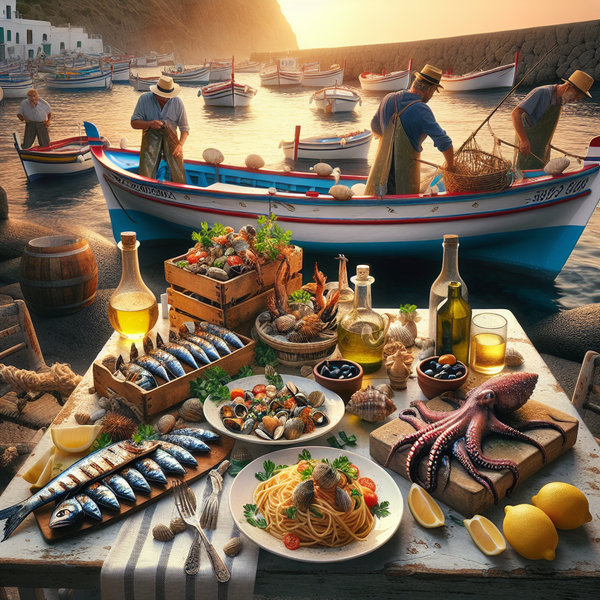
There’s something elemental about eating seafood on an Italian island — the sound of waves lapping under the pier, the scent of grilled fish kissed by sea breeze, and the easy chatter between fishermen in dialects that barely make it to the mainland. But the real secret to finding authentic seafood experiences on Italy’s islands lies beyond the tourist menu. You need to know what to order, where locals eat, and how the sea shapes daily life from Sicily to the Venetian Lagoon.
Go to the section
ToggleAuthentic Sicilian Seafood Trattorias in Coastal Villages
On Sicily, the Mediterranean defines more than cuisine — it dictates tempo. In the village of Marzamemi, near Noto’s baroque core, fishermen still drop nets before dawn and unload at the tiny port by mid-morning. You can follow them straight to Taverna La Cialoma, a restaurant perched practically on the water’s edge. The pasta alla bottarga here is made from local tuna roe, shaved over linguine caught that week. In Palermo, head for Trattoria da Enzo near La Cala harbor, where swordfish involtini (rolled and grilled) are stuffed with pine nuts and raisins — a Moorish legacy that lingers in every bite.
In western Sicily, Trapani’s seafood markets reveal a different rhythm. Visit the Pescatori market before 9 a.m. for fresh red prawns — locals boil them briefly in salted seawater and eat them cold, no lemon needed. Sicilians measure freshness not by color but by aroma: the subtle scent of iodine that disappears within hours after landing.
Discovering Family-Run Osterie in Sardinia’s Coastal Towns
Sardinia’s coastline offers an entirely distinct seascape — translucent shallows framed by granite headlands. In Alghero, a Catalan-influenced town, spaghetti alla bottarga di muggine (mullet roe) reigns supreme. Locals shop for the golden disks of cured roe at Mercato Civico di Alghero, where shopkeepers will slice and vacuum-pack it for you to carry home. For an old-school meal, book a table at Sa Mandra just outside town, where mixed grilled fish includes San Pietro (John Dory) and dentice (snapper) cooked over olive wood.
On the east coast, the fishing enclave of Santa Maria Navarrese feels almost forgotten. Here, family-run osterie like Il Cormorano still prepare rock lobster fregola — small toasted pasta pearls simmered like risotto in crustacean stock. Pair it with a crisp Vermentino di Gallura, Sardinia’s signature white wine. Never ask for Parmesan on fish pasta here; locals will gently insist the sea needs no help from cheese.
Seafood Traditions on Italy’s Lesser-Known Islands: From Elba to Ponza
Beyond Sicily and Sardinia, Italy’s smaller islands hide regional specialties reflecting centuries of isolation. On Isola d’Elba, in the Tuscan Archipelago, you’ll find stoccafisso alla riese — stockfish stewed with tomatoes, pine nuts, and capers, a dish brought by Ligurian sailors long before ferries made schedules predictable. At Da Gianni in Porto Azzurro, the daily chalkboard changes according to tide and moon phase. Order the mixed grill only if the waiter says it was a calm night; storms make the fish firm and briny.
Meanwhile, the Pontine Islands near Rome, especially Ponza, embody Campanian generosity. The island’s fishermen net bluefish and cuttlefish off Punta della Guardia, selling them at dawn along the quay. Try lunch at Acqua Pazza, a restaurant known to Rome weekenders but still faithful to its roots — the signature dish, ‘crazy water’ fish stew, uses only seawater, cherry tomatoes, and olive oil. The only seasoning is patience.
Find all the best hotel deals here.
Fresh-from-the-Net Dining on the Venetian Lagoon’s Islands
The Venetian Lagoon, though not Mediterranean in flavor, is one of Italy’s most historically rich seafood environments. Only by leaving central Venice can you taste lagoon fish as locals do. Take the vaporetto to Burano around lunchtime and stop at Al Gatto Nero da Ruggero, where chef Ruggero Bovo serves moeche — tiny soft-shell crabs available only a few weeks each spring and autumn. They’re dredged in flour, fried quickly, and eaten immediately, ideally with chilled white Pinot Grigio delle Venezie.
Across the water on Chioggia — often called “Little Venice” — the sprawling fish market at Piazza Vigo showcases over 150 species daily from the Adriatic. Here you can spot canestrelli (small scallops) and bevarole (local clams) used in the traditional risotto di pesce. The trick when ordering in Chioggia’s trattorie, such as El Gato Nero or La Tamerice, is to let the owner choose your fish of the day. They’ll fetch it straight from the stall across the canal.
The Aeolian Islands: Volcanic Flavors and Sea Bounty
North of Sicily, the Aeolian Islands bring together volcanic landscapes and deepwater fishing. Lipari’s daily catch changes drastically depending on wind direction — west winds bring in tuna and amberjack, while east winds favor red mullet. Dine at Ristorante Filippino, open continuously since the early 1900s, and try pesce all’eoliana, baked with olives, capers, and oregano from nearby Salina. Capers are the defining note of Aeolian cuisine; most families pickle them in sea salt for a year.
On Salina itself, Lingua village is famous for sardine tartines at Da Alfredo, accompanied by granite made from caper leaves. The atmosphere is effortlessly local — fishermen tie up small boats just meters from your table, and there’s rarely background music beyond the slap of waves against basalt.
Discover the best local experiences here.
How to Identify Authentic Seafood Restaurants on Italian Islands
Finding genuine seafood on Italy’s islands requires knowing local signals rather than relying on online ratings. Real island eateries usually post a hand-written menu outside, sometimes with only prices per hectogram (meaning fish is priced by weight). Another tell: the lack of long menus. When you see only three or four dishes, it’s a strong sign the restaurant cooks what fishermen landed that day.
A few quick checks before sitting down:
- Look for crates of fish on ice delivered during late morning; many restaurants buy their catch daily between 11 a.m. and noon.
- Ask which fishermen supplied the fish — island chefs are proud to name them, often family members.
- Avoid spots displaying photos of pasta with mixed seafood in heavy red sauce — that’s a mainland-style adaptation rarely eaten by locals.
It’s also worth learning the Italian terms for freshness: pescato del giorno means simply “catch of the day,” while crudo denotes raw preparations like carpaccio di ricciola (amberjack) dressed with local olive oil. In most island settings, servers will enthusiastically show the whole fish before cooking — a tradition born out of trust between diner and sea.
Island Seafood Festivals and Seasonal Timing
Timing your visit around a local fish festival offers rare encounters with community cooking. On Sicily’s Egadi Islands, the Sagra del Tonno in Favignana celebrates the bluefin tuna harvest every spring, recalling the ancient mattanza ritual. Expect grilled tuna collar and couscous cooked in tuna broth. In Sardinia, Sant’Antioco hosts a festival dedicated to bottarga in early autumn, when mullet are still spawning offshore.
In the Venetian area, late spring marks the arrival of moeche season, which lasts just a few weeks. Meanwhile, Elba’s Festa del Pesce each October turns the entire harbor of Portoferraio into an open-air seafood kitchen, with locals selling paper cones of fried anchovies.
Attending such events not only rewards the palate but connects travelers to the islands’ sustainable rhythms — the way the people there still treat the sea as both pantry and clock.
Pairing Local Wines With Island Seafood
Each Italian island pairs its seafood with indigenous wines that rarely leave regional borders. In Sicily and the Aeolians, dry Malvasia delle Lipari brings floral notes that cut through oily bluefish. Sardinia’s Vermentino, whether from Gallura or the lesser-known Mandrolisai zone, enhances shellfish flavors when served well-chilled. On Elba, many trattorie pour Ansonica — a straw-colored white with hints of wild fennel perfect for grilled bream or calamari.
Wine by the carafe often indicates proximity to a family vineyard, and locals usually drink it slightly cooler than room temperature, never iced. Don’t hesitate to ask for a half-liter of “vino locale” — it’s almost always a short journey from vine to sea.
Planning Your Seafood-Focused Island Itinerary
Practical logistics matter as much as taste. Ferries to the Aeolians leave from Milazzo multiple times daily in summer, but winter service is reduced, limiting seafood availability. On Sardinia, renting a car unlocks small coastal towns like Bosa Marina or Carloforte, known for their tuna fleets and Ligurian-influenced recipes. Sicily’s range allows for easy combination of mountain and sea in a single day — breakfast in Etna vineyards, lunch on the Catania fish market’s steps, where chefs grill baby squid right on steel plates.
Booking ahead during national holidays (especially Ferragosto in mid-August) is essential; locals flood seaside trattorie. For quieter, more authentic interaction, aim for late May or early October, when fishermen have time to chat instead of racing bulk orders for tourists.
Wherever you go, remember that authenticity isn’t a matter of rustic decor but of connection — to the island’s tides, families, and the simple question: “What came in with the boats this morning?” That’s how you taste Italy’s islands at their purest form of seafood tradition.