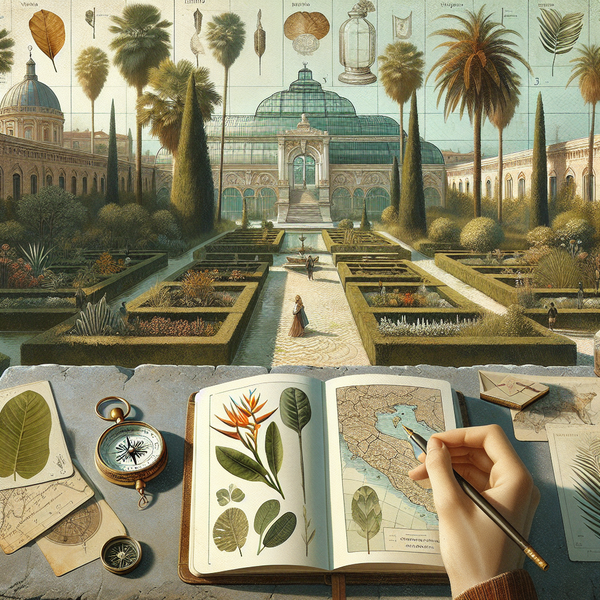
Many travelers come to Italy for its art and cuisine, but few realize that some of the country’s most ancient and atmospheric places are its historic botanical gardens. These living museums predate Italian unification itself, and visiting them offers a quiet lens into how science, culture, and design evolved together on the peninsula. Whether you’re tracing medicinal plants once studied by Renaissance scholars or finding a moment of calm under centuries-old magnolias, exploring these gardens connects you to Italy’s most contemplative side.
Go to the section
ToggleExploring the Roots: Italy’s First Botanical Gardens in Padua and Pisa
The Orto Botanico di Padova, established in 1545 by the University of Padua, is recognized by UNESCO as the world’s oldest academic botanical garden still in its original location. It sits less than a 10-minute walk from Prato della Valle, one of Italy’s largest squares. The garden’s circular Renaissance layout symbolizes unity between nature and knowledge. Step into its “Hortus Sphaericus,” the oldest section, where labeled species like Ginkgo biloba and Agave americana commemorate centuries of plant exchanges from Asia and the Americas. If time allows, visit early morning when light filters over the old university walls and the garden is nearly empty.
A couple of hours west by train, the Orto e Museo Botanico di Pisa tells a slightly different story. Founded by Cosimo I de’ Medici and installed near Piazza dei Miracoli, this garden moved twice before settling into its current location on Via Luca Ghini. The herbarium here includes 125,000 specimens, and the small museum showcases early botanical illustration tools. Visitors interested in sustainable restoration should note how Pisa’s garden has carefully reintroduced Mediterranean wetland species to combat biodiversity loss.
The Artistic Heart: Florence and Lucca’s Garden Traditions
In Tuscany, botanical gardens blend easily with artistic tradition. The Giardino dei Semplici in Florence, established by the Medici family in 1545, is Italy’s second-oldest. It’s tucked behind Via Micheli, close to the Accademia Gallery. The garden specializes in ancient medicinal plants—botanicals that would have supplied apothecaries serving the Florentine elite. Don’t miss the camellia and azalea greenhouses open each spring, where volunteers often share propagation tips in Italian and English.
For travelers exploring by car or regional train, the lesser-known Orto Botanico di Lucca provides a slower rhythm. Situated next to the city’s 16th-century walls, it manages to feel hidden even though you can access it easily from Porta Elisa. Here you can trace a compact route around a pond dominated by a 10-meter-high cedar planted in 1822. The garden’s small museum records the local silk industry’s reliance on mulberry trees—an unexpected connection between horticulture and Tuscan commerce.
Nordic Influences in Lombardy: Pavia and Bergamo’s Academic Landscapes
Moving north toward the Po Valley brings different plant priorities and climatic adaptations. The Orto Botanico di Pavia, administered by the University of Pavia since the 18th century, showcases Alpine flora rarely found elsewhere in Italian university gardens. The neatly restored greenhouses, accessible through Piazza Botta, hold collections of carnivorous plants and orchids that thrive in the Lombard humidity. Look for the two monumental Ginkgo biloba trees near the main gate; they’re among the oldest cultivated specimens in northern Italy.
Further northeast, the Orto Botanico di Bergamo “Lorenzo Rota” is compact but dramatic, clinging to a hillside in the Città Alta district. The climb to reach it—up Via San Tomaso or using the Scaletta di Colle Aperto stairs—rewards you with views over red rooftops to the distant Alps. Despite its modest size, this garden emphasizes local conservation: its Lombard endemic plants, including Campanula bergomensis, highlight how high-altitude species cling to microhabitats around Lake Iseo and Val Seriana.
Southern Stories: Naples, Palermo, and the Botanical Edge of the Mediterranean
Italy’s southern gardens speak of warmer seas and global botany. The Orto Botanico di Napoli near Via Foria was created in the 19th century as a royal research garden for exotic species arriving through the Port of Naples. Today its subtropical palms and massive ficus trees give shade even in midsummer heat. The garden runs occasional weekend tours focusing on edible plants used in Campanian cuisine, and the paths are flat enough for easy strolling after lunch at nearby pizzerias like Lombardi a Santa Chiara.
Across the Strait of Messina, the Orto Botanico di Palermo is arguably the most atmospheric in Italy. Founded in the late 18th century and managed by the University of Palermo, it occupies 10 hectares near the Foro Italico waterfront. You can wander through a neoclassical Herbarium, palm avenues, and a giant rubber tree whose aerial roots form a living sculpture. The Sicilian sun breathes energy into species from Africa and the Caribbean, a botanical reflection of Palermo’s long history as a crossroads of civilizations. Morning visits are best to avoid heat; combine it with a stroll through the adjacent Villa Giulia public park for shade and ironwork fountains.
Hidden Corners: Alpine and Island Botanical Gardens Worth the Detour
While Italy’s major university gardens claim the headlines, smaller alpine and island sites reward those who travel off the main routes. The Giardino Botanico Alpino Saussurea near Courmayeur, accessible by the Mont Blanc Skyway cable car to Pavillon du Mont Fréty, is one of Europe’s highest botanical gardens. Its 7,000-square-meter grounds feature gentians and saxifrages that bloom between late June and August, depending on the mountain thaw. Bring a windbreaker and sturdy shoes; even a midsummer visit can be brisk at 2,173 meters.
Far to the southwest, the Giardini La Mortella on Ischia island combine botany and design. Created by British composer William Walton’s wife, Lady Walton, they showcase subtropical plantings layered against volcanic cliffs overlooking Forio Bay. Although younger than Renaissance gardens, La Mortella’s terraced design and intimate amphitheater for chamber music concerts create a sensory blend rare even in Italy. From Naples, ferries to Ischia leave hourly from Molo Beverello, and buses connect the port with Forio in under 30 minutes.
Understanding Italy’s Botanical Heritage and Seasonal Visits
Visiting Italy’s historic botanical gardens is most rewarding when timed with their biological rhythms. Spring months—March through May in the north and as early as February in the south—bring waves of magnolia, iris, and wisteria blooms. Summer suits mountain and coastal gardens, where altitude or sea breeze keeps temperatures manageable. Autumn can be surprisingly vivid, especially at Padua or Pavia when ginkgo leaves light up the courtyards in gold tones. Most gardens close or restrict sections in winter, so always check hours on official sites before traveling.
Many gardens now emphasize environmental education. Some, like Naples and Palermo, host plant conservation programs aimed at protecting endemic Mediterranean flora. Joining a guided tour not only enriches your visit but supports these often underfunded institutions. A contribution of 5–10 euros goes directly toward maintenance and botanical research.
Practical Tips: Tickets, Accessibility, and Local Etiquette
Italy’s botanical gardens are usually open from morning until late afternoon, with ticket prices between 4 and 10 euros. University-managed gardens sometimes offer free entry to students or discounts for families. Carry small cash, as some smaller sites like Lucca don’t always accept cards. Photography is typically allowed, but drones are not. Comfortable walking shoes and a hat are essential in southern locations like Naples and Palermo, while a light jacket is wise for northern gardens even in summer.
Accessibility varies: Florence’s and Padua’s gardens are largely flat and wheelchair-friendly, while sites like Bergamo’s hillside layout require moderate fitness. Italian etiquette expects quiet voices in these scholarly settings. Avoid touching labels or collecting fallen plant fragments; staff take pride in precisely curated systems that often date back hundreds of years. When possible, support their bookstores—Florence’s Giardino dei Semplici sells bilingual field guides perfect as souvenirs.
Design Your Itinerary: Linking Gardens with Regional Travel
If you’re tracing a cross-country route, botanical gardens can serve as thematic anchors. A train-based itinerary could start in Padua, continue through Florence and Lucca, detour to Pavia and Bergamo, then descend by high-speed rail to Naples and ferry to Palermo. Travelers with three weeks might add alpine or island gardens for variety. Car rentals are useful around Lombardy’s smaller institutions but unnecessary in major cities where public transport suffices. Pairing a morning garden visit with an afternoon museum stop balances serenity and urban exploration without overload.
To deepen your understanding, consider timing visits with local botanical festivals. Florence usually hosts a “Mostra dei Fiori” floral market in the Cascine Park each spring, while Padua’s garden organizes educational weekends around biodiversity. These events offer a glimpse of contemporary Italian engagement with nature—a living continuation of the Renaissance curiosity that started it all.
Why Italy’s Botanical Gardens Matter More Than Ever
In an era of ecological concern, Italy’s historic botanical gardens have regained cultural importance. They function not just as repositories of beauty, but as active tools for climate research and biodiversity conservation. University scientists in Padua and Palermo study plant adaptability to drought, while Florence’s curators preserve heirloom medicinal herbs used in traditional Tuscan remedies. For visitors, these sites offer literal breathing space within Italy’s dense art cities. Spending an hour here slows the pace and connects your journey to something rooted and ongoing—a dialogue between curiosity, cultivation, and care.
Exploring Italy through its botanical gardens isn’t about checking sights off a list. It’s about noticing texture—lichen on stone benches, the scent of bay leaves after rain, the hum of bees over centuries-old walls. By visiting thoughtfully, you help sustain the living heritage that shaped Italy’s garden art and its scientific genius alike.