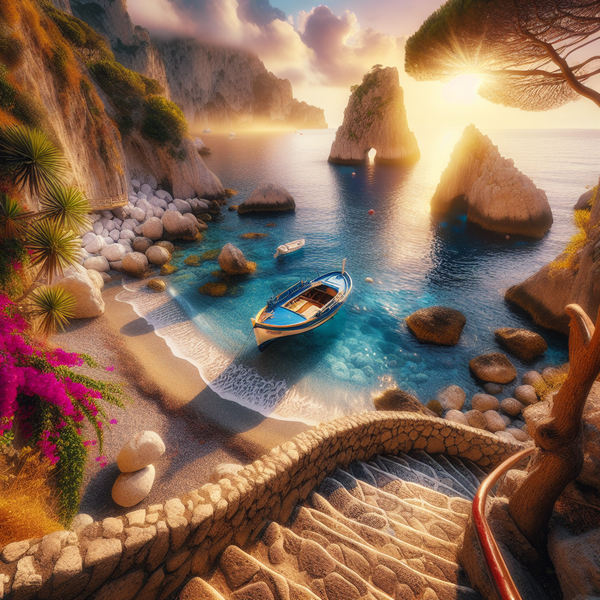
The Gulf of Naples doesn’t need introductions — its sweeping bay crowned by Mount Vesuvius has inspired painters and poets for centuries. Yet few travelers realize that this volcanic curve hides a collection of beaches as varied as Italy itself. From quietly elegant coves reached by footpaths to buzzing strips beneath grand hotels, each beach reveals a distinct rhythm of local life. Whether you’re boarding a traghetto from Molo Beverello or steering a rented Vespa along the Amalfitana road, the sea here will always pull you toward its cobalt-blue horizon.
Go to the section
ToggleSecluded Beaches Near Sorrento and Massa Lubrense
For visitors who base themselves in Sorrento, the closest taste of the bay’s natural side lies beyond the commercial marinas. A twenty-minute drive west leads to Massa Lubrense, a series of peninsular hamlets where signs for “Baia di Ieranto” and “Marina del Cantone” point down twisting roads shaded by olive terraces. The Spiaggia di Ieranto, protected by the FAI (Italian Environment Fund), can only be reached on foot from Nerano; it’s a 40-minute hike, and the reward is a pebbly cove facing Capri, where snorkeling reveals volcanic rocks laced with sea urchins. No umbrellas, no bars — just turquoise clarity and the echo of your own splash.
Nearby, Marina del Cantone offers a gentler compromise: a mix of private lidos and free access spots. Locals favor Da Maria’s simple wood-deck restaurant for spaghetti alle zucchine — the same zucchini recipe credited to nearby Nerano. The buses from Sorrento’s Circumvesuviana station run hourly in summer, though driving yourself lets you stay for sunset when fishermen repair nets along the rocky dock.
Vesuvius Coast Beaches: Where Locals Swim with a Volcano View
Between Castellammare di Stabia and Torre del Greco, the coastline hides black-sand crescents formed by ancient eruptions. Tourists rarely stop here, but Neapolitans consider the Lido di Stabia or the smaller Le Ondine Beach in Ercolano their go-to for a quick weekend dip. The volcanic sand, dark and surprisingly warm underfoot, is rich in minerals, and locals swear it helps circulation.
In Ercolano, beach clubs announce themselves with bright turquoise gates along Via Alveo. Trains on the Circumvesuviana line stop at Ercolano Scavi, and from there it’s roughly a fifteen-minute walk downhill to the shore. This area offers a rare view: crystalline water directly under the looming cone of Vesuvius. Pair your swim with a visit to a Vesuvian winery on Via Tirone della Guardia, where lava soil nurtures crisp white Lacryma Christi wines.
Capri’s Hidden Coves: Off the Tourist Trail
Capri’s fame often overshadows its small, precious beaches. Yet beyond the designer boutiques and day-trippers, a slower island still exists. The Bagni di Tiberio, reachable by a five-minute boat ride from Marina Grande, occupies the same coastline once favored by Roman emperors. Its pebble shoreline, dotted with sunbeds and a small bar, feels intimate and historically charged — the submerged ruins of Augustus’s villa can still be glimpsed beneath the surface.
More adventurous travelers hike from Anacapri down to Punta Carena, the island’s far western lighthouse. The descent ends in a flat reef platform, perfect for diving straight into deep-blue water. Arrive before 10 a.m. to claim a shaded spot under the cliffs, and stay for aperitivo at Lido del Faro when the sun drops directly into the Tyrrhenian.
Ischia’s Thermal Shores and Soft Sand Beaches
If Capri is chic, Ischia is lush and unapologetically local. The island’s mineral springs give its beaches an almost spa-like atmosphere. Sorgeto Bay, near Panza, is the most curious: local families wade into small tide pools that bubble naturally with hot water, mixing it with cool seawater to the perfect temperature. The 200 steps down discourage crowds, but there’s a simple bar at sea level for cold beer and grilled squid.
For fine sand ideal for children, the expansive Maronti Beach stretches three kilometers east of Sant’Angelo. Water taxis link the two points continually, costing about 10 euros each way. The soft gray sand is volcanic but surprisingly gentle, and bathers often alternate between sea swims and the nearby thermal cave of Olmitello. Parking can be difficult in high season, so using the island’s efficient microbuses from Ischia Porto is often simpler.
Procida: Authentic Island Charm and Pastel Beachfronts
Procida, now easier to reach via frequent hydrofoils from Naples Beverello, remains refreshingly untamed. The Chiaiolella Beach on the island’s south side combines black sand, shallow entry, and a postcard view of the rocky islet of Vivara. The promenade fills at dusk with locals in linen shirts carrying pizza boxes to eat by the sea wall — a scene unchanged for decades.
Closer to Marina Corricella, Spiaggia della Chiaia offers cinematic style: pastel fishermen’s houses climb steeply behind the beach, their facades mirrored in the water. The walk down several flights of old stone stairs dissuades most tourists, giving the sand a calm, neighborhood feel. Bring water and patience for the climb back up — taxis rarely navigate the narrow lanes here.
Posillipo and Gaiola: Urban Naples Meets Marine Sanctuary
Even within Naples city limits, the sea still calls. The Gaiola Underwater Park, accessible from the Posillipo neighborhood, looks modest from the clifftop but shelters an astonishing marine reserve. Registration on the park’s website allows entrance to a limited-capacity swimming area beside Roman archaeological remains visible under the surface. Since motorboats are banned, the water stays amazingly clear despite being just a metro ride from Piazza Amedeo.
Nearby Palazzo Donn’Anna Beach hides below the dramatic baroque ruin of Donn’Anna Palace. Locals slip through a small gate from Via Posillipo and swim between rock arches that glow amber at sunset. Taking bus 140 from Mergellina station lets you hop off at the closest turn; there’s no marked stop, so tell the driver “discesa Donn’Anna.” This is as Neapolitan as seaside living gets — improvised, romantic, and entirely real.
Planning Tips for Beach-Hopping Around the Gulf of Naples
Beach-hopping in the Gulf of Naples requires balancing spontaneity with logistics. Hydrofoils to Capri, Ischia, and Procida depart from Naples’ Molo Beverello starting around 7 a.m., but tickets often sell out after 10 a.m. In summer, always reserve online or arrive early. For land routes, the Circumvesuviana rail line links Sorrento to Naples in just over an hour, with several coastal stops. If renting a car, note that many beach roads, especially around Massa Lubrense and Anacapri, require strong nerves — lanes narrow to barely two meters and scooters appear from every direction.
For gear, small local supermarkets frequently sell folding parasols and cheap beach shoes — crucial on volcanic stones. Tap water is potable across the region; refill bottles at public fountains labeled “acqua potabile.” And remember Italian beach etiquette: even on free beaches, leave room between towels and greet your neighbors with a polite “Buongiorno.”
A Slow-Day Itinerary: One Perfect Gulf of Naples Beach Circuit
Start your morning in Sorrento with a coffee at Bar Veneruso on Corso Italia before catching an early boat to Capri. Swim at Bagni di Tiberio until midday, then continue to Ischia for lunch at Ristorante Alberto, directly on Spiaggia di San Pietro near the port. Spend the afternoon soaking in Sorgeto’s natural pools or simply lazing under a straw umbrella at Maronti. By dusk, hop the fast hydrofoil back to Naples, where a final swim at Gaiola before dinner at Posillipo’s La Sacrestia lets you trace the curve of the entire gulf in a single, unforgettable day.
Every beach in the Gulf of Naples tells a story shaped by volcanic fire and Mediterranean salt. Some require stamina; others, just the will to follow a small blue sign down a winding stair. Yet all share the same view — the luminous half-moon of sea where Naples, Vesuvius, and its islands keep their eternal conversation.