Every traveler who steps into Rome expects the grandeur of the Colosseum, but those willing to wander a little farther find the city’s deeper layers—ancient temples tucked behind palazzi, subterranean sanctuaries beneath churches, and ruins that still shape daily Roman life. Exploring Rome beyond the Colosseum means stepping into the quieter corners where emperors gave way to ordinary citizens, and the archaeology feels alive under your feet.
Go to the section
ToggleUnearthing the Roman Forum and Palatine Hill: Where Power Was Born
Just a five-minute walk from the Colosseum’s entrance, the Roman Forum stretches like an open-air archive of Roman civic life. Most visitors glance from above, but it’s worth entering near the Arch of Titus and climbing slowly toward the Temple of Saturn to follow history chronologically. The Palatine Hill, accessible with the same ticket, offers not only remains of imperial palaces but shaded citrus gardens overlooking the Circus Maximus. Early morning visits—around 8:30 AM, when gates open—offer soft light ideal for photographing marble carvings and columns without the midday glare.
The Baths of Caracalla: Ancient Leisure on a Monumental Scale
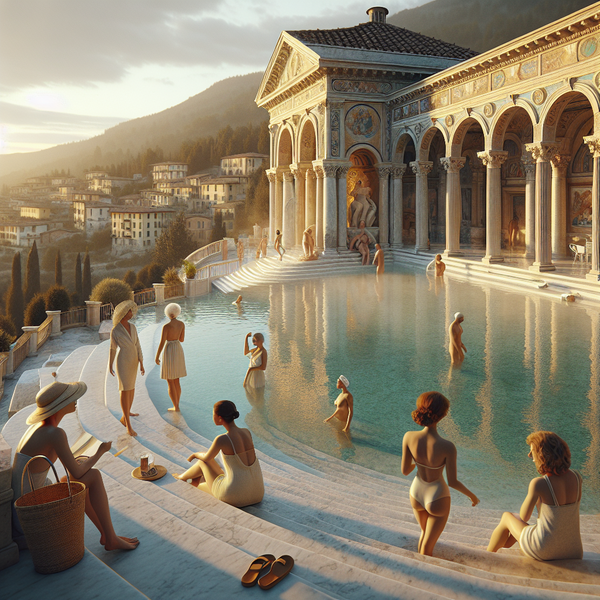
The Terme di Caracalla give you a sense of ancient luxury unlike anything else in Rome. Built as public baths, gymnasiums, and libraries, they occupy an easy 15-minute walk south from the Circus Maximus metro stop. The complex’s brick vaults rise stories high, and though the marble has long been stripped away, fragments of black-and-white mosaics still carpet the floors. Bring a light scarf or hat—the site offers little shade, and summer temperatures make afternoon visits intense. Purchased online, the standard ticket now includes access to a virtual-reality headset that reconstructs the interiors as they once looked, allowing you to stand where Romans swam and socialized nearly two millennia ago.
Ostia Antica: Rome’s Forgotten Port City
While Pompeii steals the headlines, Ostia Antica delivers a similar archaeological thrill without the crowds. A 30-minute train ride from Roma Porta San Paolo station takes you directly to the entrance; from there, the ruins spread across a vast site filled with warehouses, bakeries, and apartment blocks from the age of empire. The mosaics in the Thermopolium of the Cisiarii still depict wine pitchers and garlands, giving a snapshot of daily trade. Pack water and allow at least three hours—its size surprises most visitors. Because it sits near the Tiber’s former mouth, birdwatchers often spot herons gliding where Roman grain ships once docked.
The Domus Aurea: Nero’s Underground Palace Reimagined
Beneath the Oppian Hill, just north of the Colosseum, lies the Domus Aurea, Emperor Nero’s fabled Golden House. Archaeologists continue excavating its elaborate rooms, and access is limited to guided tours with mandatory helmets—proof that the site is still alive beneath centuries of construction. Book entry in advance for weekends when archaeologists lead visits in English and include an impressive immersive video projection inside the octagonal hall. The guided experience lasts about 75 minutes, combining tangible ruins with digital overlays that reconstruct its marble columns and shimmering frescoes. The entrance on Via della Domus Aurea connects easily from Colosseo metro stop via a quick uphill path through Parco del Colle Oppio.
The Pantheon and Largo di Torre Argentina: From Temples to Modern Rome
The Pantheon may sit in a lively piazza, but it remains an archaeological marvel with its unreinforced concrete dome still intact. Arrive before 9 AM or after 7 PM to experience the acoustic resonance of the central oculus without tour noise. The nearby Largo di Torre Argentina hides four Republican-era temples sunken below street level, with modern tramlines rumbling just above. The city has completed new elevated walkways that let you walk around the ruins after years of closure, finally revealing where Julius Caesar met his fate. Cats from the local sanctuary often nap atop the columns—an oddly fitting image of Rome’s collapse and continuity.
The Appian Way and Its Catacombs: Walking History in the Countryside
Few experiences connect you to ancient Rome more directly than strolling along the Via Appia Antica. Rent a bicycle from Appia Antica Caffè at the start near Porta San Sebastiano, or simply walk five kilometers toward the countryside, where basalt paving stones still bear chariot ruts. Along the way, two major catacombs—San Sebastiano and San Callisto—offer guided underground tours through early Christian burial tunnels. They close for lunch from 12:00 to 2:00 PM, a typically Italian rhythm visitors should plan around. Just beyond lies the Tomb of Cecilia Metella, whose circular structure often hosts open-air concerts in summer, merging archaeology with living culture.
The Baths of Diocletian and the National Roman Museum: Rome Indoors
If the midday heat becomes unbearable, the Baths of Diocletian beside Termini Station provide Rome’s most impressive interior ruins. Integrated into the National Roman Museum, these baths preserve massive halls reimagined by Michelangelo as church and cloisters. The museum’s ticket is valid for multiple days across four locations—including Palazzo Massimo near Piazza dei Cinquecento, which houses the delicate frescoes from Livia’s garden pavilion. Pay attention to the partial inscriptions on marble dedications inside the former frigidarium; they name the artisans who built what may have been ancient Rome’s largest bathing complex. It’s an archaeology deep dive without leaving central Rome.
Case Romane del Celio: Layers Beneath a Basilica
Under the minor basilica of Saints John and Paul on the Caelian Hill, the Case Romane del Celio offer one of Rome’s most atmospheric underground sites. This residential complex contains frescoed dining rooms preserved under the current church, accessed through an entrance at Clivo di Scauro. Audio-guides lead you past pagan murals, early Christian graffiti, and the foundations of Roman housing that predate the basilica above. Because the humidity is high, bring a light sweater even in midsummer—the temperature difference can be surprising. Tickets are easiest to buy at the small kiosk next door, cash only, and visits are often uncrowded.
The Stadium of Domitian at Piazza Navona: The Hidden Arena Beneath the Fountains
Below the lively Piazza Navona, site of Bernini’s Fountain of the Four Rivers, lies the Stadium of Domitian. Enter from Via di Tor Sanguigna to explore vaulted corridors that once encircled the athletic field. The curve of today’s piazza actually follows the footprint of that ancient stadium, which predates the circus culture later perfected by the emperors. Museum panels explain the switch from Greek-style athletics to Roman spectacles; audio-visual installations bring spectators’ cheers back to life. If you visit on a weekday afternoon, you might have the subterranean passageway to yourself—an eerie contrast to the cafes upstairs.
The Aurelian Walls and Porta San Sebastiano Museum
For a different perspective on ruins, follow the Aurelian Walls—the ancient fortifications that encircle much of central Rome. The best-preserved stretch runs between Porta San Sebastiano and Porta Appia, where a free museum shows artifacts found during restoration. Visitors can walk along an elevated section of the ramparts, catching glimpses of medieval watchtowers incorporated into residential buildings. The museum, open Tuesday through Sunday mornings, provides multilingual panels and even displays pieces of the original locking mechanism used in the gates. It’s a tangible way to see how ancient infrastructure was adapted for later centuries without being erased.
Testing the Rhythm of Archaeological Rome
Visiting Rome’s archaeological sites beyond the Colosseum is not about ticking boxes—it’s about understanding how a living city grew from layered ruins. Five days allow a comfortable rhythm: one morning in the Forum and Palatine, an afternoon along the Appian Way, another day in the Baths and museums, then a half-day at Ostia Antica. Always check closing times; many sites shut one hour before sunset, and the last admission is typically 30 minutes earlier. For transportation, the 118 bus conveniently connects the Appian Way to the city center, while the Roma Pass includes entry to several of these archaeological areas.
What makes these places enduring is not just their age, but their connection to daily Roman life. From cats basking amid fallen capitals to joggers passing tombs along the Via Appia, archaeology here is part of the present tense. Beyond the Colosseum’s grandeur, Rome’s buried and open-air ruins reward those who explore slowly, tracing the lines where empire became city, and history became daily routine.